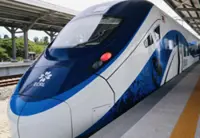
PETALING JAYA: A multi-million-ringgit piece of equipment has been deployed to speed up inspections ahead of the East Coast Rail Link (ECRL) opening.
Known as the comprehensive inspection train (CIT), it is fitted with an array of sensors to measure parameters related to track engineering, traction power supply as well as the signalling and communication system.
Things that are measured by the array of sensors and cameras mounted on the equipment include track geometry and rail profile, the quality of physical contact between the train and the overhead power lines through the pantograph, as well as the quality of 4G LTE coverage along the alignment to support safe and reliable operations and signalling.
The CIT, which resembles a regular passenger train, has been in operation since Aug 21 as part of system integration testing, which assesses the integration and coordination of key railway systems and their interfaces.
Malaysia Rail Link Sdn Bhd (MRL), which owns the project connecting Gombak in Selangor and Kota Baru in Kelantan, expects the equipment to significantly shorten the testing and commissioning period.
“This inspection train will continue to play a role in the future servicing and maintenance of the ECRL railway system,” it said in a statement distributed to the media during a round trip on the CIT from Gombak to the Kuantan Port City station in Pahang yesterday.
The ECRL is scheduled to begin operations in January 2027, but Transport Minister Anthony Loke has suggested that it be brought forward to early December, in time for the year-end holidays.
“We are trying our best to make this happen,” said MRL chief executive officer Datuk Seri Darwis Abdul Razak.
The procurement of the CIT, which is six cars in length, means that only 10 trainsets will be available to serve commuters, instead of the original 11.
Asked why a dedicated inspection train is needed when more operators in developed countries are mounting sensors and cameras on regular passenger trains, Darwis said the dedicated train allows data on the line to be collected quickly.
He also said having the inspection unit in its current configuration is not as “wasteful” as it might seem since it could still accommodate up to 100 passengers with a business-class seating configuration, along with amenities such as a conference room, lounge and dining area.
This means it could be offered as a special charter train in future, he added.
Normal ECRL passenger trains can carry around 430 passengers, depending on the seating configuration.
“We are also open to deploying this (inspection) train for passenger service should there be a need for it,” he said.
Darwis added that seating capacity could also be expanded by lengthening the six-car sets to eight-car sets, rather than relying solely on buying more trainsets.
According to railway industry observers, the CIT may be useful during the first few years of ECRL operations, when gathering comprehensive data quickly on the railway’s performance in Malaysia’s tropical conditions will be critical.
An official from the main contractor, China Communications Construction Company-ECRL, said putting sensors and equipment on actual passenger trains, as is being done in some countries, would reduce the number of seats available to passengers and affect revenue.