PUTRAJAYA: Malaysians applying for the new-generation MyKad have described the process as smooth and efficient, with most applications taking only minutes despite the crowd.
The new-generation national identity card (MyKad) was officially unveiled, with public applications opening on Wednesday (Sept 16).
Shaza Nuizeaan Shafie, 48, from Puchong, said she came with her two daughters, Nur Ataa Iqra Abdul Wahab, 21, a UiTM Shah Alam student, and Nur Amnaa Irbah Abdul Wahab, 12, for their MyKad applications.
“It did not take more than 10 minutes. The service was also very good today. Although there seemed to be many people, the process was smooth,” said the contact centre supervisor when met at the National Registration Department (JPN) here on Thursday (Sept 17).
Shaza was also pleased that the new MyKad could still be used to access benefits such as Sara and Budi95.
“It makes things easier for us because there is only one access. We can use all those benefits,” she said.
Meanwhile, airport worker Nurul Shahira Izati Ramly, 24, who lives in Sepang and is originally from Kelantan, said she was surprised to learn about the new MyKad when she walked in to replace her broken card.
“I am excited. I feel more secure,” she said.
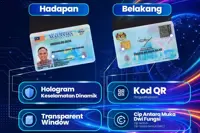
Foo Yew Jin, 36, said he liked the new MyKad’s design, particularly its hologram.
“It is nice, especially with the hologram. What is important is that the security is guaranteed,” he said.
JPN Identification Card Division director Muhammad Asraf Sukadi said existing MyKad holders did not need to replace their cards solely because of the introduction of the new-generation MyKad, as long as their cards were not damaged.
However, holders of Plastic Identity Cards (KPP), High-Quality Identity Cards (KPT) and MyKad without a ghost-image security feature are required to replace them with the new-generation MyKad, he said.
He added that receiving the new-generation MyKad would not cause a recipient’s Sara balance or eligibility to be lost.
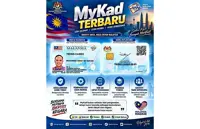
The new MyKad features enhanced security elements including dynamic security, a QR code, enforcement features, a transparent window and a dual-interface chip.