WHENEVER Tressie Yap, 53, sees a discarded piece of packaging or a pile of corn husks, she sees more than waste. The architect and environmental activist sees an opportunity.
“If we can recognise that a discarded material still has value, then it isn’t waste,” says Kota Kinabalu-based Yap.
“Sustainability begins before an item becomes trash. Upcycling is one part of a much bigger change in the way we consume and value resources.”
Since 2014, the founder of social enterprise Upcycled Shack has worked with communities across Sabah, helping people turn unwanted materials into useful products.
She has trained over 80 youth and women in repurposing waste for craft, while upcycling more than 1.3 tonnes of discarded materials. These projects have helped women develop skills, earn additional income and recognise the importance of sustainability.
Across the South China Sea, Magic Seed – a social enterprise under Moms Village Asia based in Puchong, Selangor, which transforms discarded paper into plantable stationery products – believes that caring for the planet goes hand in hand with community empowerment.
These two goals were never seen as existing separately, according to Magic Seed co-founders Roselin Das and Vatsala Nair Manoharan.
“It was never meant to be just another sustainable product business, as we believe we can create opportunities and make a meaningful difference in people’s lives,” says Roselin.
Noticing just how much paper is used for events, packaging and marketing materials before being quickly discarded, they came up with the idea of plantable products in 2019.
Roselin recalls asking a question: “What if something that was going to be thrown away could be given another purpose?”
The process begins with sorting, shredding and breaking down suitable waste paper with water into pulp before being formed into new sheets of paper.
Then, seeds are incorporated into it before the sheets are dried naturally and turned into finished products such as invitation cards, tags, bookmarks and notebooks.
Creating opportunities
Yap clinched the 2023 Sabah Creative Economy and Innovation Centre’s Social Enterprise Kinabalu Award in the Women Empowerment category for her work with women’s communities, particularly her efforts to create social and economic opportunities through eco-friendly and upcycled products.
Today, her work has grown to involve six communities. The groups include people from ethnic backgrounds such as Kadazan, Dusun and Kimaragang, spanning generations between the ages of 20 and 70.
This diversity is part of what makes community work meaningful.
“I want to show the value that already exists within every community in Sabah – their knowledge, skills, culture, resources and creativity. Very often, communities already possess what they need; they simply need the opportunity, connection and platform to realise that value,” says Yap, who shares images of the communities’ upcycled goods on upcycledshack.com.
Yap has long advocated the 5Rs – refuse, reduce, reuse, recycle and rot – stressing that sustainability begins with changing the way people think about consumption and resources.
“Upcycling alone is not the solution to our waste problem,” she says. “But it becomes extremely important in places where proper waste- management systems or recycling facilities are limited.”
In Kota Belud, for example, Yap has taught women to turn discarded food packaging into tote bags and pencil cases.
In Kota Marudu, she has encouraged homemakers to turn corn husks into crafts.
Thanks to these initiatives, crafters can earn between RM200 and RM500 each month.
“I often say that household waste can become the capital of upcycling,” she says.
“Communities must look at what they already have (which can be upcycled) and how they can create value from it.”
Meanwhile, Magic Seed works with mothers, homepreneurs (entrepreneurs operating out of their own home) and women seeking flexible income, offering a new possibility by allowing them to be involved in the production process.
They recognise that earning an income through a nine-to-five employment may not be able to accommodate childcare, family responsibilities or other circumstances women may face that require flexibility.
“We believe opportunities need to be created around the realities of women’s lives, rather than expecting to fit into one conventional way of working,” shares Roselin.
“We want women to reach a point where they can say, ‘I can contribute, I have a skill, I can earn and I have choices.’”
Working as a team
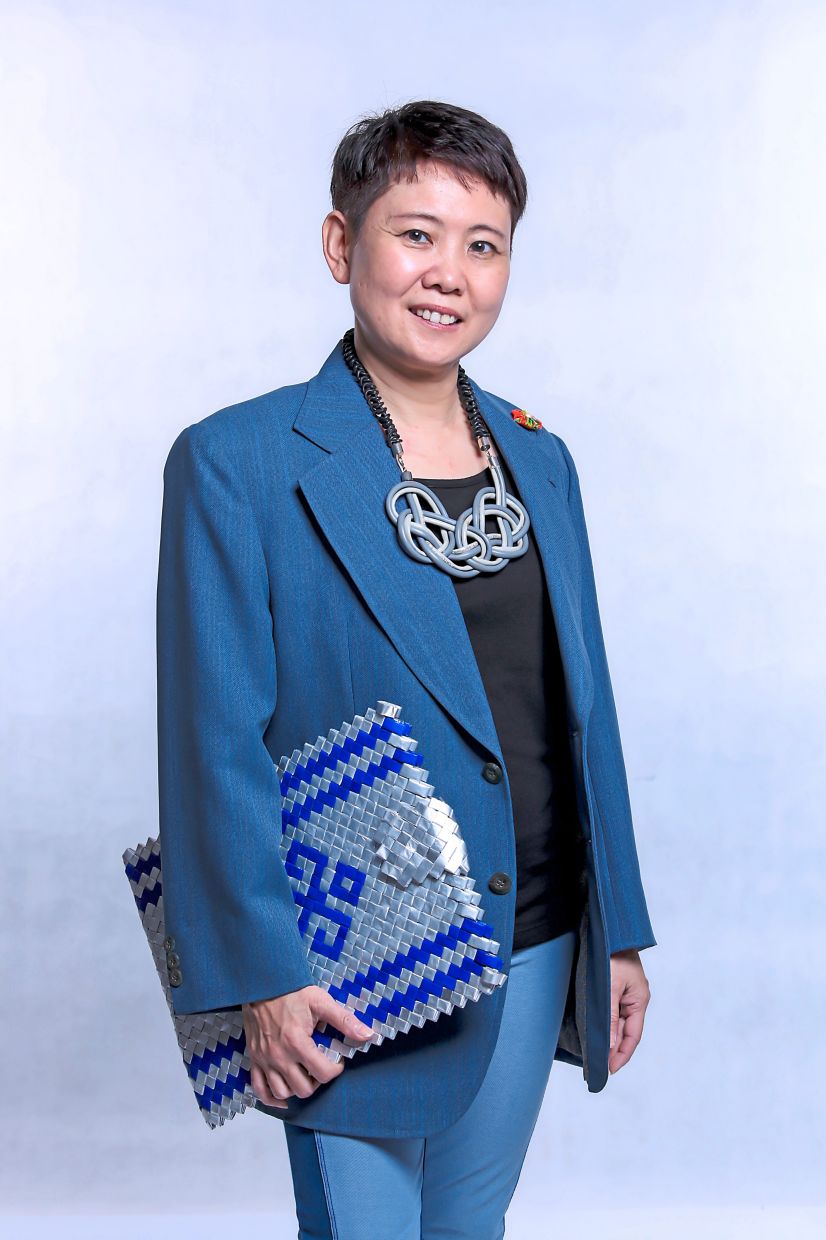
Yap believes it is important to bring communities together to share knowledge, resources and responsibility.
“A better future is not built by one individual or organisation; it is built collectively, from the ground up.”
She believes this is also where different generations have something to learn from one another.
“The older generation grew up during a time when natural resources seemed abundant and the environmental consequences of consumption were much less visible.
“The younger generation, however, is growing up facing the consequences of decades of pollution, resource depletion and climate change. As such, sustainability has become more important to them.”
When it comes to working towards a better and more sustainable Malaysia, both Yap and Roselin hold the view that neither environmental nor social change can happen in isolation.
“A cleaner and more sustainable Sabah cannot depend only on government, non-governmental organisations, businesses or individuals. Every sector has a role to play,” says Yap.
“When communities have the ownership, individual actions begin to become collective action.”
Roselin shares the same sentiment, adding that businesses, communities, women and other organisations each bring different resources and perspectives, making partnerships essential to creating impact at a bigger scale.
“When we are trying to solve challenges that are bigger than ourselves, collaboration is far more powerful than competition,” says Roselin.
“A better, greener and more inclusive future for the nation has to be something we create together.”
Ultimately, sustainability is not only about managing waste. It is about how we value our resources, our communities and one another.