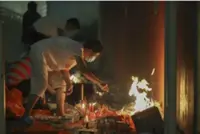
Devotees scale back burning prayer items as tradition takes an eco-conscious turn
PETALING JAYA: For some devotees, this year’s Zhong Yuan Festival, also known as the Hungry Ghost Festival, will look a little different as families rethink the role of joss paper and other offerings in their traditional prayers.
While some are cutting back on the amount of joss paper they burn and others have stopped burning it altogether, religious leaders say the tradition is ultimately about sincerity and devotion, rather than the quantity of offerings.
Federation of Taoist Associations Malaysia president Tan Hoe Chieow said devotees can continue observing the Zhong Yuan Festival while reducing the amount of incense, joss paper and other offerings.
He said Taoism emphasises living in harmony with nature and that devotees should consider the environment when observing religious practices.
“Burning incense is a tradition that has been around for thousands of years, but there is no need to burn a large incense stick.
“A larger incense stick doesn’t signify greater respect or make prayers more likely to be received,” he said yesterday.
Tan said devotees could opt for smaller paper offerings and reduce the amount burned, while religious practitioners conducting ceremonies could help determine how much was needed.
At home, devotees could continue preparing food offerings for their ancestors but cut the amount of joss paper.
Kuala Lumpur Kwong Tong Cemetery board chairman Yong Pock Yau said religious tradition and environmental responsibility were not mutually exclusive.
He said the cemetery’s Buddhist practices included sutra chanting, copying the Heart Sutra and dedicating the merits of these practices to departed loved ones.
“Ultimately, the essence of worship lies in sincerity and devotion, rather than in the quantity of ritual offerings,” he said.
Yong said a single incense stick could be offered as a symbol of sincerity, respect and devotion, while prayers, sutra chanting and dedication of merits could also be used to honour the departed.
He also said temples and devotees could preserve the spiritual and cultural essence of traditional practices by making appropriate adjustments, such as reducing the amount of joss paper and other offerings burned and adopting more environmentally friendly forms of worship.
For Klang resident Simon Yap, 52, his family will continue their annual joint Zhong Yuan prayers but scale down the amount of joss paper burned this year.
The family will still use the usual incense and candles and conduct prayers, while preparing more food offerings to be shared with family members and neighbours afterwards.
“It’s better to be more environmentally aware,” he said, adding that some family members were already feeling unwell because of the poor air quality.
For Melaka resident Lucy, 48, who preferred not to reveal her full name, the approach will be more drastic this year, with no burning at all during the observance.
“I am the one who prepares everything, so I have decided and informed my husband. Open burning is no good,” she said.
Instead, the family will offer their ancestors’ favourite food, fruits and prayers.
“It’s the thought that counts.”
Meanwhile, prayer-item trader Jason Chu said customers were still buying joss sticks, gold and silver paper and other prayer items, although some had chosen to stop burning them.
He said large paper offerings were generally associated with bigger community ceremonies, while households tended to buy simpler prayer packages.
“Some will continue to burn it, while some will stop,” he said.