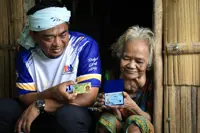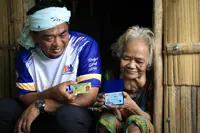
KUALA LUMPUR: Efforts to systematically document and research the traditional knowledge of Malaysia’s Orang Asli communities must be strengthened to ensure their centuries-old heritage is not lost, says the National Unity Ministry secretary-general.
Datuk Haslina Abdul Hamid said closer collaboration between museums, universities, government agencies and Orang Asli communities was crucial to preserve knowledge ranging from traditional crafts and hunting practices to performing arts and an intimate understanding of the natural environment.
“In today’s digital era, documentation and research efforts need to be strengthened so that the traditional knowledge of the Orang Asli communities can be systematically recorded.
“Cooperation between museums, institutions of higher learning, government agencies and the communities is crucial to ensure this invaluable heritage continues to be preserved,” she said at the Citra Nusa: Magis Belantara 2026 programme at Muzium Negara here on Sunday (Aug 9).
Haslina said Orang Asli heritage should not be viewed merely as a legacy of the past, but as an important body of knowledge that should be preserved and passed on to future generations.
She cited weaving, wood carving, traditional hunting tools, performing arts, music, dance and knowledge of flora and fauna as examples of indigenous knowledge reflecting generations of local wisdom.
In another move to safeguard Orang Asli heritage, Haslina welcomed the Museums Department’s plan to seek formal heritage recognition for the Moyang Lanjut statue.
She said the department intended to have the statue recognised as a Heritage Object and subsequently as National Heritage under the National Heritage Act 2005.
“This is a highly significant step in ensuring that an artefact which carries historical and cultural value, as well as the identity of the Orang Asli community, continues to be preserved, documented and protected under the country’s laws,” she said.
Haslina said such recognition would also demonstrate the government’s commitment to acknowledging the contribution of Orang Asli communities to Malaysia’s national heritage and identity.
She expressed hope that the department’s efforts would succeed, allowing the Moyang Lanjut statue to be preserved as a national treasure for future generations.
Meanwhile, Museums Department deputy director-general (Policy) Mohamad Shawali Badi said about 2,000 Orang Asli and their family members were participating in Magis Belantara 2026, held in conjunction with the International Day of the World’s Indigenous Peoples.
He said the programme served as a platform to introduce and elevate Orang Asli arts and heritage among the wider public while recognising the communities’ talent, creativity and identity as part of Malaysia’s national heritage.
Activities include cultural performances, a mini exhibition of traditional hunting tools, workshops and stalls selling heritage products.
Visitors can also watch demonstrations of wood and mask carving, traditional weaving, trap-making and top-making, as well as take part in blowpipe, traditional cooking and colouring competitions.
Mohamad Shawali said such activities could provide direct income to Orang Asli participants while helping prevent traditional practices from disappearing.
“The Museums Department had lined up several programmes in conjunction with National Month and Malaysia Day this year.
“These include the Bola Merdeka: 1 Inspirasi exhibition from Aug 31 to Dec 31, which will revisit the glory days of the national football team and the role of sport in uniting Malaysians.
“The Bermalam di Muzium programme will be held from Sept 15 to 16, followed by Nostalgia Anak Kampung from Sept 25 to 27,” he said.
The department will also organise the International Malay Diaspora Seminar 2026 on Oct 10, bringing together local and international researchers and academics to discuss the history, culture and identity of Malay diaspora communities.