PETALING JAYA: The inaugural Chief Risk Officer (CRO) Summit 2026, organised by Star Media Group (SMG), successfully brought together regulators and business leaders to chart the future of risk leadership and equip organisations with solutions to navigate evolving business risks.
The two-day event, held from July 14 to 15 at Menara Star, highlighted critical dialogues on resilience, environmental, social and governance (ESG), digital risk and the future of enterprise risk management, among high-level risk officers.
The supporting sponsor of the summit was Kollect Systems Sdn Bhd, a software firm that empowers lenders and enterprises to automate debt recovery, streamline receivables and ensure total risk and compliance with Agentic AI-driven solutions.
Other strategic partners include the Malaysian Financial Planning Council (MFPC) and the Association of International Certified Professional Accountants (AICPA) & CIMA.
The summit saw an array of insightful panel discussions concerning risk management.
Day 1: July 14
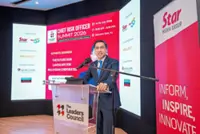
The day kicked off with Bursa Malaysia Bhd chief executive officer (CEO) Datuk Fad’l Mohamed noting that geopolitics itself has become the number one business risk over the next few years, according to the World Economic Forum’s Global Risk Report 2026.
He stressed that geopolitics has moved from being a distant background issue to something that directly shapes corporate boardroom decisions today.
“Trade tensions, geopolitical rivalries and national security are influencing decisions relating to manufacturing, technology access, investments and supply chains.
“For companies, these risks can affect production costs, access to technology, supply chain continuity, capital flows and investor sentiment,” he said, adding that this poses a big implication for Malaysia.
He also highlighted that artificial intelligence (AI) is spreading fast but most companies have not built the guardrails to manage its risks and the financial consequences are already huge.
He added that climate risk is another transition challenge, increasingly shaping capital allocation and long‑term value in the race to net zero.
“In its Country and Climate Development Report for Malaysia, the World Bank said that climate change could reduce Malaysia’s GDP by up to 8.3% by 2050 with adaptation investments potentially reaching US$1.13 trillion,” he said.
He also stressed that ecosystem connectedness amplifies systemic risk as organisations depend on providers and platforms that create efficiency but also dependency.
“For chief risk officers, enterprise risk management must now account for third‑party dependencies, including technology concentration, cyber resilience and operational continuity across the broader ecosystem as these are no longer isolated operational risks.
“The priority now is shifting from risk oversight to strategic resilience. Risk management shouldn’t just identify threats.
“It should help boards and management see how changing conditions affect strategy, growth, investments, reputation and long-term success.
“The role of the chief risk officer is to provide forward-looking insights that help boards and management anticipate change, navigate uncertainty and make better decisions,” he said.
Fad’l added that forums like this bring leaders together to learn, build trust and improve market efficiency.
Following his remarks, the plenary session commenced with CG Board Asia Pacific managing partner Wee Hock Kee speaking on why tomorrow’s CRO must influence strategy, capital decisions and transformation, not just manage controls.
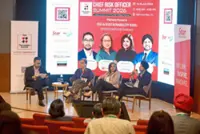
An engaging discussion followed, focusing on how to translate risk appetite frameworks into practical, defensible decisions at the executive and board level.
Moderated by Ernst & Young Consulting Sdn Bhd partner Philip Satish Rao, the panellists were Karex Berhad CEO MK Goh, The Center of Applied Data Science Sdn Bhd founder and CEO Sharala Axryd and Tenaga Nasional Bhd CRO Mohamed Azrin Mohamed Ali.
The next session highlighted how enterprise risk management (ERM) must shift from siloed practices to a strategic role in guiding decisions.
Additionally, on using AI for ERM, Kollect Systems Sdn Bhd CEO and founder KeshMahinder Singh advised boosting graphics processing unit (GPU) capacity to guard against data breaches.
Moderated by PricewaterhouseCoopers Risk Services Sdn Bhd partner Nik Shahrizal Sulaiman, the panellists were KeshMahinder Singh, Malaysia Digital Economy Corporation (MDEC) risk and compliance director Sarazin Sheikh Mustafa and UEM Sunrise Bhd board member and board governance and risk committee chairman Chari TVT.
There was also a discussion on how sustainability considerations are reshaping risk frameworks and guiding long-term business outcomes.
This insightful session was moderated by KPJ Healthcare Bhd Operational Risk & BCM head Syuqry Sheikh Ismail, CIMB Group Holdings Bhd independent non-executive director Ho Yuet Mee, PLUS Malaysia Bhd chief strategy and sustainability officer Satpal Singh and Future LinQ Sdn Bhd founder and managing director Ahila Ganesan.
Attendees also learned how trust is rebuilt when leaders align behaviour, culture and incentives with risk management goals.
Moderated by Axcelasia Sdn Bhd managing director Chang Ming Chew, the panellists were ACCA senior policy consultant Sharath Martin, IHH Healthcare Bhd Group CRO Nili Shayrina Saat and Lembaga Tabung Haji chief risk and compliance officer Syahril Nizam.
The first day ended with a discussion on how digital, cyber and AI risks intersect with third-party and cloud dependencies in today’s interconnected ecosystems and comprehended risk management in this.
The session was moderated by SRKK Group Enterprise Sales and Industry head Justin Yeap with panellists Maybank independent non-executive director Vittorio Furlan, Malaysia CIO Network AI Risk advisory Ts. Dr Tay Hui Chong and NTT Data Payment Services group chief risk and credit officer Khushwant Singh.
Day 2: July 15
The second day kicked off with Lokesh Sharma, managing director for AI and Data at Accenture Malaysia, sharing on the need to strengthen governance and risk controls as AI and advanced models become more widely used.
Next, the Malaysian Anti-Corruption Commission senior assistant superintendent from the community education division Nik Lokman Hakim Nik Mohd Nor explained the evolving financial crime risks and regulatory expectations and how organisations must strengthen monitoring and compliance to address the threats.
This was followed by a panel session discussing how strategic risk management can strengthen resilience, improve decision-making and drive sustainable growth and long-term value.
Moderated by RHB Bank enterprise risk and governance head Dayang Norfarehan, the panellists were former CRO Sharizul Baseri, S P Setia Bhd chief risk, integrity and governance officer Nuranisah Mohd Anis and Malaysian Takaful Association CEO Mohd Radzuan Mohamed.
Another session explored how risk teams need new skills, tools and capabilities to manage future emerging challenges, ensuring they remain effective and prepared.
It was moderated by the MDEC Regional Digital Economy Office director Raja Segaran with panellist CTOS Digital Bhd group chief risk and compliance officer Sivanathan Subramaniam, Khazanah Nasional Bhd governance, risk and compliance executive director Datuk Suhana Dewi Selamat, PricewaterhouseCoopers Risk Services Sdn Bhd partner Dominic Chegne and Bursa Malaysia Group risk and compliance director Fathilah Ishak.
There was also discussion on how organisations can better understand regulatory and legal risks while building adaptive compliance approaches that help prepare for future challenges.
Moderated by PricewaterhouseCoopers Risk Services director Glenda Eng, the panellists were Malaysian Resources Corporation Bhd independent non-executive director Lim Fen Nee, Sime Darby Bhd Group risk and compliance group head Richard Ong and Malaysia Debt Ventures Bhd CRO Ahmad Shukri Abdul Rahman.
The summit concluded with the final session on how efficiency‑driven supply models are giving way to resilience‑focused decisions in response to global fragility.
This was moderated by Deloitte Southeast Asia partner Prakash Arikrishnan with panellists Ernst & Young Consulting partner Tan Chiaw Hooi and DRB-HICOM Bhd chief risk and sustainability officer Azizul Rahman Mohd Basir.
The CRO Summit offered practical insights on navigating emerging risks in today’s complex business landscape.
The Leaders Council by SMG is an exclusive platform that brings together C-suite leaders for bold conversations, real-world insights and transformative collaboration.
Built for decision-makers, this dynamic space goes beyond networking to spark strategic dialogue, peer-driven learning and practical solutions to today’s toughest business challenges.