SINGAPORE: Malaysia, Brunei, Indonesia and Singapore could face severe trans-boundary haze in the coming months as South-East Asia has been placed on red alert for an elevated haze risk, according to the Singapore Institute of International Affairs (SIIA).
In its Haze Outlook 2026 report released on Wednesday, SIIA identified August and September as the peak risk period, with the threat compounded by the El Niño and Indian Ocean Dipole (IOD) weather phenomena.
This year's red alert is only the second such rating issued since the outlook was launched in 2019, with the previous assessment issued in 2023.
The report highlighted growing concerns over the return of El Niño conditions in 2026 and the possibility of a stronger and more prolonged dry season.
"Some meteorologists have also warned of a potential positive IOD, which could further intensify hot and dry weather conditions and increase fire risks across South-East Asia," it said in a statement issued in conjunction with the report's release.
SIIA chairman Simon Tay said the challenge is to ensure that sustainable practices are maintained across entire supply chains, including by small and medium-sized enterprises that may be operating under greater economic pressure.
"There is much that can be done to prevent the worst and strengthen climate resilience, energy and food security and regional cooperation," he added.
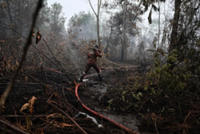
According to the report, Indonesia has strengthened its institutional response to forest and land fires, including by establishing a new inter-agency Forest and Land Fire Coordination Desk and continuing efforts to improve monitoring, enforcement and community fire-fighting capabilities.
The report further emphasised that haze prevention should be viewed as part of a broader agenda of sustainable land management and climate adaptation.
"Recent fires in Johor and floods in Sumatra illustrate how land-use decisions can create wider environmental and economic vulnerabilities across the region," it added.
In addition, the report called for stronger Asean cooperation and the effective implementation of existing commitments, including increased funding for haze prevention and sustainable land management, as well as greater collaboration among stakeholders.
"Asean needs to take greater ownership of this challenge as the region enters a potentially severe dry season and faces the longer-term impacts of climate change.
"Supporting solutions with adequate funding will be critical," Simon said. – Bernama