GEORGE TOWN: Malaysia may attain high-income nation status by the end of the decade, but widening income and development disparities between states could mean the benefits are not shared equally, says World Bank economist Deisigan Shammugam (pic).
He said many citizens may see little benefit from the achievement as income and development gaps continue to vary widely across states.
He noted that stark disparities could persist across the country, citing Kuala Lumpur and Kelantan, where household and business incomes in the capital are about eight times higher than in the east coast state.
“If Kelantan’s income is like Sri Lanka’s and Kuala Lumpur’s income is like Portugal’s, can you imagine them being in one country? What kind of tensions would that create?” he said.
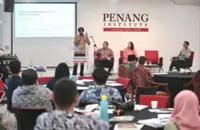
Speaking at the Interstate Forum on State-Federal Relations organised by Penang Institute and the Penang State Assembly Select Committee on State-Federal Relations, Deisigan said the widening gap between richer and poorer states was larger than in many other countries and carried economic, social and political implications.
He said World Bank research showed that less-developed states generally have greater growth potential than wealthier ones, but many have yet to realise that potential.
“Malaysia’s next phase of growth will depend on empowering states to build on their strengths while ensuring federal transfers are distributed through a more transparent and rules-based system,” he said.
Balanced development, he added, should ensure children in states such as Sarawak and Kelantan enjoy the same access to education, healthcare, utilities, internet connectivity and public services as those in Kuala Lumpur and Penang.
Deputy Minister in the Sarawak Premier’s Department Datuk Sharifah Hasidah Sayeed Aman Ghazali said the relationship between the federal and state governments should transcend political affiliations, as political dynamics can change over time.
She said finding common ground between Putrajaya and the states was key to strengthening Malaysia.
“There should be no fear or mistrust in federal-state relations, which must be guided by the Constitution, the rule of law and mutual trust.
“It does not matter whether the governments are led by the same political parties or different ones. What is important is that the relationship remains equitable and within the framework of the Constitution and the law,” she said.
She said a stronger and more prosperous Sarawak would contribute directly to national growth.
“If Sarawak is wealthy and developed, Malaysia will also benefit because Sarawak contributes through taxes, revenue and many other sectors that support national development,” she added.
Penang Chief Minister Chow Kon Yeow said current federal allocations, including per capita grants, were insufficient, prompting states to seek more sustainable funding models such as revenue sharing.
He added that several states still relied on federal loans to fund essential infrastructure projects, including housing, flood mitigation and water supply works.
Also present were Penang State Assembly Select Committee on State-Federal Relations chairman Gooi Hsiao Leung, state executive councillors from Terengganu, Perlis, Kelantan and Selangor, as well as Penang assemblymen.