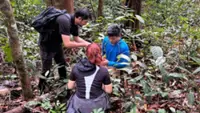
KOTA KINABALU: A new species of entomopathogenic (causes disease or kills insects) fungus and five fungal species never documented before in Malaysia have been recorded in Sabah’s forests.
The discovery made by Universiti Malaysia Sabah (UMS) through its Institute for Tropical Biology and Conservation (ITBC) significantly expands the nation’s fungal biodiversity records and strengthens global understanding of tropical fungal diversity.
The discovery of the new entomopathogenic fungus also led to exploration of whether it can be developed into novel antifungal agents against plant pathogens and crop diseases, said the ITBC.
It said the discovery was the result of doctoral (PhD) research conducted by ITBC postgraduate student Muhammad Shahbaz, whose work is helping to uncover the hidden diversity and potential of Borneo’s remarkable fungal resources.
The statement said that through extensive field surveys and advanced molecular analyses, Shahbaz and the research team identified Leptobacillium geminatum sp. nov., a species previously unknown to science, in addition to documenting five species as new records for Malaysia: Simplicillium formicae, Simplicillium puwenense, Leptobacillium leptobactrum, Leptobacillium symbioticum, and Leptobacillium coffeanum.
The newly discovered species was from a sample isolated from a spider collected in Sabah’s forest and was confirmed through detailed morphological (form and structure) examination and DNA-based phylogenetic (evolutionary or ancestry) analysis.
“The fungus possesses unique characteristics that distinguish it from other species within the same genus, highlighting the immense scientific value of Sabah’s biodiversity and the countless organisms that remain undiscovered within its tropical ecosystems,” the statement said.
Beyond species discovery, Shahbaz’s study, under the supervision of Assoc Prof Dr Jaya Seelan of ITBC, explores how compounds derived from these entomopathogenic fungi can be developed into novel antifungal agents against plant pathogens and crop diseases.
The study also explores the application of nanotechnology to enhance the effectiveness of these compounds, offering potential contributions to sustainable agriculture, food security and environmentally friendly crop protection strategies.
The ITBC research team believes that every species discovered represents a potential source of knowledge, innovation and solutions to future global challenges, given that many modern medicines, agricultural products, and biotechnological breakthroughs have originated from natural organisms.
This achievement reflects ITBC’s long-standing commitment to nurturing the next generation of scientists while strengthening Sabah’s position as a regional leader in biodiversity research.