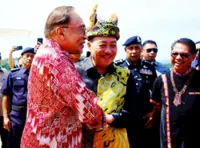
PENAMPANG: The government has implemented strict cost-cutting measures across ministries, with the savings fully redirected towards programmes and initiatives that benefit the people, says Prime Minister Datuk Seri Anwar Ibrahim.
Allocations for ministries would be reduced for non-essential spending, but critical sectors such as education, healthcare and basic infrastructure, including in Sabah, would be spared.
Anwar said the cost-cutting measures include limiting ministers’ overseas trips, except for mandatory meetings under international platforms such as Asean, BRICS and Apec.
“All study visits and similar trips have been cancelled at the federal level. Even for official visits, if a delegation previously consisted of six people, it is now reduced to two. If the accommodation was a Royal Suite, it is now downgraded to a Junior Suite,” he said.
Apart from overseas travel, Anwar said government training programmes are now being held at government-owned facilities instead of luxury hotels, reported Bernama.
“If we do not exercise wisdom and prudence in spending, the country cannot be saved. The money we save is channelled back to the people,” he said.
The Prime Minister also stressed that efforts to strengthen governance and combat corruption were not politically motivated, but aimed at restoring the country’s financial position.
He said savings generated through cost-cutting measures and the recovery of funds had enabled the government to channel RM15.5bil back to the people through various initiatives, including the Sumbangan Tunai Rahmah (STR) and Sumbangan Asas Rahmah (Sara) programmes.
The funds have also been used for the repair of tens of thousands of school toilets at an additional cost of RM1bil, as well as the immediate distribution of RM100 book vouchers to all school and higher education students nationwide, Anwar said.
Meanwhile, in addressing an uncertain geopolitical landscape, Anwar said Malaysia’s foreign policy is based on the principle of ‘centrality’, which allows the country to remain independent while maintaining a principled position on global issues.
“We do not use neutrality because there are times when injustice, violence and killings occur elsewhere, and we do not think it is right to remain silent. Centrality means being independent,” he said.
He added that Malaysia’s principled and investor-friendly foreign policy had also contributed to stronger trade and investment ties with both the United States and China.