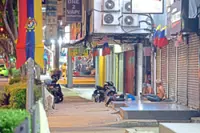
KUALA LUMPUR: As dusk sets over the city, 63-year-old Maimunah quietly lays out a thin piece of cardboard along a five-foot way in the heart of the capital, preparing for another night on the streets.
Draped around her neck was a small towel, while a worn-out bag was by her side, with a few clothes – all her worldly possessions.
Around her near Petaling Street were others with similar stories of hardship, loss and broken hopes.
Maimunah has family, but she has no desire to reconnect with them. However, she insists she does not blame her family or anyone else for the life she lives.
“I chose this path myself. If I talk about my family, it only makes my heart heavier,” she said when met around Central Market here.
Maimunah, who survives each day on public donations and aid from volunteers, said she no longer wants to burden her loved ones despite missing them deeply.
“Everyone makes mistakes in life. I just don’t want to trouble my family any more. As long as I can eat and get through the day, that’s enough for me,” said the woman, who refused to say more about her family or her problems.
“’I have been here for a long time,” was all she would say.
Steven, 61, has his own sad story. He had come to Kuala Lumpur looking for a better life as a mechanic, but was conned and ended up on the streets.
For him, life on the streets comes with constant worries over safety, especially when dealing with intoxicated people among the homeless community, including foreigners.
Still, he said such incidents are not a daily occurrence and those living rough have learned to look out for themselves.
“You have to know how to take care of yourself. It’s not dangerous every day, but you still need to be careful,” he said.
Steven admitted he still thinks about his family from time to time.
“Of course I miss them, I’d be lying if I said I didn’t. But as long as I’m healthy and not sick, that’s all that matters,” he said.
Another homeless man, who wished to be known only as Rahim, 60, said he ended up living on the streets after a workplace injury left him unable to continue working as a construction labourer several years ago.
Without a steady income and unable to afford rent, he gradually lost contact with friends and eventually began sleeping around the city centre.
“At first, I thought it would only be temporary. But when you can’t work and don’t have savings, life changes very quickly,” he said.
Rahim said he occasionally takes up small jobs offered by traders or passers-by just to earn enough for meals.
“There are good people who still help us. Sometimes they buy food or offer small jobs. That’s how I survive,” he said.
For some, like Chong, loneliness is the biggest reason to remain on the streets.
The 64-year-old said that, after the death of his wife several years ago, he could not cope emotionally and financially.
The retiree said he once lived alone in a rented room but was lonely.
“After my wife died, I slowly stopped talking to people and ended up here,” he said.
Now, Chong said he tries to remain positive and spends most evenings chatting with other homeless individuals around the area.
“We may not have much, but at least we understand each other,” he said.
‘Sometimes, that companionship is enough to keep going.”