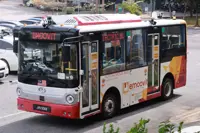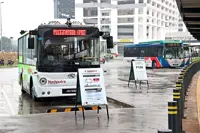
PETALING JAYA: While electric buses make an important contribution towards Malaysia’s net zero ambitions through lower emissions and cleaner air, using these buses alone is not enough without the support of a robust ecosystem covering connectivity, energy sourcing, and transport policy, say experts.
Water and Energy Consumer Association of Malaysia president T. Saravanan said the public transport sector is one of the most impactful areas to decarbonise as it services a large number of commuters daily.
However, he said electrification alone is not sufficient as environmental benefits also depend on how electricity is generated.
“Greater integration of renewable energy into the grid is essential to ensure electrification truly reduces emissions.
“Adequate, reliable and strategically located charging infrastructure must also be developed to support operations,” he said in commending plans by Prasarana Malaysia Bhd to electrify its bus fleet.
“The move also signals leadership from the transport operator, helping build confidence among consumers and industry players that Malaysia is serious about its net zero ambitions,” he added.
Association of Water and Energy Research Malaysia president S. Piarapakaran also agreed that going electric is just the first step.
“The in-situ emission is addressed but total emissions will now depend on the type of electricity used,” said the chief executive officer of the Centre for Water and Energy Sustainability, adding that the solution also needs to be complemented by good first- and last-mile connectivity for comprehensive sustainability.
“Existing developments should be retrofitted and included with transit-oriented developments as they may already have potential commuters. The objective is to reduce vehicles, especially during peak hours,” he said.
Universiti Putra Malaysia’s (UPM) Law Teik Hua said electrification alone may be insufficient, noting that substantial emission reduction can also be achieved by reducing the total mileage or “vehicle kilometres travelled”.
“A phased approach to the rollout and operational efficiency improvement is crucial.
“Inefficient infrastructure and charging stations create additional inefficiencies that can hamper efforts to reduce emissions.
“Telematics, electrification, route planning, and depot location need to become key instruments of decarbonisation policy, rather than complementary projects,” said Law, who heads UPM’s Road Safety Research Centre.
Other steps that can be taken towards reducing emissions, he said, are implementing congestion charges, restructuring parking costs, and eliminating fuel subsidies.
“This enables transport authorities to influence consumer behaviour. Otherwise, enhanced public transport will not see an adequate modal shift,” he said.
Law also stressed the importance of managing costs incurred from the transition towards fleet electrification.
“It should not negatively impact the user side in terms of pricing or taxation,” he said.
Meanwhile, Johor is fully on board with boosting green mobility, says state executive councillor Ling Tian Soon.
The Health and Environment Committee chairman said some bus operators have already gone electric, particularly for cross-border services between Johor and Singapore.
“Several shuttle bus services within town areas have also started using electric buses, and we plan to have more in line with our Green Transportation Policy 2030.
“Some of our local councils have also begun using EVs [electric vehicles] for official purposes, including enforcement vehicles,” he said, adding that Johor has set a target of more than 1,245 EV charging stations by 2030 to support the growth in the number of EV users.
“We are on track, and so far we already have about 500 charging stations statewide,” he said.
He also expressed hope that the Federal Government will expedite approval for the Elevated Autonomous Rapid Transit (E-ART) system, which further supports green initiatives.
The E-ART was proposed by the state government in 2024 to disperse traffic in the city centre as the Rapid Transit System Link, which connects Johor Baru and Singapore, is set to start operations next year.