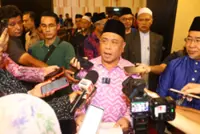
PETALING JAYA: Cabinet ministers, deputy ministers, and senior civil servants should refrain from unnecessary travel at a time when the government is reviewing its expenditure, says MCA deputy president Datuk Dr Mah Hang Soon.
Where travel is required, Mah said it should be in economy class for overseas trips, domestic flights, and railway journeys.
“Public office and leadership must reflect exemplary prudence in both policy and practice,” he said in a statement on Thursday (April 30).
Dr Mah stressed that the government must provide greater clarity and accountability regarding its expenditure review plan.
While the move reflects a necessary step towards strengthening fiscal discipline amid economic pressure, he said key questions still remain.
“How will the proposed reductions be distributed among ministries, particularly the Health and Higher Education Ministries?
“Will cuts be confined strictly to administrative and non-essential spending, or will they affect frontline services, core teaching resources, and student support?
“Has a comprehensive impact assessment been conducted, and will it be made public?” he asked.
He highlighted that fiscal adjustments may also affect the higher education sector.
“Healthcare and education are not peripheral sectors — they are foundational to the nation’s wellbeing and long-term competitiveness.
“With medical services yet to fully recover, and universities already facing funding constraints in research, teaching quality, and campus maintenance, broad-based cuts risk triggering long-term consequences that may outweigh short-term savings,” he said.
While healthcare is exempt from the government’s move, Dr Mah said expenditure rationalisation should focus on non-critical areas.
“These include administrative overheads, non-essential programmes, large-scale events, and consultancy costs that do not directly benefit rakyat outcomes. Ministries must prioritise efficiency over visibility,” he said.
He said assurances that public healthcare will be exempt from cuts are crucial and must be strictly upheld.
Dr Mah, however, cautioned that the proposed cut of more than RM3bil to the Health Ministry raises concerns, despite assurances that core services will remain safeguarded.
“Patients and healthcare professionals are left pondering where the reductions will fall, who will be affected, and whether service quality and staff morale can truly be maintained.
“The RM3.06bil slash, about 6.6% of the ministry’s operating budget and below last year’s level, is substantial for a system already under strain, with a shortage of 11,000 specialists, an 18% nursing vacancy rate, and hospitals near full capacity,” he said.
“Our public healthcare system supports approximately 70% of Malaysians and remains under strain due to manpower shortages, ageing infrastructure, and delayed upgrades.
“Any reduction, direct or indirect, in operational capacity risks compromising patient care, lengthening waiting times, and placing a further burden on already overstretched healthcare personnel,” he added.
Fiscal responsibility, he said, must not come at the expense of essential services or the nation’s future.
On Wednesday (April 29), the Treasury issued guidelines to ministries and agencies to reorganise their priorities related to operating expenditures, in line with challenges posed by the ongoing global energy supply crisis and the increasing subsidy burden.
The Finance Ministry said this measure formed part of a prudent fiscal management approach to optimise government resources while ensuring continued support for the people.
On Thursday (April 30), the ministry clarified that the budget recalibration for ministries involves only non-critical expenditure.
All core expenditures, including essential services, security, healthcare, and education, will continue as approved under Budget 2026.