OVER a decade ago, Ahmad Jimmy was working as an accountant, going through numbers that had gradually become routine and uninspiring.
Today, the 41-year-old spends his days behind a camera, capturing families in their festive best and preserving moments that, for many, may never come again.
His journey into photography began in 2010, using a camera that belonged to his wife.
What started as a simple interest took a turn when a colleague asked him to photograph a wedding.
That opportunity led to more jobs and, by 2014, as demand grew, Ahmad made a bold decision: he left his stable job to pursue photography full-time.
“Usually we focus on Raya, both Hari Raya Aidilfitri and Hari Raya Haji. These are the times when we get the most customers,” he said.
The journey, however, was not without challenges.
Ahmad described the Covid-19 pandemic as the toughest period in his career, when restrictions brought photography work to a near standstill.
“It affected everyone, especially those who deal directly with customers. As photographers, we could not really do anything,” he said.
With events cancelled and studio sessions limited, income became uncertain overnight. Still, he pushed through by taking on whatever work was available until conditions improved.
Today, business has picked up again, particularly during the festive season, when families flock to studios across Sandakan for their annual Raya portraits.
For Ahmad, the busy period also comes with a personal sacrifice.
While many spend the first days of Syawal visiting relatives, he remains in the studio, attending to one family after another. Even so, the festive spirit finds its way to him.
“My family comes to the studio. They bring food, so I still feel like I am celebrating Raya,” he said.
Over the years, he has also noticed a shift in how customers value their photographs.
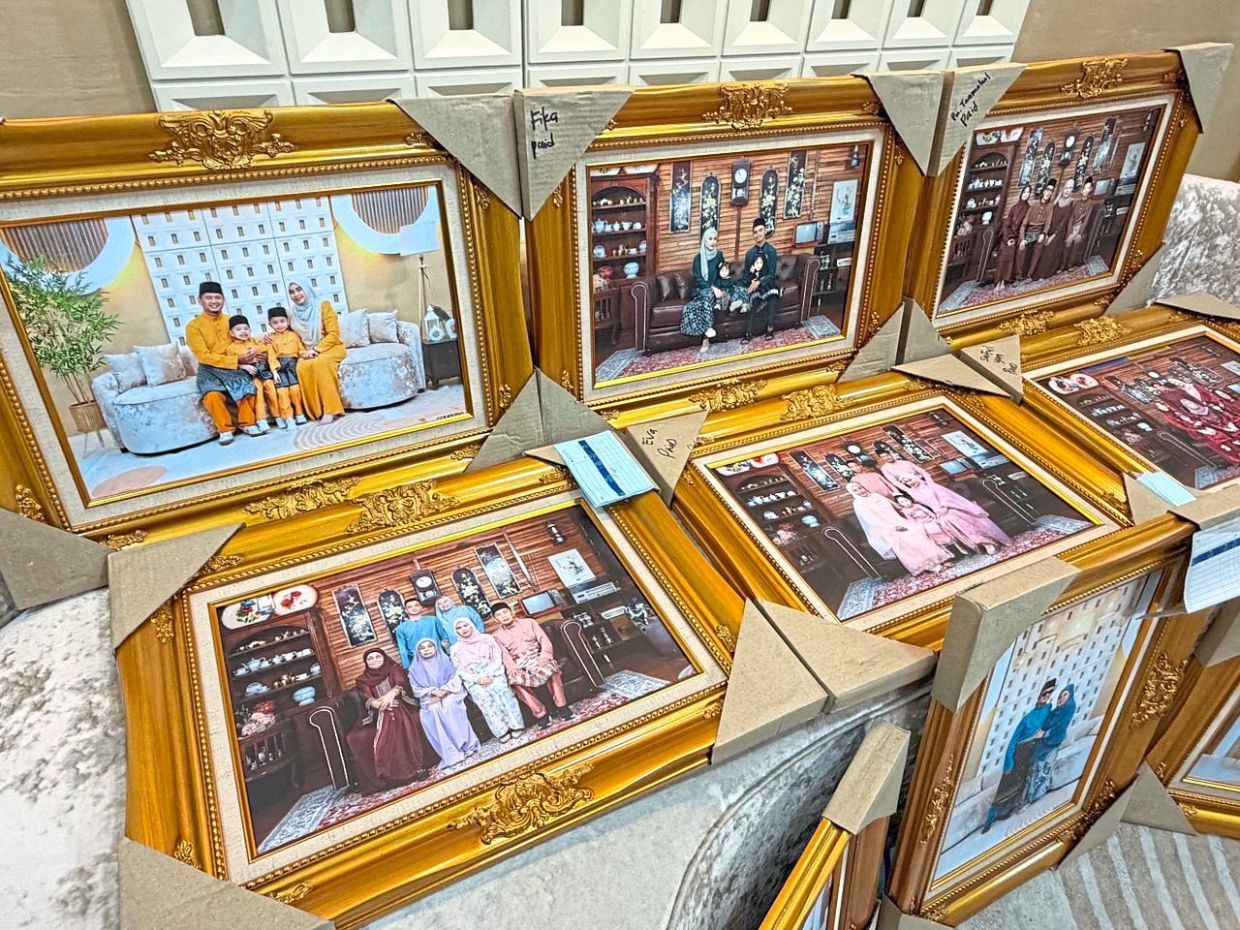
More people are choosing to print their images instead of keeping them as digital files, preferring something tangible that can be displayed at home.
He believes this is because digital files can be easily lost due to damaged devices or changes in technology.
Across Sandakan, Raya photography has become an annual tradition for many families.
Some travel from nearby districts such as Kinabatangan and Beluran, while others return from cities like Kuala Lumpur, making the most of a brief period when everyone is able to come together.
For Mazlan Jimmy, 36, who has been in the industry for nearly a decade, demand remains strong but competition is growing.
With more studios opening in recent years, customers now have more choices.
“Sometimes we give 15 minutes for a small family, but they come in a big group. In the end, not everyone gets photographed personally and they feel it is not enough,” he said.
Despite this, families continue to turn up, determined to leave with a complete portrait.
For younger photographers, the Raya season also presents new opportunities.
Addin Lukhman, 28, recently opened his own studio after spending two years shooting Raya sessions outdoors.
But for him, the work carries deeper meaning.
“In every Raya photo, there is a story,” he said.
He has encountered requests from clients who wanted absent loved ones included in their pictures – from partners working far away to family members who have passed on.
“Some families come hoping to include loved ones who have passed on, and we try to bring them back into the picture. For us, it is not just editing, it is helping them hold on to someone who still matters in their lives,” he added.
While artificial intelligence is becoming more common in photography, Addin believes it cannot replace real human interaction.
“The bonding and the emotions can be seen as they go from serious to happy. That is something you cannot fake,” he said.
For 20-year-old promoter Nur Farah Azirah Amrin, who described herself as the one who usually gets her family to agree to a photoshoot, that emotional value is exactly why these sessions matter.
She said it often takes some effort to gather everyone, especially with different schedules and commitments, but she believes it is worth it.
“Raya only comes once a year. This is when we get together. We do not know what will happen after this,” she said.
She added that having a family photo gives them something to hold on to, especially when they are not always able to be together.
“It is not easy to get everyone in one place. That is why when we do, we want to keep that memory,” she said.
In Sandakan, where many leave home in search of work, these reunions are often brief. When they pass, what remains is a photograph. A single frame that holds more than just faces. It holds time, presence and the reassurance that, for that moment, everyone was there.