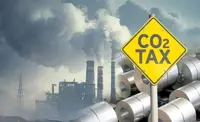
PETALING JAYA: The decision to delay the rollout of the planned carbon tax for industries has been described as a sensible move amid prevailing economic and geopolitical uncertainties in the Middle East, though analysts say clear communication will be crucial to avoid perceptions of policy inconsistency.
Centre for Market Education chief economist Alvin Desfiandi said given the current circumstances, delaying the plan appears to be a sensible step.
“The pause could instead be used constructively to provide greater clarity on the scope, rate structure and collection mechanism of the carbon tax.
“This will ensure the market is ready by the time the policy is implemented,” he said when contacted yesterday.
Earlier, the government announced that it would delay the carbon tax plan for industries due to the situation in the Middle East to avoid adding pressure on the people.
Desfiandi said sectors likely to be most exposed include logistics, tourism, broad-based manufacturing and agriculture.
“This impact is largely due to their sensitivity to higher energy inputs, such as diesel and jet fuel, as well as potential supply chain disruptions involving key inputs, like plastics and fertilisers,” he said.
Desfiandi said such uncertainty could dampen long-term green capital formation in affected industries, adding that the ultimate impact would depend on the longer-term outlook and viability of green investments.
Economist professor emeritus Dr Barjoyai Bardai described the decision to delay the implementation of a carbon tax as a sensible short-term “shock absorber”, though the move must clearly be time-bound to avoid undermining policy credibility.
“If firms face sudden increases in fuel, raw materials and financing costs, an additional tax can be inflationary rather than corrective, especially in an import- dependent economy.
“That said, it’s only defensible if the delay is clearly time-bound and well-signalled,” he said.
Economist Geoffrey Williams said the proposed carbon tax may appear inconsistent in a system where fossil fuels and electricity remain subsidised, given that these subsidies also contribute to carbon emissions.
“It makes no sense to tax carbon when you subsidise gas, petrol and diesel as well as electricity, which create carbon.
“It’s better to just remove the subsidy for high-carbon-footprint companies instead.
“The carbon tax is not a good tax, and the current situation has allowed a quick get-out option which hopefully the government can use to scrap the idea altogether,” he said.
The Small and Medium Enterprises Association of Malaysia (Samenta) president Datuk William Ng said while introducing the carbon tax to counter demand for such a tax in destination markets such as Europe, it is a beneficial move to delay the tax until the situation in the Middle East stabilises.
“Businesses, and especially exporters, are struggling to contain costs and obtain supplies; so their time is best spent on defending their business instead of adding on compliance requirements at this time,” he said.
Last year, during the Budget 2026 announcement, Prime Minister Datuk Seri Anwar Ibrahim stated that Malaysia would introduce a carbon tax this year, starting with the iron, steel and energy sectors, marking a major step towards a low-carbon economy.
The Bill, expected to be tabled in June this year, will enhance transparency and accountability through carbon emission measurement and reporting mechanisms.