KUALA LUMPUR: Let's give credit when it's due.
The decision of Datuk Seri Anwar Ibrahim to engage in relentless phone-call diplomacy - and many foreign visits - is now yielding tangible, measurable results.
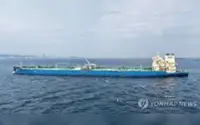
Few outcomes are as strategically significant as Iran allowing Malaysian vessels to pass through the Straits of Hormuz.
According to news reports, about 50% of Malaysia's total oil passes through the narrow strip.
The Prime Minister had called up Iranian President Masoud Pezeshkian, while Foreign Minister Datuk Seri Mohamad Hasan also spoke to his counterpart, Abbas Aragchi, to allow seven ships to continue their journey home, four of which were carrying crude oil.
Iran's Ambassador to Malaysia, Valiollah Mohammadi Nasrabadi, has stated that the vessels would be allowed to pass through the strait safely and free of charge.
As of late March 2026, reports indicate that Iran has begun demanding "transit fees" or "tolls" from ships navigating the Strait of Hormuz, with some suggesting charges of up to US$2mil per vessel.
It is not just a symbolic win but a hard geopolitical achievement. Malaysia has always strongly defended its neutrality.
Malaysia is a friend to everyone, but we are not afraid to speak up when something isn't right, including the attacks on Iran and the Palestinians in Gaza.
The passage through the Straits of Hormuz is crucial, as Malaysia produces its own oil but imports roughly 69% of its crude oil from the Persian Gulf to keep domestic refineries running.
Malaysia exports its own lighter, higher-priced crude while importing heavier, cheaper oil from the Middle East that passes through the Strait of Hormuz.
The closure of the Strait of Hormuz has created significant economic pressure, forcing the government to increase fuel subsidies to control domestic prices.
At a time when the Strait of Hormuz - through which roughly a fifth of global oil supply flows - has effectively become a conflict zone, Iran has been restricting passage and asserting tight control over shipping.
Yet, Malaysia has secured a special carve-out, with its tankers and crews allowed safe passage following direct engagement with Tehran and other regional powers.
Why does Malaysia's foreign policy work?
First, Anwar has positioned Malaysia as an honest broker rather than a partisan actor. Unlike major powers that are militarily or politically entangled, Malaysia has consistently called for de-escalation and dialogue, rejecting military involvement while maintaining moral clarity on the conflict. This neutrality gives Kuala Lumpur credibility in Tehran.
Second, Anwar's personalised diplomacy matters. In an era of fractured multilateralism, direct leader-to-leader communication - phone calls with Iranian, Turkish and Egyptian counterparts - cuts through bureaucracy and builds trust.
These are not mere formalities; they signal respect, recognition, and seriousness to a country like Iran that feels strategically isolated and "repeatedly deceived" by global powers.
Third, Malaysia brings economic relevance without a strategic threat. Iran understands that Malaysia is a major energy consumer and trading partner, not a military adversary.
Allowing Malaysian ships to pass through does not weaken Iran's geopolitical posture but strengthens its ties with a key Southeast Asian nation.
We may be a small country, but middle powers like Malaysia can still exercise influence, not through force, but through credibility, consistency and communication.
Let's not forget that when our 23 Malaysian volunteers from the Global Sumud Flotilla were detained by Israel while on a Gaza aid mission, they were freed following intense diplomatic efforts led by Anwar last October.
It was the result of many phone calls to numerous leaders, including the influential and powerful President Recep Tayyip Erdogan of Turkey.
During peacetime, it is easy to overlook the quiet effectiveness of diplomacy conducted over the phone.
Yet, the release of Malaysian tankers and the reopening of a critical supply route show that such diplomacy is not naive - it is pragmatic and consequential.
Anwar's approach demonstrates that even in a highly polarised conflict, access is negotiated, not assumed.
And Malaysia, by choosing engagement over alignment, has secured something many larger nations have not - trust. That's the real strategic capital in international diplomacy. – Bernama
> Datuk Seri Wong Chun Wai is the chairman of Bernama and a National Journalism Laureate.