



PETALING JAYA: Malaysia must move beyond reactive blame and cultivate a stronger safety culture to protect children at home and in public spaces, experts say.
The recent case of a three-year-old girl, who fell into a wastewater pond in Perak and died, has prompted calls for systemic reform, including fencing hazardous ponds and strengthening enforcement of child protection laws.
Alliance for a Safe Community chairman Tan Sri Lee Lam Thye said the tragedy should serve as a lesson at all levels of society.
He said Malaysia’s safety culture remains inadequate, with preventable accidents still occurring due to negligence by individuals and authorities alike.
“This is a needless death and would have been preventable had the parents exercised their responsibility to protect the child.
“Under the Child Act 2001, this constitutes an offence and the case calls for a thorough review of the Act to identify areas that can be improved, strengthened and enhanced.
“Most importantly, parents must never take their child’s safety for granted,” he said.
On Monday, the girl was found unconscious in a wastewater pond at Simpang 4, Permatang Pelandok near Teluk Intan at around 7pm.
Police checks revealed the pond lacked safety features such as barriers or covers, and was about 1.2m deep.
At the time, family members were reportedly cleaning the house after an event when they realised the child was missing.
Lee said even if the pond was on private land, local councils have the authority to compel owners to act in the interest of public safety.
Consultant paediatrician and child disability activist Datuk Dr Amar-Singh HSS echoed the urgency, warning that drowning is a “silent epidemic” claiming about 700 lives annually in Malaysia, particularly among children.
“Drowning is the second leading cause of death among children and adolescents below 18. It happens fast, within 20 to 60 seconds, and even six inches of water can be fatal.
“Parents must never leave children under five unattended. Whenever a child is in or near water, an adult must be within arm’s reach.
“Phones must be put away. A child’s life is worth more than a social media photo or a WhatsApp message,” he said.
He added that prevention cannot rest solely on families, and that local and national authorities must take responsibility for fencing and securing bodies of water near homes.
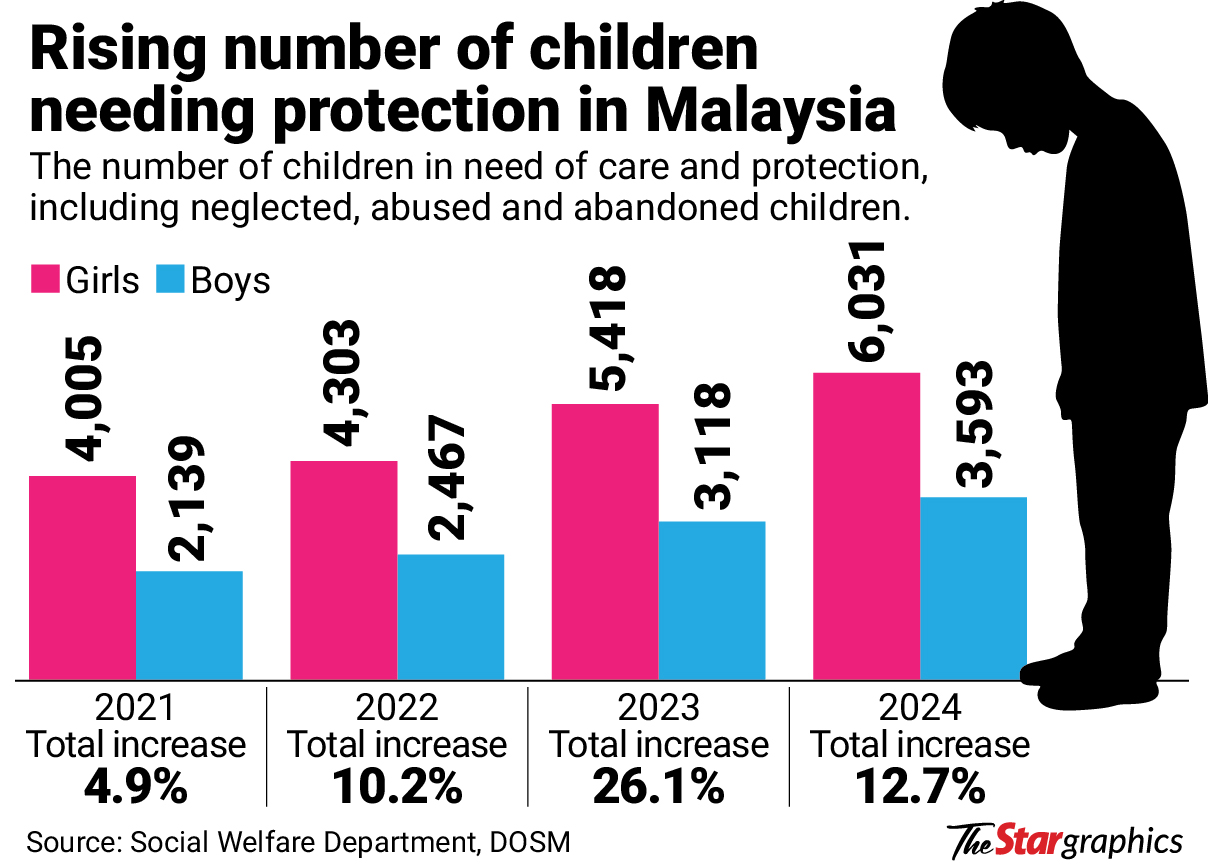
Suhakam Children’s Commissioner Dr Zufar Yadi Brendan Abdullah highlighted that child neglect cases reported to the Social Welfare Department tripled between 2020 and 2025, indicating that existing laws alone are insufficient to deter neglect.
He said while Malaysia has a comprehensive legal framework, gaps in enforcement, resources and preventive measures continue to undermine child protection.
“While reform efforts are ongoing, the government must speed up policy updates, including the National Child Protection Policy, to provide clearer strategic direction.
“A Royal Commission of Inquiry and new legislation to regulate employees in childcare centres are needed to prevent neglect.”
From a child rights perspective, he said responsibility must be shared between parents, as first-line protectors, and the state, which has a legal obligation under the United Nations Convention on the Rights of the Child to ensure safe environments.
He added that the best interests of the child must guide all decisions, with authorities prioritising prevention and safety over blame.
“Physical or emotional injury, or the death of a child due to parental negligence, is no longer regarded as accidental but negligent.
“Stern action must be taken against reckless parents, while authorities must also be held accountable for unsafe public areas,” he added.
