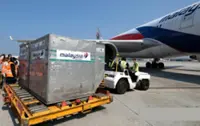
PETALING JAYA: Airfreight forwarders in Malaysia are expressing concern that they have been subject to what appears to be arbitrary increases in fuel surcharges (FSCs) lately, even for domestic deliveries.
The Airfreight Forwarders Association of Malaysia (AFAM) raised concerns about significant differences in FSC levels imposed by airlines operating in Malaysia’s air cargo sector, with its members noting significant disparities in fuel surcharge rates, particularly for sectors connecting Peninsular Malaysia with Sabah and Sarawak.
“The association noted that these differences occur despite airlines operating under the same fuel market conditions and airport infrastructure.
“While international airlines generally apply fuel surcharges based on recognised global fuel price indices, the domestic market appears to apply FSC levels without a clearly defined benchmark or reference mechanism,” it said in a statement.
AFAM chairman Thomas Mathew said while the association supports legitimate cost recovery by airlines, the current situation highlights the need for greater transparency.
“Fuel surcharges should ideally reflect actual movements in global aviation fuel prices and follow a transparent benchmark.
“Without a clearly defined reference mechanism, there is a risk that such surcharges could become inconsistent across the market, which ultimately affects the cost of doing business for Malaysian companies,” he said.
AFAM also noted that similar concerns have previously arisen regarding terminal handling charges and cargo screening fees at KLIA, where variations among cargo terminal operators have raised industry concerns about cost transparency.
In view of this, AFAM argued that this important industry should not be subject to what appears to be indiscriminate price revisions.
The local airlines offering cargo services here are MAS, Raya Airways, Mjets, Teleport (under Capital A) and Batik Air Malaysia.
AFAM believes that fuel surcharge adjustments should ideally be linked to recognised fuel price indices or a transparent benchmark, as is the practice of international carriers.
“Such mechanisms are typically tied to recognised benchmarks such as the IATA Jet Fuel Price Monitor or the Singapore Jet Fuel Index, ensuring that surcharge adjustments remain transparent and aligned with actual fuel cost movements,” said Mathew.
The Star understands AFAM has already conveyed its concern to the Finance and Transport Ministers, where it urged intervention over the matter given that Malaysia has positioned itself as an important regional logistics and transhipment hub.
“AFAM believes that introducing greater transparency through a recognised benchmark or index-linked mechanism would help ensure fuel surcharges remain a fair cost-recovery component within the logistics supply chain, while providing fair and greater predictability for businesses that rely on air cargo services across Malaysia,” it said.
The Star had reached out to MAS Kargo and Raya Airways for comment.