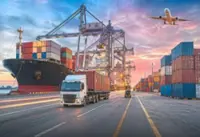
PETALING JAYA: The shifting of cargo from road to rail is slow here because Malaysia’s freight system is structurally designed for trucks, not rail, says Wan Agyl Wan Hassan (pic), an analyst on transport and mobility policy.
“Furthermore, the price signal is hugely distorted, with licensed logistics operators allowed to buy subsidised diesel at RM2.15 per litre when market price is above RM3.
“That makes trucking artificially cheaper than rail. As long as this gap exists, rail struggles to compete,” said Wan Agyl, who is now also overseeing an express bus company as CEO.
He said trucking within Klang Valley is very competitive, given that Port Klang is within a 50km radius from most factories and warehouses.
“For short-haul, trucks are naturally more efficient. Rail typically only becomes competitive beyond 150-300km.
“Trucking offers faster booking, real-time GPS tracking, flexible dispatch, and clearer liability handling,” he said.
Wan Agyl, who also used to handle policy matters under the Land Public Transport Commission, added that rail ecosystem here still lacks comparable digital booking systems and service level agreements and guarantees.
“Passenger trains often get priority on shared tracks, limiting freight scheduling windows, and this capacity constraint reduces reliability for cargo movement by rail, while intermodal infrastructure (inland depots, efficient transfer hubs) are still developing.
“Without seamless transfer points, rail adds extra handling cost and time,” he said.
In the meantime, he agreed that the government should continue diligent enforcement on overloading as this can improve rail’s relative competitiveness, though it must also be in tandem with the gradual refinement of diesel subsidies along with other targeted incentives for rail.
“There should also be rail promotion on corridors where it makes economic sense, such as the peninsula north–south long haul, Asean cross-border freight, and the upcoming East Coast Rail Link,” Wan Agyl said.
He added that customer-centric enhancements include upgrading the rail freight service model to be more digital-based, introducing enforceable service level agreements, and establishing a clearer liability framework.
“In my view, the industry is not resisting change irrationally. It responds to economics. Once structural conditions change, modal shift will follow naturally,” he said.