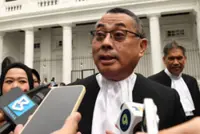

Citing data that points to better scheduling and case management, the top judge said the newly established Special Corruption High Court starting April 1 will primarily hear appeals from the Sessions Courts in Kuala Lumpur.
In an exclusive interview with Sunday Star, his first one since becoming the nation’s top judge in July last year, Wan Ahmad Farid said there will be rare instances where the Special High Court will also be hearing cases filed within its jurisdiction.
“We have studied the figures, and the establishment of Special Corruption Courts has managed to improve the disposal of such cases at the Sessions Courts. The only logical step is to replicate it at the superior courts.
“The mechanism is already in place to prevent unnecessary delays,” he said.
ALSO READ: Special Corruption High Courts may be expanded nationwide
The Star broke a story on Wednesday about the appointment of Justice Noor Ruwena Md Nurdin as the Special Corruption High Court judge.
Currently, 14 Special Corruption Sessions Courts are operating nationwide, with the target of resolving each case within one year of registration.
The Chief Justice said that there was no problem, thus far, at the Sessions Court level.
“I have been visiting the states recently and was briefed on the statistics. The disposal of the corruption cases at that level is generally within the one-year target.
“It is regrettable that the public is unaware of this success rate since there was no wide media coverage of the trials themselves. We are only made aware when the accused person is convicted or acquitted,” he said.
The problem sometimes arises when the High Court is the court of first instance and the case is classified as a high-profile case, he added.
“It is these cases that involve multiple witnesses and complicated cross-border documents, which are time-consuming. And the media will normally give daily coverage on the progress of the trial,” said the 63-year-old.
“So the success of the disposal rate at the subordinate courts is diluted by the unavoidable prolonged delay of the trial of high-profile cases at the High Court (at first instance). But with the establishment of the Special Corruption High Court, the judge will only have to concentrate on corruption trials and appeals,” he explained.
“He or she will not be hearing other cases. But the stakeholders – the prosecution and the lawyers – will have to cooperate, too,” he stressed.
He said when the court gives the date for trial, the stakeholders have to accommodate.
The top judge, who holds an impeccable record of having no outstanding grounds of judgment since he was a judicial commissioner, also qualified that the delay in the disposal of high-profile cases was sometimes unavoidable.
“Take one example where the prosecution has more than 80 witnesses, and when the defence is called, it has another 40 witnesses. Imagine the time taken in the examination-in-chief, where each of the witnesses has to actually read out the witness statements in open court – page by page.
“That does not include the marking of the exhibits. This task is very time-consuming.
“A trial judge cannot stop all these. He or she has to give the prosecution and the defence equal opportunity. A failure to give this opportunity will itself be a ground of appeal in the event of any conviction or acquittal,” he said.