
‘Initiatives should be seen as long-term investment for a healthier future’
PETALING JAYA: States that have yet to start their low-carbon initiatives should see the effort as an investment in aiming for greener cities and healthier communities, rather than worry about added expense to implement it, says Datuk Seri Arthur Joseph Kurup.
The Natural Resources and Environmental Sustainability Minister said those states need awareness on the issue and begin with participation from small industries like shopping malls and schools.
“We want to encourage more participants, especially in urban areas, to join this initiative by Malaysian Green Technology and Climate Change Corporation (MGTC),” Kurup said during a press conference at the Low Carbon Cities 2025 Award Ceremony in Kuala Lumpur yesterday.
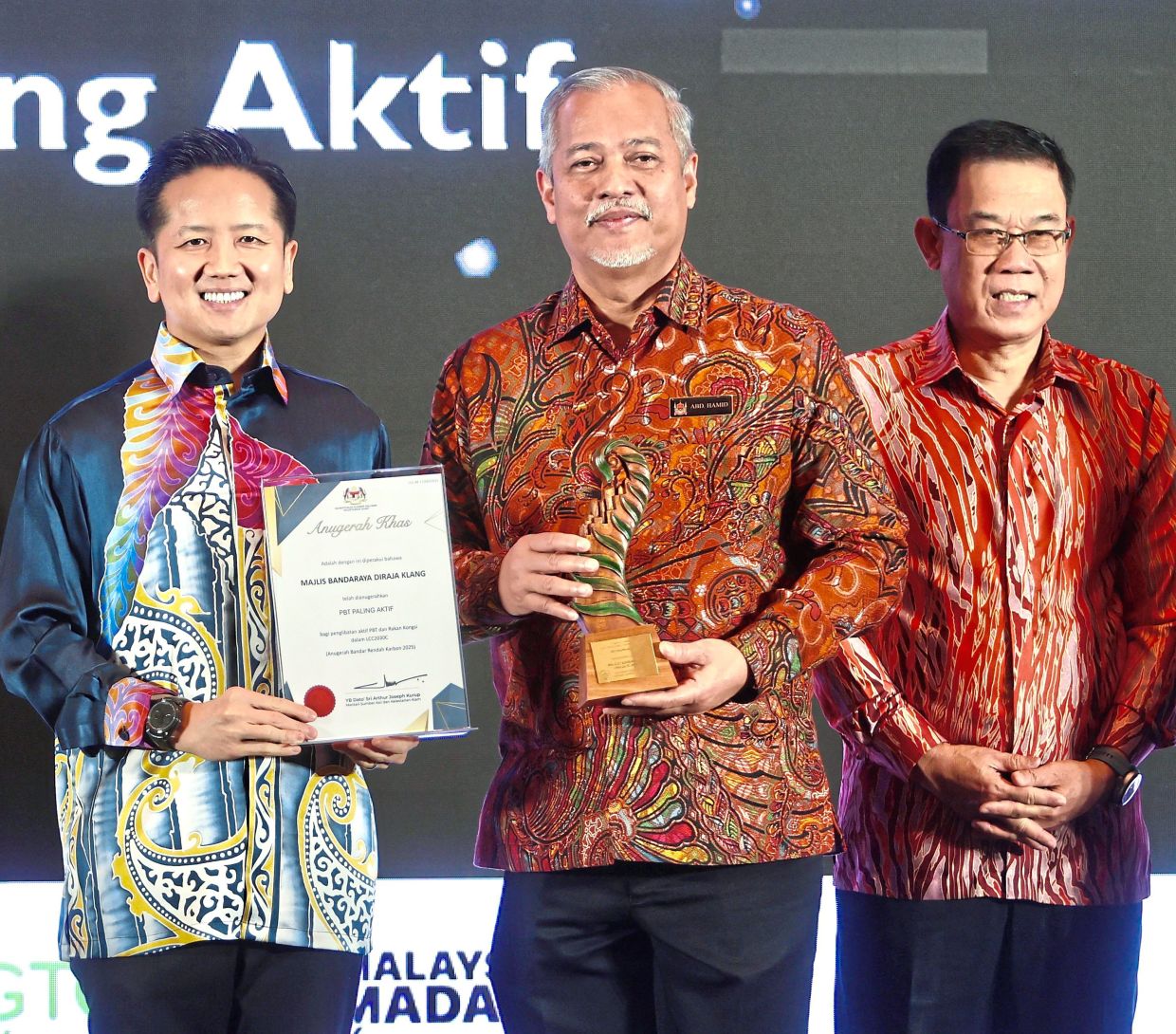
Around 164 companies, industries and local governments from Selangor, Johor, Melaka, Pahang and Kedah were recognised for their low-carbon initiatives yesterday.
Kurup said the low-carbon programme is not just about infrastructure like solar panels or green technology, but more about changing community behaviour.
“For example, in the past, everyone drove their own car. Now, programmes like carpooling, public transport and e-bikes encourage people to adopt more sustainable habits.
“These changes in behaviour, combined with infrastructure improvements, are part of the next steps we are taking to make cities truly low-carbon,” he added.
Besides, the ministry is emphasising its goal of establishing 200 Low-Carbon Zones nationwide by 2030, a target that was first announced in 2019.
Kurup cited 2025 data from the MGTC that showed low-carbon initiatives making a real impact, achieving reductions in greenhouse gases.
“These results are equivalent to replanting over 10 million mature trees and removing nearly 88,000 cars from the roads for the year.
“The total carbon absorption from these initiatives exceeds about 80,000 tonnes, and the reduction of greenhouse gases equals about 324,073.84 tonnes of carbon dioxide,” he said, adding that these small steps taken by local authorities contribute significantly to national sustainability.
Kurup also said that 70% of global greenhouse gas emissions are concentrated in urban areas (cities).
Malaysia has therefore submitted its Third Nationally Determined Contribution (NDC 3.0) under the Paris Agreement on Oct 24, 2025 and set out its latest emissions reduction plans.
The ministry said that under NDC 3.0, Malaysia aims to reduce emissions by between 15 and 30 million tonnes by 2035.
“This is a clear signal to the world that Malaysia is serious about playing its role as a responsible global partner,” he said.
Separately, Kurup said his ministry will look into the issue of residents in Gelang Patah, Johor, experiencing hotter temperatures and water shortages, following a recent protest on data centres in the area.
“The ministry will have to look into this. Because data centres, as we know, have high energy requirements.
“If we go into our new energy transformation roadmap now, we need to adopt greener and more renewable energy sources.
“We need to make sure that the solutions are in line with green energy to achieve carbon neutrality. This is the long-term plan,” he added.