THE government’s debt servicing charges rose to about 16% at the end of last year, says Deputy Investment, Trade and Industry Minister Liew Chin Tong.
This compares with 12.5% in 2019, following a sharp increase in debt incurred between 2020 and 2022 to finance stimulus packages and economic recovery plans during the Covid-19 pandemic, he said.
Liew said Federal Government debt rose by RM286.6bil during that period, an increase of more than 36% from RM793bil in 2019. This also saw the debt-to-GDP ratio rise from 52.4% in 2019 to 60.2% in 2022.
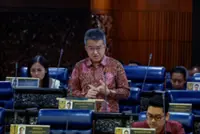
“Therefore, several fiscal reforms need to be implemented to ensure the fiscal deficit and the amount of annual borrowing can be reduced,” he said during Question Time yesterday.
Liew was responding to Tan Sri Muhyiddin Yassin (PN–Pagoh), who asked about the strategy to address debt servicing payments, which are expected to account for 16.3% of government revenue by 2025, and the steps being taken to reduce the burden.
According to Liew, fiscal reforms and debt consolidation efforts are guided by the Public Finance and Fiscal Responsibility Act 2023 (Act 850), under which the government reduced new borrowings from RM100bil in 2021 and 2022 to RM92bil in 2023.
Borrowings were further reduced to RM77bil in 2024 and are projected to decline to about RM75bil in 2025, with further reductions expected this year.
Muhyiddin later raised a supplementary question on how the government would ensure debt servicing payments do not rise further in the coming years.
Liew said government measures since 2022 have reduced new borrowings through prudent administration and subsidy rationalisation, which cut spending by RM15.5bil.