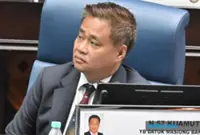
KINABATANGAN: Parti Gagasan Rakyat Sabah (PGRS) vice-president Datuk Masiung Banah called on voters in Kinabatangan to elect candidates from the ruling party for effective representation.
Masiung, the Kuamut assemblyman under Kinabatangan parliamentary constituency, said that having elected representatives from the government would help the people as they would be able to serve the communities in their constituencies.
Masiung was with Barisan Nasional chairman Datuk Seri Dr Ahmad Zahid Hamidi, who was in Kinabatangan’s upper reaches of Tongod earlier Thursday (Jan 22) to campaign for Barisan’s Mohd Naim Kurniawan Moktar, who is in a three-cornered fight for the Kinabatangan seat.
"The people of Kuamut should take advantage of the good relationship that has been established between the Federal Government and the state government," he said, urging voters to come out and vote on Saturday (Jan 24).
Earlier, the Deputy Prime Minister called for the strengthening of cooperation between Gabungan Rakyat Sabah (GRS) and Barisan, as prolonged political quarrels will not benefit the people.
"Enough of politics. What is more important today is stability for the sake of development and the welfare of the people of Sabah,” he said during the Sentuhan Kasih Desa@Kuamut programme in Tongod.
“This will ensure Sabah enjoys political stability, which in turn will drive comprehensive development of the state,” he said, adding that political differences that occurred previously must be set aside for the well-being of Sabah and its people.
Barisan, which opposed GRS in the just concluded November state election, is now part of the GRS-led state coalition government involving Pakatan Harapan, Upko and other parties, including five independents, following a hung state election result.
Ahmad Zahid said political stability is the main prerequisite for sustainable state development.
He said the Madani government had given the highest rural development allocation to Sabah under Budget 2026, which reflected the commitment to continue prioritising development and the well-being of rural communities, without sidelining the state.
He said the allocation covered various initiatives for rural development, including education, skills training, basic infrastructure, and socio-economic empowerment of communities in the interior.
The focus was in line with the Rural and Regional Development Ministry targets of ensuring balanced development, especially in areas that faced limited access to basic facilities and economic opportunities.
He also said that rural education facilities, particularly classes under the Community Development Department (Kemas) in Kuamut and Tongod, will continue to be given attention to ensure existing infrastructure is upgraded.
"The implementation of various initiatives under the ministry will be coordinated with state leadership and relevant agencies to ensure every allocation can be effectively utilised by the people," he added.