Latest attempt to explore ocean floor driven by mature tech, say experts
PETALING JAYA: The latest attempt to locate Malaysia Airlines Flight MH370 comes as underwater mapping and autonomous search technologies have matured, allowing investigators to reassess the aircraft’s final trajectory with greater precision.
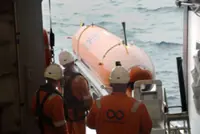
Aviation experts said Ocean Infinity’s renewed seabed search reflects advances in deep-sea exploration, including improved mapping and autonomous underwater vehicles.
Prof Major Dr Mohd Harridon Mohamed Suffian said previous searches were constrained by technological limitations, particularly in accurately mapping the ocean floor across vast and uneven terrain.
“While previous efforts managed to chart large areas of the seabed, the resolution and consistency of the data were not always sufficient to confidently identify smaller or fragmented wreckage,” he said.
MH370, which went missing on March 8, 2014, with 239 people on board, has been searched for in multiple phases since then, including an extensive multinational underwater search that ended in 2017 and a private Ocean Infinity-led effort in 2018, before the latest search was announced this year.
Mohd Harridon added that newer autonomous systems now allow for more detailed and systematic surveys, reducing the likelihood of missing debris in complex underwater environments.
He said the renewed search does not reflect new satellite data, but rather an improved capability to test existing assumptions more rigorously.
“Even if the search does not locate the wreckage, it will help refine our understanding of MH370’s final path by narrowing down areas where the aircraft is unlikely to be,” he said.
Asked about the likely condition of the black box after more than a decade underwater, Mohd Harridon said it is designed to withstand extreme pressure and resist corrosion for a limited period, meaning some data may still be recoverable should the wreckage be found.
Transport Minister Anthony Loke recently confirmed that the government had signed an agreement with Ocean Infinity to resume the search at the end of the year.
Under this arrangement, Malaysia will only pay the company if the wreckage is found, with a success fee of up to US$70mil (RM286.81mil).
Ocean Infinity previously participated in the search for MH370 between January and May 2018, covering more than 112,000sq km of the southern Indian Ocean seabed before ending the mission.
Datuk Captain Nik Ahmad Huzlan Nik Hussain said Ocean Infinity’s willingness to proceed on a “no-find, no-fee” basis suggests a degree of confidence, driven by technological advances and a significantly reduced search area.
“They are prepared to gamble because the operational cost is relatively low for them, while the potential payoff is high,” he said, adding that calmer sea conditions in the southern Indian Ocean during this period also improve feasibility.
However, Nik Ahmad Huzlan cautioned that locating wreckage does not automatically equate to recovery.
“This is a search effort, not a salvaging operation.
“Finding the aircraft could mean images or sonar confirmation, but retrieving debris – especially the black box – would require a separate operation, different vessels, and specialised equipment.”
He said the black box remains the most critical element in resolving the mystery, as it could determine whether the aircraft was under control at the end of the flight or broke up on impact.
Meanwhile, Malaysian Pilots Association president Captain Prof Ab Manan Mansor cautioned that the renewed search risks reopening old wounds for families of the victims.
He said repeated announcements could turn the tragedy into “sensational storytelling” rather than providing closure, questioning what the operation would realistically achieve.
Ab Manan also raised concerns over the agreement with Ocean Infinity, particularly over what constitutes a successful “find” and whether any recovery effort is included beyond imaging and verification.
“Even if they locate something, how are they going to retrieve it?” he asked, adding that the aircraft is believed to lie between five and seven kilometres below sea level.
He added that after more than a decade, the aircraft would likely have disintegrated under extreme pressure, with debris scattered by ocean currents, pointing to parts previously recovered along the African coastline.
“Reopening this case should not be about hype. It should be about honesty, clarity and respect for the families who have already endured 11 years of uncertainty.”