
TELUK INTAN: Practice makes perfect. This aptly describes Nor Firdaus Tuah, who has been using a boat to harvest oil palm fresh fruit bunches at his plantation in Kampung Batu 7 1/2, Sungai Baung, Changkat Jong, here, for the past 16 years.
The 28-year-old Teluk Intan native said that although the method was somewhat dangerous, it remained the best option to prevent part of his crop, planted near the Bidor River, from being stolen or rotting after being submerged in floodwaters.
"Since I was 12, my father has taught me to use this method. Whenever the flood season arrives, we take a boat to harvest fruit from trees submerged in water.
"This method is quite risky because we have to get into the water to collect the fruit, while also facing the threat of sharp timber and venomous animals.
"However, we have no other choice, and this is the only way we believe can minimise the risk of losses," he told Bernama when met here on Monday (Nov 9).
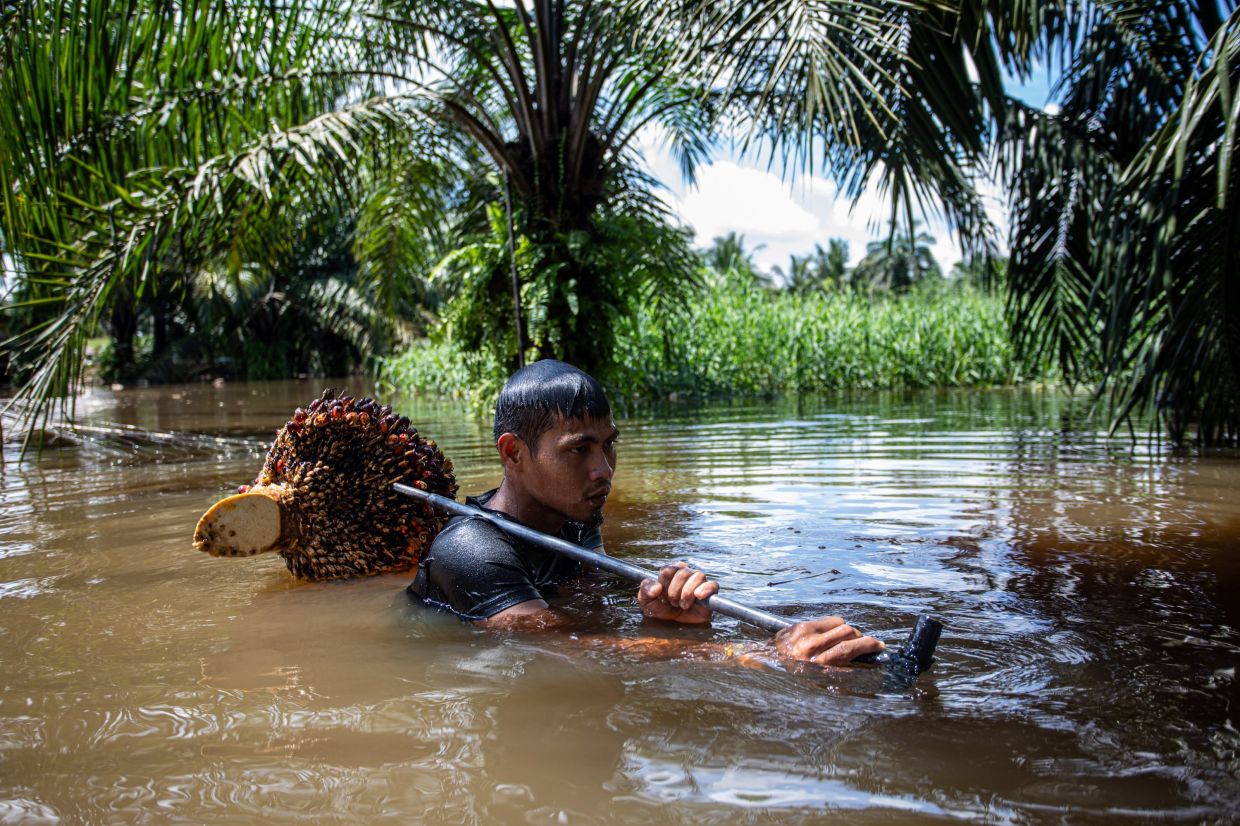
The father of two said operating a boat heavily laden with oil palm fruit required great care to maintain its balance and prevent untoward incidents.
"Any mistake in balancing the load or collision with submerged tree stumps could cause the boat to spin and capsize," he said.
Meanwhile, Nor Firdaus spends six hours a day, accompanied by his assistant, Ishak Idris, 40, harvesting oil palm fruit at the approximately six-hectare plantation.
He said the harvested fruit is then loaded onto the boat and transported to the riverbank, where it is gathered before being sold to local dealers.
"Usually, I start at around 8am and work until 2pm, and the harvesting process can continue for up to 21 days.
"If all goes well, we can harvest about four to five tonnes a day throughout that period," he said.
He said oil palm production could decline by between 60% and 80% compared with normal conditions each year due to the impact of the disaster on crop yields. — Bernama