KUALA LUMPUR: The Transport Ministry says that delaying the full enforcement of laws on overloaded heavy vehicles is not a safe option, citing the still-alarming rate of accidents involving such vehicles.
Deputy Transport Minister Datuk Hasbi Habibollah said the ministry acknowledges calls from several quarters for a six-month to one-year postponement or a phased implementation to allow operators time to adjust their operations.
"Police statistics show 346 fatalities in 2024, with 260 involving lorries and 86 involving buses. From January to September this year, 260 fatalities were recorded, comprising 211 cases involving lorries and 49 involving buses.
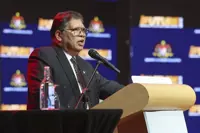
"These numbers demonstrate that safety issues involving heavy vehicles are not trivial and require firm and consistent immediate action," he said when winding up the debate on the 2026 Supply Bill in the Dewan Negara on Wednesday (Dec 10).
He said enforcement data from Op Perang Lebih Muatan (War on Overloading) operation showed widespread non-compliance, with 3,087 out of 129,778 heavy vehicles inspected found to be overloaded, while 5,915 notices were issued for various offences.
Hasbi said technical findings from the Road Transport Department (JPJ) and the Malaysian Institute of Road Safety Research (Miros) revealed that overloaded commercial vehicles face a high risk of brake failure, instability on downhill stretches and contribute significantly to road and bridge damage.
Meanwhile, Deputy Agriculture and Food Security Minister Datuk Seri Arthur Joseph Kurup, in his winding-up speech, said Malaysia's rice supply remains sufficient, with 1.263 million tonnes of physical stock recorded as of Dec 2.
He said the stock comprises 1.063 metric tonnes of trade stock and 200,000 tonnes of buffer stock.
"Malaysia will continue to diversify its import sources from Vietnam, Thailand, Pakistan, India and Myanmar to ensure supply stability, especially in the event of global market disruptions or changes in export policies by producing countries," he said.
On another matter, Arthur said the ministry's agriculture-focused Technical and Vocational Education and Training (TVET) programmes are now conducted in 16 training institutes nationwide, with upgraded syllabus incorporating modern technologies such as automation, the Internet of Things, drones and artificial intelligence (AI).
He said the curriculum was also developed in collaboration with industry and academia to ensure alignment with real sector needs.
Additionally, the Special Competency Certification (Remote Certificate of Competency – Agriculture Ligh, RCoC-AL) for agricultural drone operators has been introduced with lower training costs and shorter training periods, helping accelerate the development of skilled talent in farm technology.
Arthur said the ministry has also established strategic cooperation with industry through the Smart Agriculture directory, which serves as a platform for matching expertise with career opportunities for youth.
Also winding up the 2026 Supply Bill debate were Deputy Foreign Minister Datuk Mohamad Alamin and Deputy Home Minister Datuk Seri Dr Shamsul Anuar Nasarah.
The Dewan Negara sitting resumes on Thursday (Dec 11). – Bernama