



KUALA LUMPUR: A special committee has been formed to act on “sick projects” under the Works Ministry, its minister said.
Datuk Seri Alexander Nanta Linggi said this is necessary as delayed projects often become an eyesore.
“Based on our information, only about 3% of the projects are problematic or sick projects.
“The numbers may be small but they have become an eyesore and talking point. We also have projects that were completed even a year ahead of schedule, but these are not talked about,” he told reporters after launching the Malaysia-Korea ITS Roadshow 2025 here yesterday.
On Monday, Prime Minister Datuk Seri Anwar Ibrahim said the Works Ministry must get tough against contractors who delayed infrastructure projects to ensure that these were completed on time. He said this was crucial as the ministry oversees numerous development projects involving public interest.
To address the problem, Nanta said ministry secretary-general Datuk Seri Azman Ibrahim has formed a special committee to monitor sick projects and take appropriate action.
“However, there are legal elements involved in these projects, and terminating contracts cannot be easily done,” he said.
As to the reasons behind the delays, the minister said there were various factors, including management issues.
“There is no single reason. The delays are usually due to human elements and other factors such as approvals that must be obtained from several agencies, state governments, local authorities and others,” added Nanta.
He cited the example of road widening projects which could involve the relocation of utility infrastructure, adding that this required the approval of the bodies involved.
Earlier in his speech, Nanta lauded the close relationship between Malaysia and South Korea in development and advanced technology, highlighting the building of the Penang Bridge and one of the Petronas Twin Towers as examples of South Korea’s visible construction legacy here.
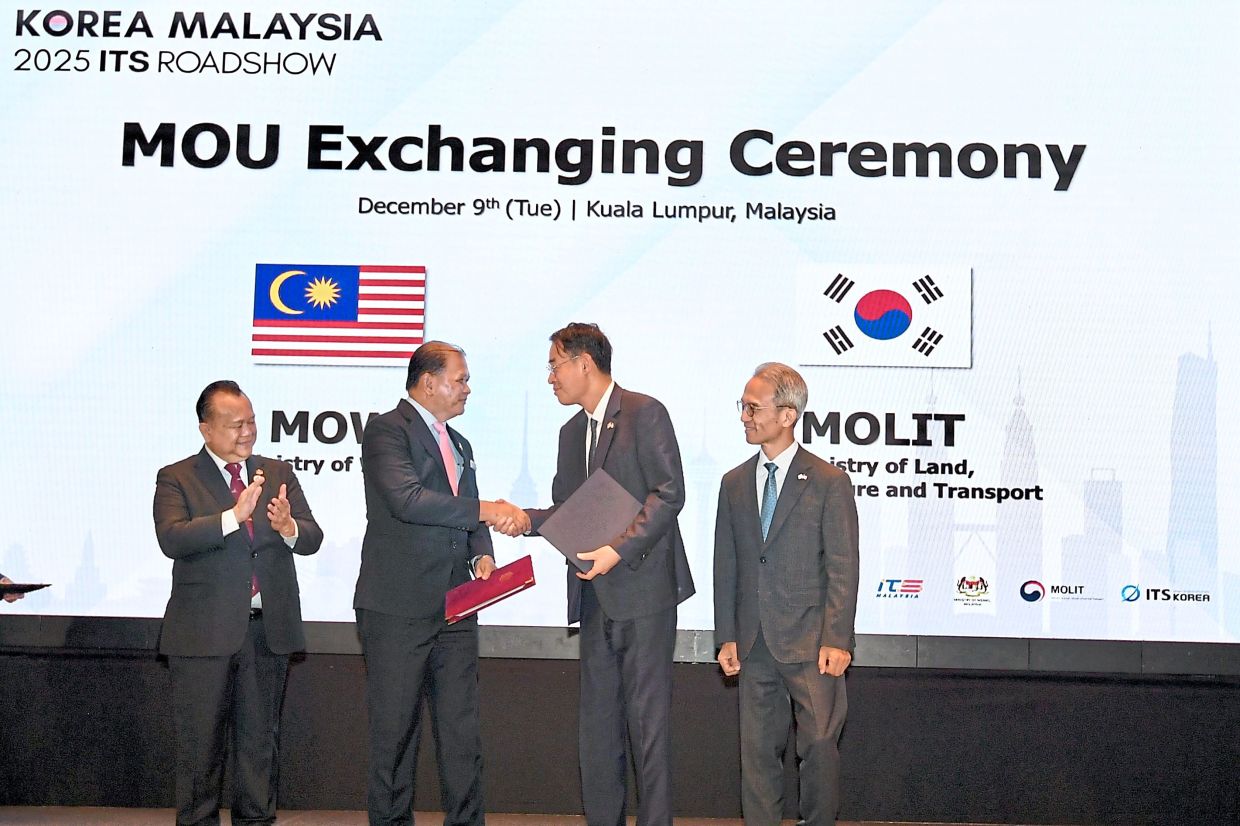
At the event, Nanta and South Korea’s Land, Infrastructure and Transport vice-minister Hee Up Kang witnessed the exchange of an MOU aimed at strengthening bilateral cooperation in development and advanced technologies between both countries.

