



PETALING JAYA: Long hours and an “always-on” work culture are fuelling a burnout crisis among Malaysia’s young professionals – and a year after being ranked second worst globally for work-life balance, many continue to cry out over rising stress and exhaustion.
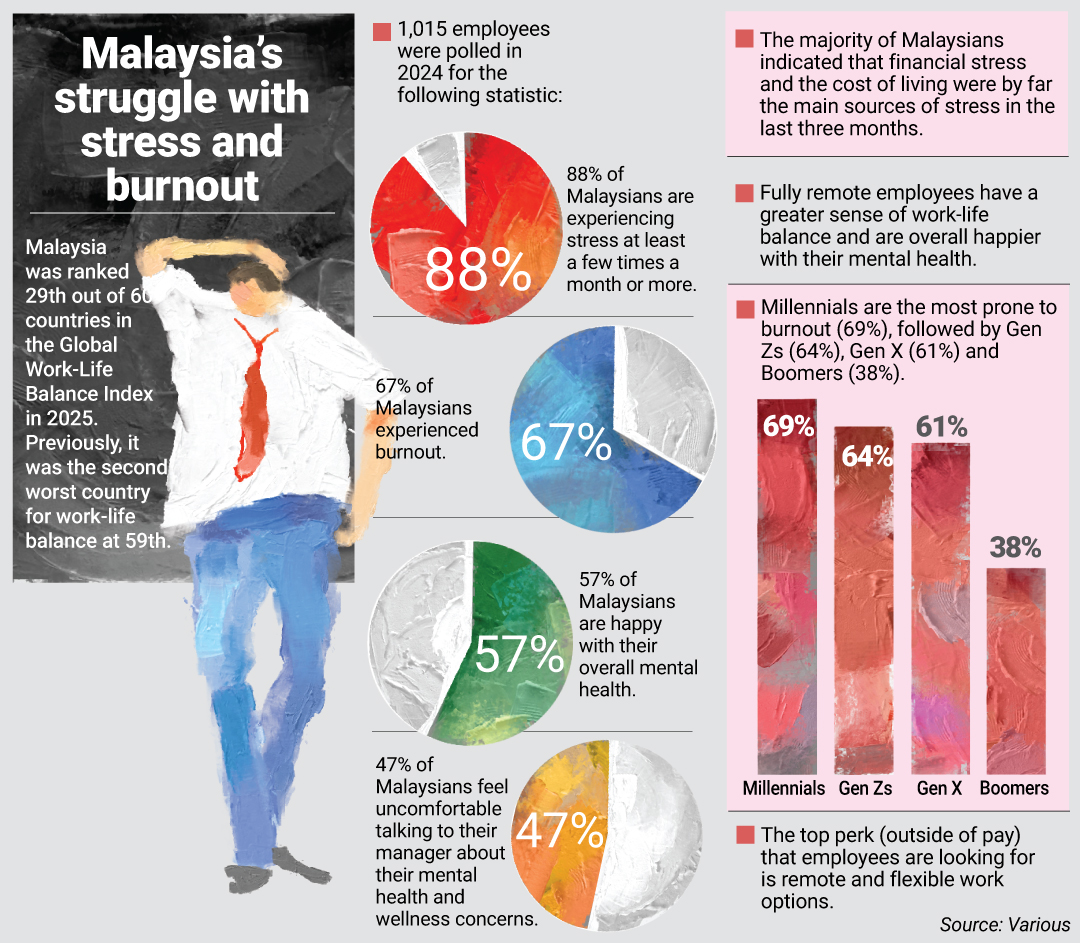
Although Malaysia climbed 30 ranks to 29th by 2025 (see graphic), many young workers say they are caught between financial insecurity, mounting expectations and a work culture that glorifies overwork, leaving little room for rest, growth or recovery.
Among young lawyers, burnout is so common that some see it as an unavoidable part of the profession.
Aisyah, a junior lawyer, said emotional exhaustion begins early in the career.
“The legal field is competitive and hierarchical; you’re expected to work 24/7, often with very little pay,” she said, adding that the high expectations and limited room for error make the job mentally draining.
While mental health awareness has grown, young professionals say real structural change remains slow.
Aisyah believes the workplace culture still rewards overwork.
“Realistic workloads, fair pay and mentorship could make a huge difference.
“We need a culture where mental well-being is valued as much as performance,” she added.
Lawyer Joseph Ch’ng described burnout as feeling like “survival mode”.
“You’re racing against time, doubting whether you’re good enough and fearing mistakes.
ALSO READ: Experts: Structural workplace reforms needed to stop burnout
“For seniors, burnout comes from the weight of responsibility, ensuring juniors’ work meets standards while balancing client demands.”
Marketing executive Marcus Chin said burnout is pervasive in the private sector.
“It’s very common in marketing. Companies chase sales targets without caring about staff welfare.
“Younger professionals are told to just ‘endure’ the stress because it’s part of learning, but it breaks people down over time.”
He also said poor onboarding and long commutes add to the fatigue.
“You can’t expect someone to perform well when they’re constantly exhausted.
“Flexible work arrangements could help, but few companies are open to it,” he said.
In hospitals, burnout among healthcare workers often goes unnoticed, said dietitian Sarah Foong.
She said the job demands continuous emotional and physical investment.
“My workday lasts about 10 hours on average, and it often stretches beyond official hours.
“Healthcare doesn’t allow for fixed schedules; patient needs and emergencies can easily extend the day,” she said.
Foong attends to between six and 12 patients daily, with each consultation lasting more than 30 minutes.
“It’s rewarding but mentally draining because you’re not just treating patients – you’re understanding their habits, emotions and motivation for change.”
She also supervises staff and interns.
“Balancing management duties and clinical work requires planning. I delegate tasks and create room for staff to grow, but it’s still demanding,” she said.
“Healthcare often feels like a 24/7 commitment.”
To cope, Foong has learned to set boundaries and recognise the early symptoms of burnout.
“For me, it shows up as fatigue, agitation and difficulty focusing. When that happens, I pause and reset.
“I’m thankful to have a strong support system both at work and at home.”
