
Composting community grows after Budget 2026 tax reliefs
PETALING JAYA: Although sophisticated machines can turn dinner scraps into garden soil in just a day, the real compost revolution is happening in backyards and community gardens using pots, dry leaves and a little time and patience.
Under Budget 2026, Malaysians can claim up to RM2,500 in personal income tax relief for purchasing household food composting machines and food waste grinders - a move environmental groups say could accelerate awareness of sustainable food waste management.
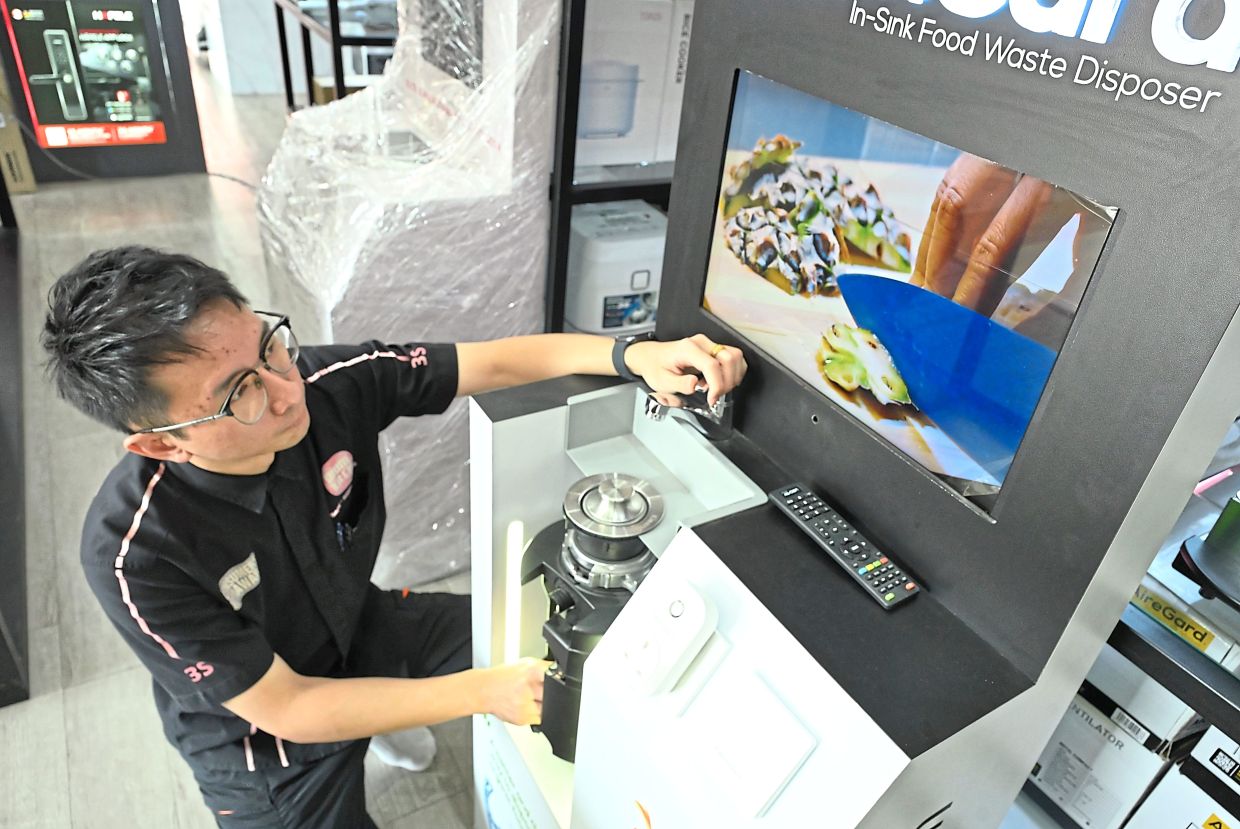
A household food composting machine works by using a combination of heat, air and moisture to rapidly break down food scraps. The final product is a dry, soil-like material that can be used for gardening.
A food waste grinder machine, which is installed under a kitchen sink, uses a motor to spin a grinding plate at high speed, pulverising food waste into fine particles.
The ground waste is then flushed down the drain with running water into the wastewater system
At the industrial end, Malaysia Bioeconomy Development Corp and a local firm have already deployed bio-based composting machines under the Kembara Komuniti programme to encourage communities to turn food waste into nutrient-rich compost.
"These machines mimic the natural composting process but in a much shorter time," said Bioeconomy Corp chief executive officer Mohd Khairul Fidzal Abdul Razak.
Using controlled heat, aeration, and proprietary enzymes, food waste is biologically broken down into high-quality compost within 24 hours.
"The process is odourless, pest-free and fully automated," he told The Star.
Khairul Fidzal said the initiative diverts organic waste from landfills, reducing methane emissions while producing compost that nourishes soil and supports community gardens.
"This is a great example of how bio-based innovation can promote circularity and sustainability at the community level," he added.
The machines, however, do not come cheap. Household units range from RM3,000 to RM5,000, while larger models for hotels, universities and factories cost between RM35,000 and RM300,000.
Zero Waste Malaysia (ZWM) director and co-founder Khor Sue Yee welcomed the tax incentive but cautioned against over-reliance on machines.
"These devices help reduce the volume and moisture of food waste, but they manage waste rather than reduce it.
"We should also look at reduction-at-source strategies, such as buying less, planning meals and sharing surplus food," she said.
Khor said 75% of respondents in a recent ZWM survey agreed that Malaysia lacks community composting facilities, showing strong public support for local-level initiatives.
She also warned that composting machines could create new e-waste problems if not properly managed.
"The policy risks subsidising one waste stream to create another. We need to ensure the machines' life cycles and outputs are sustainable, and that users understand the compost often needs further curing before it's soil-ready.
"The direct output is usually still acidic and biologically active. It can harm plants rather than nourish them," she pointed out.
For households that cannot afford machines, composting can still be done easily at home.
Bioeconomy Corp offers community workshops where participants learn DIY composting techniques using simple containers, soil and natural enzymes.
ZWM also promotes low-cost methods such as hot composting or vermicomposting using worms.
"You don't need to buy a machine. All you need is a pot, some dry leaves collected from the roadside and some time. Nature does the rest," she added.
For Jesz Cheah, a 42-year-old interior designer who grew up using a food waste grinder at home, the key is awareness and accessibility.
"It was my parents who introduced it. Then when I encountered food composters at work, I thought it was brilliant by turning what we throw away into something useful again," she said.
Cheah said while price is a factor, awareness and convenience remained the biggest barriers to adoption.
"Once people see how food waste can be transformed into fertiliser or compost, it becomes a lifestyle investment. It's about changing how we value what we consume."
Cheah now promotes sustainable design for homes and offices, incorporating composters, solar panels and rainwater systems into her projects.
"When clients experience the benefits firsthand, they tend to share them with others. That’s how change really starts - one kitchen, one community at a time," she added.