PETALING JAYA: With technology reshaping how people work and connect, Malaysia’s leading human resource (HR) experts gathered again at the Chief People Officer (CPO) Summit 2025 to discuss how workplaces can evolve from traditional management to digital transformation without losing human communication.
The two-day event organised by Star Media Group (SMG), held at a hotel here from Nov 12 to 13, highlighted present-day top pressing issues in HR.
Supporting partners of the summit included the Private Pension Administrator (PPA), the central administrator for Private Retirement Schemes (PRS), which was approved by the Securities Commission to help Malaysians save more for their retirement.
Strategic partners included the Malaysian Institute of Human Resource Management (MIHRM) and Selangor Human Resource Development Centre (SHRDC).
The summit had an array of insightful panel discussions concerning workforce management.
Day 1: Nov 12
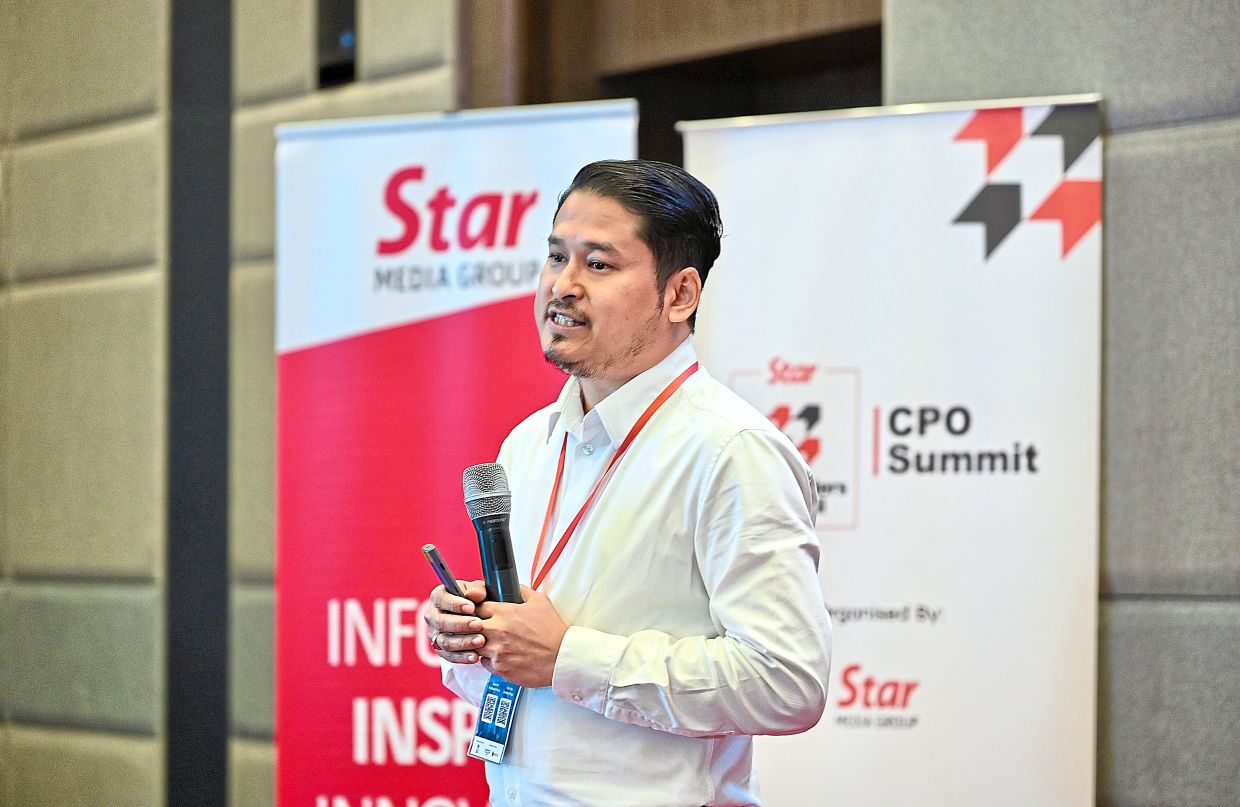
The first plenary session was delivered by Talent Corp Malaysia Bhd (TalentCorp) group chief strategy officer Nazrul Aziz, who discussed how HR can align their strategies with the 13th Malaysia Plan (13MP) to build a high-value, innovation-driven economy.
Nazrul said if companies were to align with the 13MP talent agenda, they must hire on skills, not just credentials – and create flexible workplaces that are able to retain talent.
He explained the underlying problem: Malaysia was not creating enough high-skilled jobs.
“Many skilled talents go to underemployment. They are working at a level below their qualifications.
“Many qualified workers end up working in positions that don’t match their skills.”
He said although Malaysia was on its way to becoming an ageing nation, the median age of 31 indicates a relatively young workforce, one that still holds strong potential to grow alongside the economy.
Providing a different view, Manaf Gardner Associates (MGA) chairman Datuk Dr Nora Manaf said the issue wasn't a lack of skills but rather gaps in governance and management practices that limit talent utilisation.
“We should move away from thinking of age 60 as an expiry date in the workforce.
“From an employer’s perspective, governance and infrastructure need to evolve to fully embrace diverse skills and inclusiveness, enabling the organisation to achieve its business outcomes,” she added.
In her session on increasing employee retention, Nora said that retrenchment was not a result of a lack of skills, but rather an organisation’s unclear objectives.
“Every skill can be learnt. Even seniors can start using AI, and it should be used wisely, not to replace thinking but to help us compress time and reduce cognitive burden,” she said.
MIHRM council member Koljit Singh emphasised the importance of open dialogue between management and employees.
Koljit, who is vice-president for culture transformation in FGV Holdings Bhd, said HR practitioners having dialogues can prevent disputes, thus improving the performance of employees.
To support this, he highlighted that in 2024, over 1,500 annual industrial relations (IR) cases were recorded, with 72% involving termination and costing RM60mil to settle.
Following the network session, attendees had their first panel discussion on shaping a future workforce by doing skill-based recruitments instead of credential-focused hiring.
Moderated by Lee Kok Choong, an accredited trainer and certified professional coach, the discussion featured panellists: Sarawak Energy Bhd’s head of HR in Business and HR Excellence GMBPsS Michelle Chiou Thien Ling; Gamuda Bhd’s head of talent management and organisational development Tan Tho Wei; and Ninja Van Malaysia’s human resources director Rilla Amrullah.
Another session explored how AI can enhance employee experience and engagement, demonstrating how this robust technology can transform the way organisations operate.
The session, which included expert opinions on the pros and cons of using AI in the workplace, was moderated by BM Greentech Bhd senior general manager, group HR Harvindar Singh, while the panellists were Accenture Malaysia country HR lead Dionne Bain, Optimal Insight chief executive officer Dr Michele Sagan and SHRDC head of Malaysian Smart Factory (MSF) Ts Dr Chua Wen Shyan.
There were also sessions discussing the importance of recognition in the workplace and giving appreciation rewards to multiply impact among employees.
Moderated by Stellar SparX International founder and chief executive officer Esther Yap, the panellists were MODEC director-people Zacharias Rajagopal, Lumileds global human resources vice-president Shankar Nagalingam and Touch ‘n Go Group chief human resources officer Erlny Greiss.
Attendees also learnt about how organisations can use automation and technology to make HR more efficient without losing the human element.
Moderated by AIHQ Training and Consultancy founder Pang Sern Yong, the panellists were Ecolab International Sdn Bhd HR leader and South-East Asia HRBP Sri Thevi, IPG Mediabrands chief talent officer Debica Sigamani, and Pinnacle Connexion director Khim Tan.
An engaging session on leadership through emotional intelligence (EI) was discussed among the experts, highlighting that workplace challenges today involve emotions.
The session was moderated by Westpost Malaysia’s head of Manpower Planning Talent Acquisition and Rewards Devan Nair with, Chapter Advisory founder Norlida (Oli) Azmi, Shell human resources business operations vice-president Shazmi Ali and UOA Group chief human resources officer Haikal Akmar, on the panel.
Dr Michele Sagan discussed how rapid technological shifts were transforming workplaces and why trust remained the cornerstone of successful change during her session.
She cautioned that pushing employees too hard in the name of progress could lead to burnout, stressing the need to balance innovation with empathy.
The first day ended with a panel discussion on managing a multi-generational workforce, where HR leaders shared how organisations balance career progression and feedback styles for different age groups.
The session was moderated by Agensi Pekerjaan VHR Consultancy Sdn Bhd founder and managing director FK Low, with panellists being Mercedes-Benz Malaysia APAC human relations and performance operations general manager Reuben Rethinalingam, Boost chief people officer Sarah Yon, and Bank Muamalat Malaysia Bhd head of human capital division Rayyan Irwan.
Day 2: Nov 13
The second day kicked off with a plenary session by Kerry Group’s employee experience service line lead (APMEA and Europe) Reena Talla, on building a sustainable and responsible workforce, who emphasised the integration of environmental, social and governance (ESG) into the organisation’s overall operations, highlighting its convergence with HR’s roles.
“The future of work is not just about productivity but about people, planet and prosperity working in harmony,” Reena said.
Next, PayNet chief people officer Shafenaz Farouk highlighted how HR leaders can navigate and lead effectively in a rapidly changing world.
She said HR leaders have the credibility, competence and commitment an organisation needs to lead its employees.
Following that, Volvo Malaysia, Singapore and Japan vice-president for people and culture Sharmeel Kaur spoke on diversity, equity and inclusion (DEI) as a leadership priority in an organisation.
“The principles (DEI) aim to create a just and fair environment where identity no longer determines an individual’s outcome, thus improving their performance overall,” she said.
Pos Malaysia Bhd group chief people officer Natalia Navin also gave her insights on empowering workplace culture that drives innovation.
She noted that innovation thrived when leaders led with empathy and did not micromanage.
The attendees later learnt about the challenge of talent shortages and shared strategies for companies seeking skilled workers during a panel session.
Moderated by PWC’s Academy partner Ling Hsern Wei, the panellists were NTT DATA Payment Services, eCommerce Solutions head of human resources Cho Chun Loong, Yayasan Peneraju chief executive officer Ibrahim Sani and UOB Malaysia head of Talent Management and Organisation Development Usha Devi Muthusamy.
As new generations enter the workforce, another panel session discussed how organisations can balance their expectations of flexibility and purpose with their business needs.
The session was moderated by PPA chief executive officer Taufiq Iskandar, with panellists Philip Morris (Malaysia) Sdn Bhd People and Culture Malaysia and Singapore director Sunny Sharma and Mewah Group chief people officer Eddie Lee.
Following that, another group of HR leaders spoke about normalising mental health conversations among a multi-generational workforce.
Moderated by Work Inspires co-founder and director Mallory Loone, the panellists were PwC Malaysia, PwC's Academy, Development Consultant & Registered Clinical Psychologist Simpson Khoo, Malaysian Mental Health Association (MMHA) president Prof Datuk Dr Andrew Mohanraj Chandrasekaran and Coaching Moments Consultancy founder and coach Shereen Kaur.
HR leaders also learnt about using AI ethically, with panellists stressing the need for proper training and awareness, as many still lack an understanding of safe usage.
The session’s moderator was Thriving Talents Sdn Bhd founder and CEO Michael Teoh Su Lim, with panellists including Consulting & Technology HR leader Michelle Yong and Huacomm Telecommunications Engineering (M) Sdn Bhd regional HR adviser Laurence Yap Tung Siong.
The day ended with HR leaders explaining governance and labour law to better protect employees in organisations.
Moderated by MIHRM president Simon Benjamin, the panellists were Lee Hishammuddin Allen & Gledhill partner Amardeep Singh Toor, Asia Brands Bhd independent non-executive director Datuk Dr Lim Weng Khuan and National Union of Journalists (NUJ) general-secretary and SMG journalist Teh Athira Yusof.
The summit gave attendees key lessons on various aspects of how to better manage the organisation and its employees.
The Leaders Council by SMG is an exclusive platform that brings together C-suite leaders for bold conversations, real-world insights and transformative collaboration.
Built for decision-makers, this dynamic space goes beyond networking to spark strategic dialogue, peer-driven learning and practical solutions to today’s toughest business challenges.