
PETALING JAYA: The country needs a complete overhaul of its foreign worker recruitment policies, especially to address the issue of forced labour and exploitation.
This is because Malaysia has yet to solve the root cause of human trafficking, ranging from the forging of documents, quotas and the labelling of victims as offenders, say civil society groups.
There has also yet to be any concrete action taken against the masterminds behind the trafficking, said North-South Initiative executive director Adrian Pereira.
He proposed the drafting of a law that specifically manages foreign workers in the country.
“This will tie down all aspects like healthcare, security measures and labour matters. We need something comprehensive or else exploitation will continue.
“It is immoral to have a business model that exploits foreign workers,” he said.
He also proposed consolidating foreign labour recruitment matters solely under the Human Resources Ministry, instead of also including the Home Ministry as is being done now.
“There must be reforms towards the whole foreign worker recruitment process. While there have been efforts, these must be transparent and ensure no involvement of syndicates or cases of labour trafficking,” he said.
His call comes as Malaysia maintained its Tier 2 ranking in the 2025 Trafficking in Persons (TIP) Report by the US State Department.
On the ranking, he said that while there are some indicators of improvement, it was still not enough to conclude that Malaysia has addressed forced labour and human trafficking.
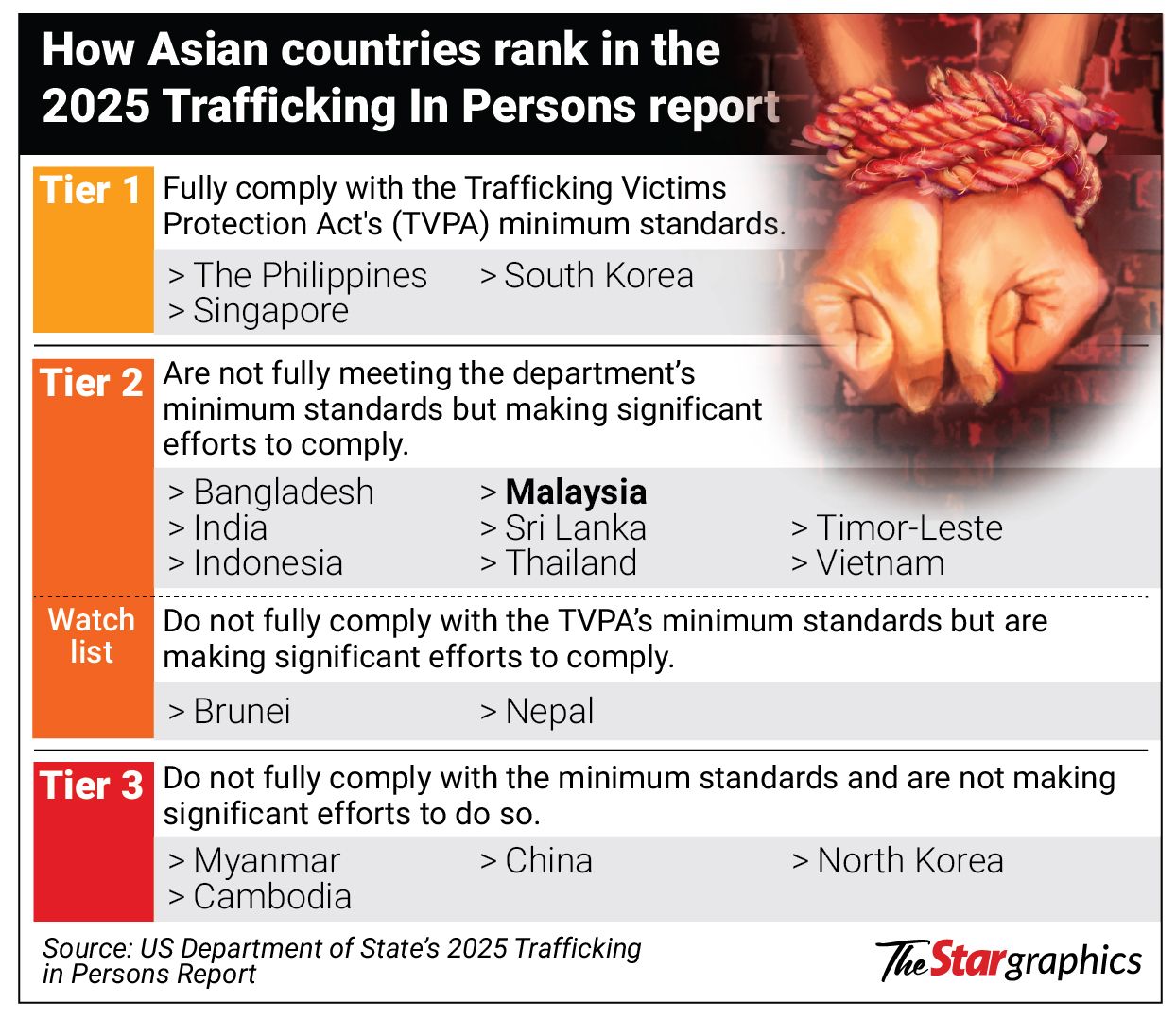
“It is possible for us to have a better TIP report ranking but our efforts shouldn’t be focused solely for that. The focus must be on doing the right thing,” he said.
The TIP Report is an annual assessment that evaluates global trafficking trends. It focuses on government efforts in prosecution, protection and prevention.
Tenaganita executive director Glorene A. Das said the ranking reflects both the progress made and the persistent gaps that remain.
She said root causes such as exploitative recruitment systems, debt bondage, and weak monitoring of workplaces have not been properly addressed.
“Prevention and protection must be done together, there needs to be stronger inter-agency accountability, genuine victim-centred mechanisms, and accessible legal and social support for survivors,” she said.
She said the framework was already in place but consistent enforcement, transparency, and political will was needed.
“The ultimate goal must be to ensure that every person, regardless of status, is protected from trafficking and exploitation,” she said.
Glorene also commended the Home Ministry, Council for Anti-Trafficking in Persons and Anti-Smuggling of Migrants and the Secretariat for their concerted efforts in addressing this, adding that multi-stakeholder collaborations have strengthened the national response in recent years.
“There has been greater coordination among government agencies, NGOs, and international partners,” she said.
“The biggest challenges remain, like in the identification of victims, especially among migrant workers, refugees, and domestic workers, and in prosecution and conviction rates for traffickers and complicit officials.
“Too often, victims are misclassified as immigration offenders, and perpetrators continue to operate with impunity,” she added.