
TRAVELLING to a foreign country often comes with big challenges, especially when it comes to language.
From ordering food, asking for directions, or even reading simple signs, it can feel impossible when you don’t understand the local language.
But now, thanks to translation apps, that once-daunting problem has become far less of an issue.
I realised this on a recent five-day trip to China, arranged by the Chinese Consulate General in Kota Kinabalu, where I visited Zhejiang, Quzhou and Jinhua with a group of media friends.

The last time I went to China was probably about two decades ago, when I relied heavily on Chinese-speaking friends just to get by.
This time, although several reporters in the group spoke Chinese, the real challenge began once we went off to our own rooms.
Beyond the basics of “hello”, “thank you” and “how are you?”, my knowledge of Chinese is close to zero, and in the past that would have left me utterly lost.
Instead, armed with Google Translate and a few other tools, I found myself navigating the country with surprising ease, and often with a smile.
One of the first challenges came in my hotel room.
The air-conditioning control panel was covered entirely in Chinese characters.
I had no clue how to adjust the temperature. But when I pointed my phone at the screen, the characters instantly turned into English.
Not always perfect English, of course. “Warm” showed up as “heating,” while “cold” became “refrigerating.”
It sounded funny, but it worked. A few taps later, the room was finally comfortable.
The apps also made a difference during sightseeing.
In Quzhou, we visited the Confucius Temple, a site rich in history and filled with cultural artefacts.
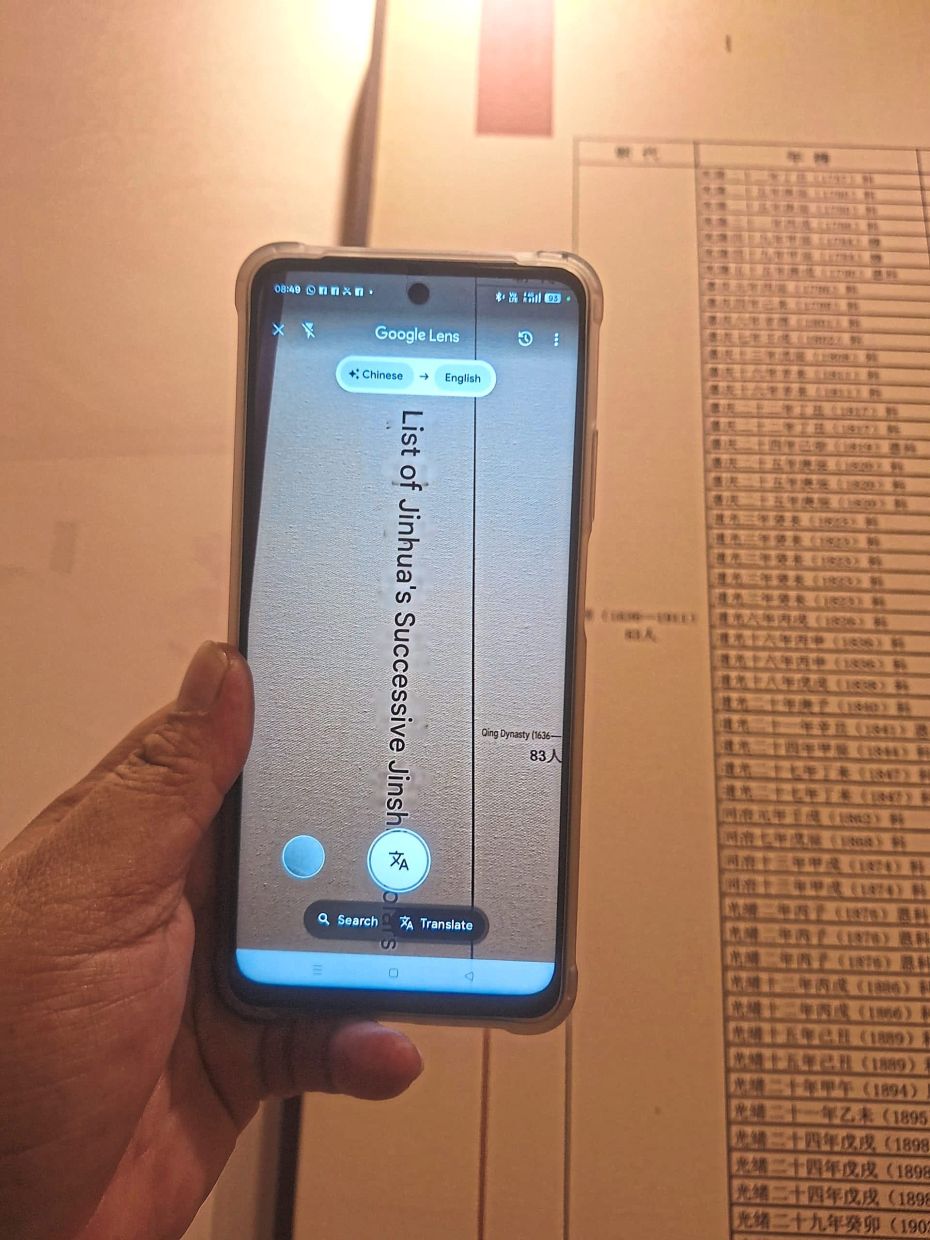
Most of the descriptions were written only in Chinese, with very little English translation provided.
While we had an English-speaking guide, I am the type who enjoys reading display notes in detail.
So out came Google Translate again.
With a quick scan, I was able to understand the stories behind the relics and displays, gaining a much deeper appreciation of the temple’s heritage.
Beyond museums and hotels, translation apps also helped with everyday interactions.
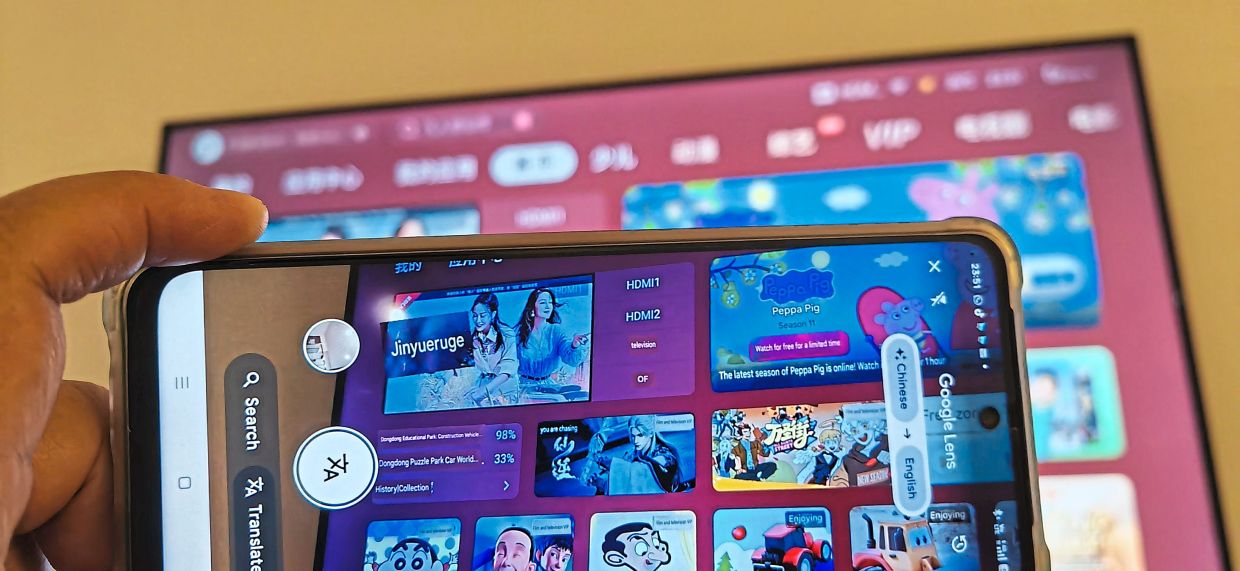
On the streets, I used them to read signboards and directions.
With locals, I typed in English, showed them the Chinese translation, and they replied with their own messages for me to translate back.
Conversations were slower than usual, but they were genuine, and, most importantly, they worked.
Instead of feeling isolated by the language gap, I felt empowered to explore.
I strolled around Hangzhou’s inspiring Future Sci-Tech City Urban Exhibition Centre, delved into Quzhou’s history at the Confucius Temple, and experienced the warmth of Jinhua’s people, all without worrying that I could not communicate.
Of course, the apps weren’t perfect. Some translations were clunky, and I had to piece together the meaning. But that only added to the charm of the trip.
I believe that what could have been a frustrating obstacle became a source of humour, discovery and even connection.
This experience showed me that travel today is less about avoiding barriers and more about embracing them with the right tools.
Language may not always be on your side, but curiosity, technology and a bit of patience can take you far.
So if you are holding back from travelling because of communication worries, don’t.
With a smartphone in your pocket, you can speak any language, or at least enough to adjust the air-conditioning, understand ancient artefacts, and enjoy every moment of the journey.