
PETALING JAYA: Protecting both human and wildlife safety on our roads is a collective responsibility, the Natural Resources and Environmental Sustainability Ministry (NRES) says.
In line with that, it said the Wildlife and National Parks Department (Perhilitan) and WWF-Malaysia has convened a high-level roundtable to identify urgent road upgrades along the East-West Highway, as one of the deadliest stretches in the peninsula for wildlife.
The highway links Gerik, Perak, and Jeli, Kelantan.
The session gathered 60 stakeholders from key ministries, state governments, NGOs, the private sector, highway concessionaires and Selangor and Federal Territory Engineering & Motor Vehicle Parts Traders Association (Empta).
WWF-Malaysia also signed a memorandum with Empta to reduce wildlife roadkill by getting stakeholders in the transport and logistics sector to encourage safe driving through “ecological zones”.
“We must act now with practical, whole-of-society solutions to reduce roadkill and improve road safety.
“Medium and long-term solutions involve habitat enrichment, improving forest connectivity and preserving existing wildlife crossings,” the ministry said in a statement.
Short-term measures included proposals to strengthen legislation, install more warning signs and more importantly, raise driver awareness and encourage responsible driving behaviour.

Responsible driving advocate Leona Chin (pic) agrees that there is a need for motorists to be more aware when driving through areas that are known to be biodiversity hotspots.
Chin, who is a professional motorsport athlete, was responding to the high incidence of deaths of wildlife, especially involving endangered species such as the Malayan tiger, Malayan tapir and Sunda pangolin on Malaysian roads.
These deaths happen when motorists are unable to avoid these animals while driving.
NRES said that more than 2,300 cases of such roadkill were recorded nationwide between 2020 and 2024.
“Motorists tend to overestimate their skills, and are often taken by surprise when they encounter wildlife when driving in the more rural or isolated stretches of the country,” said Chin.
“With the ongoing school holidays, many are taking the opportunity to travel outstation by road for holiday outings or excursions, and caution should be exercised not just in watching out for other road users, but also wildlife.
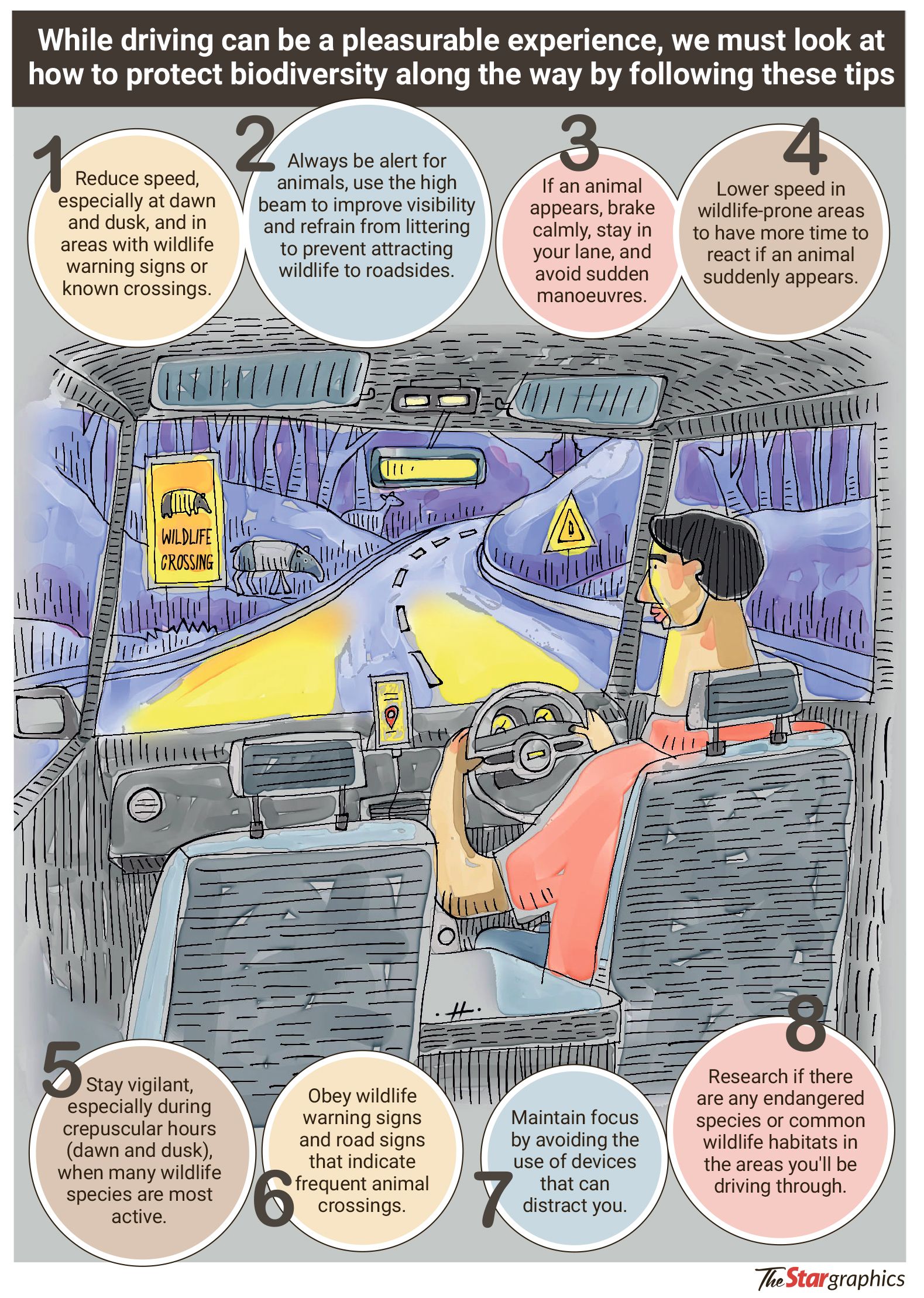
“While driving can be a pleasurable experience, we must look at how to protect biodiversity along the way,” she said and shared some tips that go beyond just merely reducing speed.
“Always be alert for animals, use the high beam light to improve visibility when appropriate, and refrain from littering to prevent attracting wildlife to roadsides.
“If an animal appears, brake calmly and avoid sudden manoeuvres.
“Stay vigilant, especially during dawn and dusk when many wildlife species are most active.”
She added that some pre-journey research on whether the drive would pass through wildlife-rich areas was also helpful.
“And lastly, don’t ignore wildlife warning or crossing signs, as they are there for a good reason,” Chin said.
Other deadly stretches for wildlife are Federal Route 8 from Bentong to Kota Baru, which passes through Kuala Lipis and Gua Musang – areas that are also rich in biodiversity.