
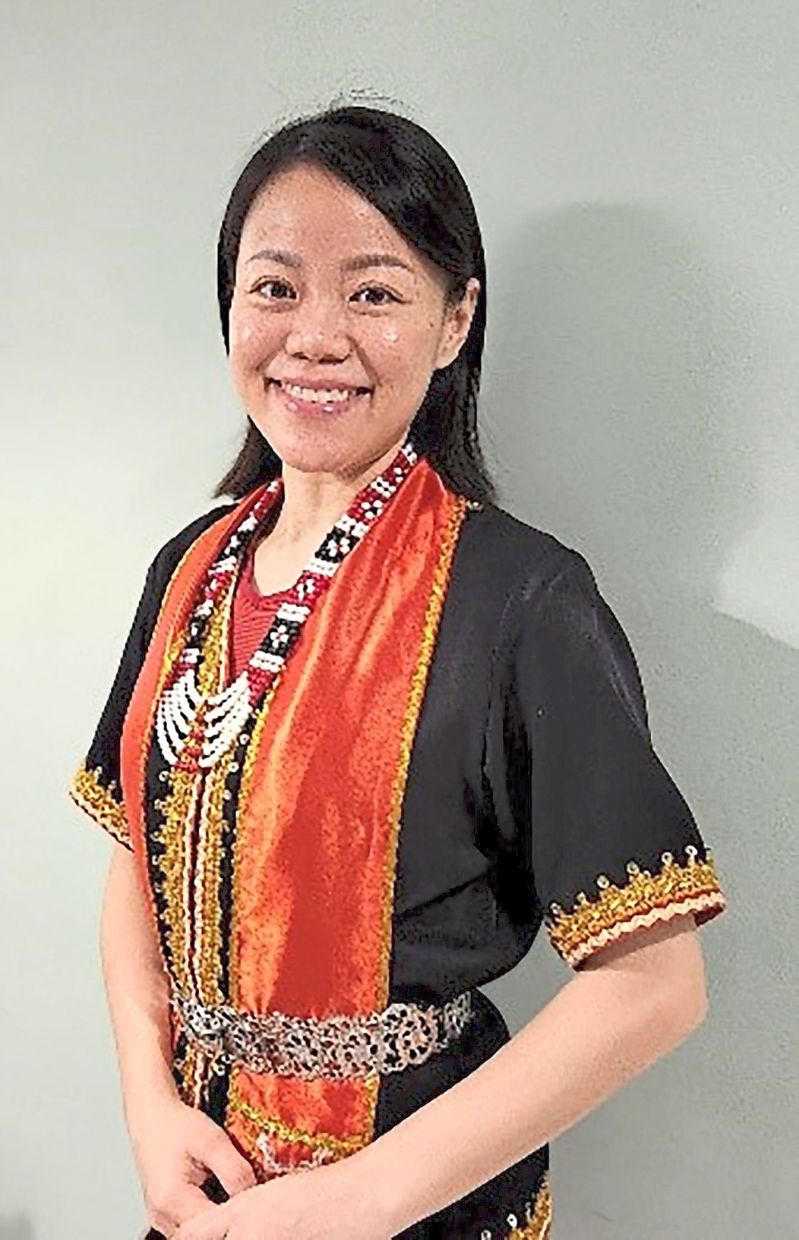
THE name Dr Sharon Choo Yoke Ling is synonymous with palliative care in Sarawak.
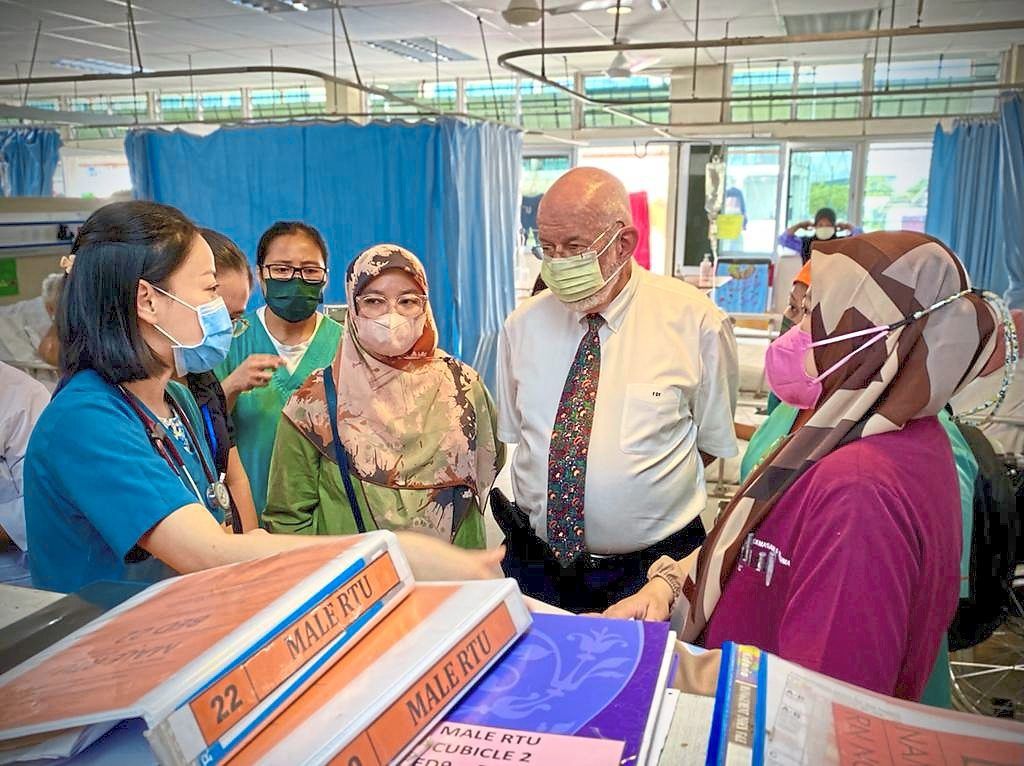
As the state’s first, and one of two current, palliative care specialists, she has been instrumental in developing palliative care services in major hospitals throughout the state.
“Sarawak has a growing number of people with cancer, organ failure and other serious illnesses – many living in rural areas, far from hospitals.
“Palliative care helps manage pain, symptoms and emotional stress, allowing patients to stay comfortable and maintain dignity, often closer to home.
“It can be provided alongside curative or other active treatment, or when curative intent is no longer feasible.
“It also supports families, which is important in our multiethnic, family-centred communities,” says the head of the palliative care unit in Sarawak General Hospital (SGH), Kuching.
In a study published in 2020 in the BMJ Supportive & Palliative Care journal, researchers projected that Sarawak would have the highest number of palliative care cases (35,065) by the year 2030 in Malaysia, surpassing Perak, Johor, Selangor and Kedah.
These top five states will collectively account for 55% of the country’s total estimated palliative care needs by then.
Yet another study published in October 2024 in the Journal Of Palliative Care revealed that there was a stark urban-rural divide in the availability and accessibility of palliative care services in Malaysia.
The study noted: “In the highly- developed central region of Peninsular Malaysia, speciality care was available within 4km, whereas in the less-developed east coast of Peninsular Malaysia, patients had to travel approximately 46km.
“In the predominantly rural East Malaysia, basic palliative care services were 82km away, and in some instances, where land connectivity was scarce, it took 2.5 hours to access care via boat.
“The corresponding median travel costs were RM9 and RM114 in Peninsular Malaysia and East Malaysia.”
One of Dr Choo’s main challenges is the limited number of trained healthcare professionals in palliative care and the frequent turnover of those who have been trained in public service, which disrupts services and reduces continuity of care for patients.
She says: “In rural Sarawak, distance and transportation barriers make it even harder to reach patients in time.
“My role also requires frequent travel to cover services in Sibu and Miri hospitals, with the hope of expanding to Bintulu Hospital next year.
“In addition, there’s still limited public understanding of palliative care, so advocacy and education are essential parts of my work alongside direct patient care.”
On-the-ground training
In 2021, when she first started as a full-fledged consultant, Dr Choo initiated the first domiciliary palliative care service (for example: healthcare staff visiting individuals in their own homes) with Siburan Health Clinic.
She collaborated with local hospices and other organisations such as the Asia Pacific Hospice Palliative Care Network (APHN) and the American Society of Clinical Oncology (ASCO) to provide training for the staff.
The programme proved immensely successful, and in 2022, it was rolled out across 34 public health clinics with family medicine specialists in Sarawak.
She says: “We work with local authorities to ensure there is prescription opioid supply for these palliative care patients.
“In the past, the health clinic team could be sent out, but if there are no proper medications to reduce pain, the patient still suffers.
“Patients reported that they had to wait up to three days to get opioids.”
To date, Dr Choo and her team have trained staff at 86 public health clinics, but she says it is still not enough as there are more than 200 health clinics in Sarawak.
“We need staff who can champion the programme. We can do all the training, but if the clinic doesn’t think it is an important programme and does not want to support or do home visits, then it is not going to work.
“The staff must be willing to do the hard work as they might have to go out on their own, trek mountains, go on boats, cross rivers ... all these take time just for one visit.
“That’s where having a national policy is good,” she points out.
From taekwondo to medicine
A sporty kid, Dr Choo was a rising star in taekwondo in her youth.
By secondary school, she was kicking, blocking and sparring her way to win national competitions.
She even earned some pocket money by assisting her head instructor in taekwondo classes.
Her talent didn’t go unnoticed, and at 17, the small-town girl from Melaka spent nine months at the Bukit Jalil Sports School in Selangor, preparing to represent Malaysia in various international competitions.
Her career highlight: competing in the 1999 SEA Games in Brunei in the finweight category – the lightest weight class.
“It was my first and last SEA Games as I didn’t win anything.
“I couldn’t maintain my weight below 44kg; I wasn’t eating enough and knew it was not good for long-term growth purposes.
“So I opted on a different career path and retired from the sport to focus on my studies.
“I was always a straight-A student and sometime in secondary school, I considered a career in medicine,” she shares.
After moving back home and resuming regular schooling, Dr Choo completed her SPM and STPM with flying colours.
The next question: which public university should she apply to study medicine?
“Against everyone’s advice, I put Universiti Malaysia Sarawak (Unimas) as my top priority as I thought Sarawak would be an adventure,” she shares.
Her mother supported her choice as her older sister was also studying there and could look out for her.
“I got a scholarship and off I went.
“My choices in life have not always been conventional ones,” says the 40-something mother of two, laughing.
After completing her studies, Dr Choo applied to do her housemanship in Sarawak and “sort of just stayed on”.
She says: “In between, I followed my husband, a family medicine specialist, for three years when he did his masters in Universiti Malaya; I also pursued my masters then, and eventually, my subspecialisation in palliative care.
“My first encounter with a dying patient was as a medical student – I took some time to reflect if this was something I could do long term.”
The answer was yes, and that sowed the seeds for her interest in palliative care.
Overcoming taboos
Unlike medical treatments targeting diseases, palliative care takes a holistic outlook, addressing a broad spectrum of needs.
But many people mistakenly believe that it is only for the last days of life, when curative treatment no longer works or the patient decides against treatment.
Palliative care has the greatest benefit when the patient is referred early enough, instead of when he or she is dying.
“A lot of patients may be too ill to plan the rest of their life, but if they are sleeping well and are in less pain, they can live well till the end.
“Doctors must be able to identify if the treatment is not working and refer the patient to palliative care as soon as possible.
“If patients are sent late, we miss all the potential to make things happen before the end.
“For example, one patient was so relieved after telling me she wanted a grand funeral – she wasn’t able to tell her family members this.
“When they’re dying, they are often in delirium and cannot communicate well.
“In our Asian culture, talking about dying is taboo, but many studies show that two-thirds of patients prefer to talk about it and for the healthcare practitioner to bring up the subject,” says Dr Choo.
There was another bedridden patient in her 30s with advanced cancer who wanted to get married to her university sweetheart.
She was waiting until she got better to tie the knot, but the doctor estimated her time was short.
Dr Choo and her team quickly planned the wedding in SGH, and fulfilled the patient’s last wish in four days – she died at home a few weeks later.
“Poignant stories like these make my work joyful,” says Dr Choo, who now does kickboxing and jogs to keep fit.
There is still a lot more work to be done and the physician is working tirelessly to build Sara-wak as a centre of excellence for palliative care service and training – one day at a time.
Click here to read more StarSpecial stories.