KOTA KINABALU: Just over a year since assuming regulatory control, the Energy Commission of Sabah (ECoS) is beginning to see tangible progress in stabilising, reforming, and future-proofing the state’s energy sector.
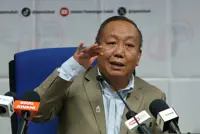
ECoS chief executive officer Datuk Abdul Nasser Abdul Wahid (pic) highlighted that Sabah’s energy landscape, once plagued by supply instability and limited rural access, is now moving towards a more resilient and inclusive system.
"When we came in, the priority was to stabilise the grid. We had to put the house in order before we could talk about transformation," Nasser shared in an interview with Niaga Spotlight.
The turnaround began with urgent interim measures: leasing 200MW of diesel and gas generation capacity, and deploying 100MW of battery energy storage systems (BESS).
These initiatives were crucial in preventing outages and restoring confidence. Sabah is now on track to achieve a 25% reserve margin by the third quarter of 2025, with plans to phase out diesel systems and replace them with permanent gas plants by 2026–2027.
"Electrification of remote areas is another area where progress is accelerating. With 96% rural electrification already achieved, ECoS is collaborating with federal and state agencies, including the Ministry of Rural and Regional Development (KKDW), UPEN Sabah, Sabah Electricity Sdn Bhd (SESB), and JELaS, to reach full access by 2030," he said.
Nasser emphasised that innovative off-grid solutions powered by renewables and supported by local communities will be key.
“Electricity is not a luxury. It is a right. We want communities, especially those long left behind, to be part of this journey,” he explained in a statement on Wednesday (June 25).
Under the Sabah Energy Roadmap and Master Plan 2040 (SE-RAMP 2040), Sabah aims to achieve 40% renewable energy by 2030 and 80% by 2050.
So far, 600MW of renewable capacity, mostly hydropower, has been approved, with a total target of 2,000MW by 2040.
“These projects create jobs, build skills, and unlock business opportunities, especially for youth and indigenous communities,” he said, stressing that this green transition must benefit everyone.
Major developments like the Upper Padas Hydropower Project will be guided by strict environmental and social safeguards, with early stakeholder engagement, environmental protection, and fair compensation at the core.
Sabah’s abundant bioenergy potential, estimated at over 800MW, is being positioned as a new growth area.
ECoS is working on policies that cap biomass exports, encourage methane capture, and support Government Linked Companies-led aggregation, while introducing premium tariffs for green electricity.
“Bioenergy is a hidden gem for Sabah. It's sustainable, scalable, and it creates rural income,” Nasser noted.
While ramping up renewables, ECoS remains clear-eyed about energy security. Natural gas will continue to serve as a key transition fuel, bridging the shift to a greener grid.
Sabah’s strategy supports both the National Energy Transition Roadmap (NETR) and SE-RAMP 2040, ensuring national alignment with local priorities.
Through the TVET Angkat ECoS programme, the agency is investing in vocational training, aligning curricula with industry needs, and equipping local youth to participate in, and benefit from, the energy transition.
“We don’t just want to build infrastructure. We want to build people,” said Nasser.
Looking ahead, Sabah is poised to become a regional energy hub. The long-planned Sabah-Sarawak grid interconnection, expected to be completed by the end of 2025, will enable cross-border electricity trade and support ASEAN energy integration.
“Our goal is to make Sabah a model of a just and sustainable energy transition,” Nasser said.