KUALA LUMPUR: With the rapid rise of DeepSeek and artificial intelligence (AI) reshaping the global landscape, technology is advancing at an unprecedented pace.
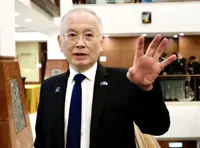
MCA cannot afford to remain in a “Deep Sleep,” says Datuk Seri Dr Wee Ka Siong.
The MCA president urged party members to reflect on the impact of technology.
He shared the example of global geopolitics, particularly the US-led chip blockade, which aimed to restrict semiconductor supplies to China.
He said that, initially, this was expected to deal a severe blow to China, but instead, it unintentionally accelerated China’s technological advancements, particularly in AI.
With a budget of just RM 25.290mil (US$5.6mil) China developed DeepSeek, a low-cost yet high-performance AI model.
Dr Wee noted that DeepSeek’s breakthrough shook the US tech industry, triggering a sharp decline in the stock market.
He explained that tech giants like Nvidia and other Western AI firms suffered market value losses exceeding RM4.75 trillion (US$1 trillion), which he described as a devastating blow.
Speaking at MCA’s 76th Anniversary celebration at Wisma MCA on Saturday (March 1), he shared a joke, saying that China created DeepSeek, the US panicked and said “Deep Shit,” while Europe saw it as a crisis and said “Deep Shock.”
He emphasised that this is the future of technology and that Malaysia must embrace these changes, increase investments, and strengthen its innovation capabilities to secure a place in this fast-moving, competitive world.
He added that all of this teaches that restrictions and challenges are not the end of the road and that with wisdom and courage, breakthroughs are always possible.
He called on MCA members to reflect on DeepSeek’s unexpected rise, stressing that AI has already reshaped the world, technology is advancing at an unprecedented pace, and MCA can no longer afford to be in “Deep Sleep.”
Dr Wee highlighted that staying ahead of technological changes is crucial for Malaysia to tackle future challenges. In this regard, he believes that the two universities established by MCA—Tunku Abdul Rahman University of Management and Technology (TAR UMT) and Universiti Tunku Abdul Rahman (UTAR)—play a vital role in preparing Malaysians for the future.
Meanwhile, Dr Wee reaffirmed MCA’s stance and urged the government to reinstate the Goods and Services Tax (GST), calling it the only viable solution to stabilise Malaysia’s economy.
He said that recently, the World Bank had also publicly recommended that Malaysia reinstate GST, adding that the government must not let pride cloud its judgment or go against global economic trends.
Domestically, he noted that the government has introduced or is planning to implement several key measures this year, including raising the minimum wage to RM1,700 per month, introducing electronic invoicing (e-invoicing) in July, which has been postponed but remains inevitable, increasing electricity tariffs in July, implementing a multi-tier foreign worker levy, requiring foreign workers and employers to contribute two per cent to EPF, enforcing targeted RON 95 fuel subsidies, and expanding the scope of the Sales and Services Tax (SST).
He stated that with so many policy changes happening at once, small and medium enterprises (SMEs) are struggling.
He criticised the government for raising taxes while cutting subsidies, noting that even fuel prices, highway tolls, and electricity tariffs are now adjusted based on income. He pointed out that the root cause behind all these policies is simple: the government does not have enough money.
He noted that from past to present, both in Malaysia and worldwide, there has always been only one solution to this problem—implementing the Goods and Services Tax (GST).