
PETALING JAYA: Alarming levels of family stress, neglect, abuse and feelings of being misunderstood are driving many teenagers away from home, adding to the number of missing persons reported nationwide, according to experts.
This disturbing trend is underscored by a steady stream of new missing teen cases each month.
Recent incidents highlight the severity of the issue, including 14-year-old Tan Joon Tien, who went missing on Dec 28 last year in Cameron Highlands and was found 20 days later in Kedah after trying to hitch a ride to a friend’s home.
Another case involves 14-year-old Noor Amni, who disappeared while jogging with a friend in Puchong, Selangor, on Jan 9, only to be located three days later at a mosque in Ampang.
Ongoing cases include 17-year-old T. Poovenessari, missing since Jan 26 after leaving her home in Taman Semarak, Ipoh, Perak, to meet her boyfriend.
Tragically, the case of Yap Xin Yuan, 15, stands out; she went missing on Dec 19 after a lion dance practice at a basketball court in Batu 11 Cheras, Selangor.
She was later found dead in a river in Banting on Dec 28.

Malaysian Association of Social Workers secretary Amy Bala said that misunderstandings between parents and children are a significant factor driving many youths to run away.
“No child is happy to run away from home; they often feel a lack of belonging if their parents don’t take the time to understand them.
“This leads to most parents missing the signs of their child’s behavioural changes,” she explained.
She emphasised that this issue can affect any child, regardless of their family’s socio-economic background.
“Contrary to common belief, most don’t run away with a boyfriend or girlfriend.
“Instead, they often just go for a walk around town or hang out at a friend’s place,” she said.
She added that emotional reconciliation between runaways and their parents can take months.
Licensed counsellor Dr Anne Jamaludin noted that many runaway cases arise from toxic or abusive home environments.
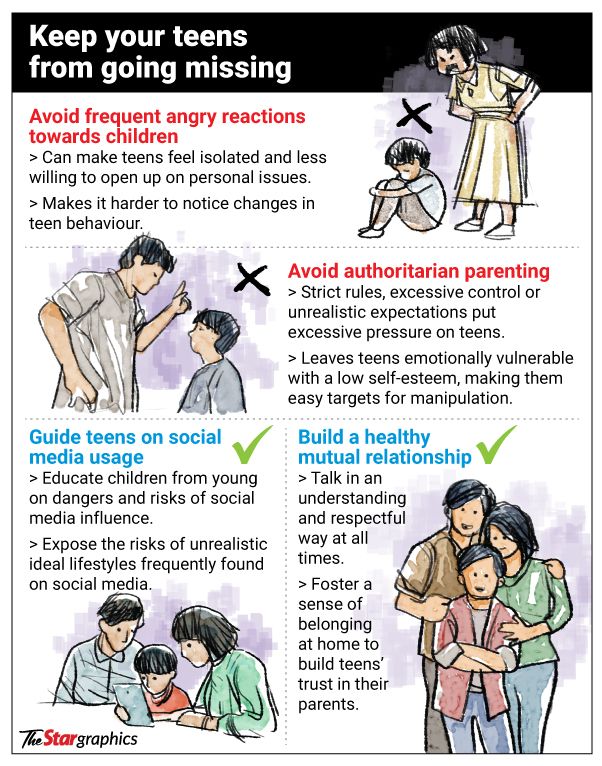
“Authoritarian parenting, characterised by strict rules, excessive control and unrealistic expectations, can make children feel trapped,” she said.
This leads to emotional vulnerability and low self-esteem, prompting them to consider leaving home, she said.
She advised parents and teachers to look for warning signs, such as isolation from family and refusal to eat dinner together.
Nazreen Nizam, executive director of the Women’s Aid Organisation, highlighted that the rise in social media use among children is linked to the increasing number of runaway cases.
“Social media exposes young people to greater risks, including contact with individuals who might influence or groom them into dangerous situations,” she said.
The combination of lack of education and parental supervision heightens their vulnerabilities, especially as they compare themselves to idealised lives portrayed online.
Nazreen emphasised the need for parents to be vigilant and proactive in educating their children about the dangers of social media and online interactions.
MCA Public Services and Complaints Department head Datuk Seri Michael Chong said many youths go missing due to a lack of trust and religious unity in families.
This often leads them to pursue “golden” opportunities without informing their parents, increasing the risk of detention or being forced into scam work.
“Some also run away to elope with partners from different religious or cultural backgrounds, fearing their parents won’t accept their differences,” he said.
Chong noted that he had received around 200 cases of missing youths, with only 58 resolved.
“If there are differing views, parents should communicate respectfully and act as friends,” he advised.
“Building a healthy relationship will make children less likely to be secretive or engage in risky behaviour.”