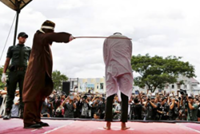
PETALING JAYA: After Friday prayers on 27 December 2024, history will be made in Terengganu when an offender in a khalwat case undergoes six strokes of the cane.
Mohd Affendi Awang, 42, is the first person in the state to be caned in public.
Senior Syariah Court Judge Kamalruazmi Ismail has scheduled the punishment at Masjid Al-Muktafi Billah Shah, Kuala Terengganu
It will be witnessed by 70 guests.
On 20 November, Mohd Affendi was charged under Section 31 (a) of the Syariah Criminal Offences Enactment (Takzir) (Terengganu) Amendment 2022.
He was fined RM4,000 and given a six-month prison sentence if the fine is not paid.
Despite a prior offence on 11 July 2023, the Kemaman District Syariah Lower Court fined him RM2,700 or three months in prison.
On 25 January, he faced the same charges, resulting in four strokes of the cane and a RM3,000 fine.
Syarie caning is rare, and many may not know its differences from civil caning.
The syariah court follows Sections 125 and 126 of the Syariah Criminal Procedure Enactment.
There are key differences between syariah and civil caning, which include:
Syariah - Conducted openly for educational purposes.
Civil - Punishment is carried out privately in prisons.
Syariah – The pain level inflicted is not the maximum possible.
Civil – Sufficiently painful to injure the offender.
Syariah - Caning involves four hudud offences: mukadimah zina, zina, qazaf and drinking alcohol.
Civil - Caning is applied to those found guilty of corruption, breach of trust, white-collar crimes, rape, and other sexual offences.
Syariah - Offenders are fully clothed, including covering the face to protect dignity (according to state law).
Civil - Offenders wear an apron at the waist with hands and buttocks tied to an A-frame.
Syariah - Moderate cane size; length not exceeding 1.22 metres and thickness not more than 1.25 centimetres.
Civil - Thin cane for corruption, breach of trust and white-collar crimes, while a thick cane is used for rape and sexual harassment cases.
Syariah - Executioner swings the cane with moderate force without raising the hand above the head to avoid skin injury.
Civil - The executioner begins punishment by holding the cane horizontally above the head and swinging it to the offender's buttocks with full force.
Syariah - After one stroke, the cane must be lifted, not dragged, and subsequent strokes should be on different parts, avoiding the face, head, stomach, chest, or private parts.
Civil - Punishment must be carried out in one session, and if stopped by medical officers, it will not continue and will be replaced with imprisonment.