PETALING JAYA: He has been living in Ningbo for just about a year. But Marul Azni Maamor has become enamoured by the Chinese port city in many ways.
For one, he is impressed with the transport system in Ningbo, which is located in the northeast Zhejiang province.

Besides being a frequent public transport user, Marul Azni is fond of walking to his workplace.
The Geely senior manager said he would walk to his office and back, which covers a few kilometres.
“I feel safe on the streets at night,” he said.
Marul Azni said the four seasons in China has had very little impact on him.
“I am a person who travels a lot, so I don’t face difficulty in getting used to the weather here.”
Marul Azni, 51, enjoys Chinese cuisine as well. He described it as scrumptious and quite different from the Chinese food back home in Malaysia.
“There are many halal restaurants here, so this is favourable to me as a Muslim,” he added.
Marul Azni is here in China on his own as his wife and three children remain in Malaysia.
Asked about the 50th anniversary of bilateral ties between Malaysia and China, he said that Malaysia should tap into opportunities to learn from China about technological advancements.
“Like China, we need to continue investing wisely in research and development.”
University student Maisarah Izzah Mohd Sukri (pic), who has been studying in Beijing for the past two years, took part in a cultural festival in April with about 20 other Malaysian students.
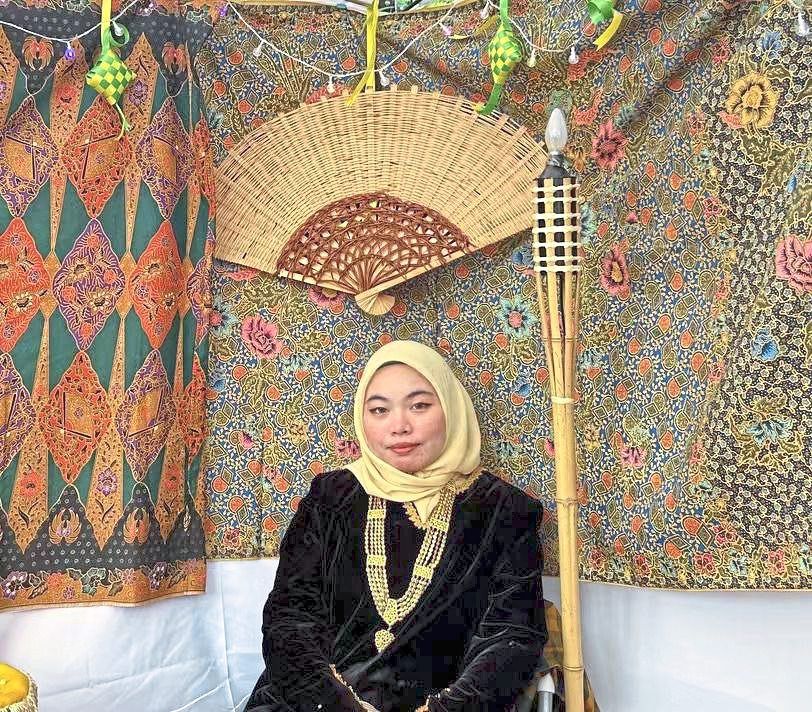
“We worked together to show the best of Malaysia,” she said.
Among other things, they put up a photo booth and a huge replica of the Petronas Twin Towers.
“My friends wore boria costumes,” Maisarah Izzah said, referring to the unique cultural heritage from Penang.
They had borrowed the outfits from the Malaysian embassy in China.
Maisarah Izzah, 23, came to the Middle Kingdom under a scholarship programme from the Education Ministry.
She is taking up Chinese as a second language at the Beijing Language and Culture University.
Although she had not learned Mandarin prior to coming to China, she can now write, read, and speak the language.
“I am quick to adapt to a new environment. I am thankful for this.”
Maisarah Izzah also enjoys visiting historic and cultural places, marvelling at their preservation, considering China’s long history.
Aside from the winter season, she said she did not have many difficulties when she first arrived in the country.
“The Chinese people are welcoming,” Maisarah Izzah said, despite the occasional curious looks she received regarding her tudung.
However, she pointed out that she could not savour Chinese fast food as it is not halal, so her food choices are more limited.
“When I get tired of eating Pakistani or Chinese halal food, I would look for fish or vegetable-based dishes.”
As for the golden jubilee of the ties between the two nations, Maisarah Izzah voiced her hope that the relationship would continue to flourish.