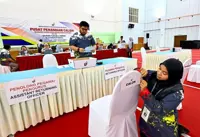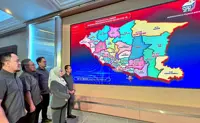
PETALING JAYA: The clash between the Pakatan Harapan-Barisan Nasional pact and Perikatan Nasional in the coming six state elections leaves little room for independents and other parties vying to make an impact, say political analysts.
The number of candidates contesting the 245 state seats up for grabs went up by a third from the 605 in the 13th General Election (GE13) in 2013 to 803 in GE14 in 2018.
This has raised the question of whether more independents and smaller party candidates will be running this time around.
Universiti Sains Malaysia political analyst Prof Dr Sivamurugan Pandian said he expects the number of candidates in the upcoming elections to be less than or close to the 803 recorded during GE14.
“Muda and independents may field a number of candidates, but the dominant parties this time around will be Pakatan-Barisan versus Perikatan.
“Some of the ‘third candidates’ can spoil or split votes but it won’t be big enough to overthrow either Barisan-Pakatan or Perikatan,” he said.
Political scientist Wong Chin Huat also predicted that there would be fewer multi-cornered fights in the upcoming state elections, especially in Malay-majority seats.
He said GE14 saw many three-cornered fights in Malay seats involving Pakatan, Barisan and PAS, with an average of 3.27 candidates per constituency in the 245 state constituencies.
“This time round with Pakatan and Barisan joining forces, and no widespread third-party contestants, the number should be below 2.5 candidate per constituency, or around 600 in total,” he added.
Wong, who is the deputy head (Strategy) of the United Nations Sustainable Development Solutions Network Asia Headquarters at Sunway University, said it was tough to predict whether there would be many independents.
“However, even if 10 independent candidates were to join the fray, that most likely means that they would all lose their deposits.
“Regardless of how many contestants, most constituencies would see only two main recipients of votes,” he said, referring to the main coalitions.
In contrast, Dr Azmi Hassan, a senior fellow at Nusantara Academy for Strategic Research, said he expected many multi-cornered contests this time around, especially in Malay-majority seats.
“There will be many independent candidates and smaller party candidates such as those from PSM and Muda.
“Malay voters are the kingmakers in this election, and with the vote split between Pakatan-Barisan and Perikatan, many ‘third candidates’ may feel they have a chance,” he said.
Dr Azmi added that it was unlikely that independents and smaller party candidates could win, but argued that several of them could be spoilers.
“There are constituencies, especially in Selangor, where the spoilt or split votes that go to the independent candidates could determine who wins between Pakatan-Barisan and Perikatan,” he said.
Already a subscriber? Log in
Get 20% OFF The Star Digital Access
Cancel anytime. Ad-free. Unlimited access with perks.