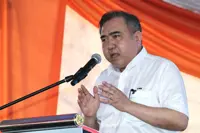
KUALA LUMPUR: Taxpayers will not be barred from travelling overseas solely for failing to pay their CP500 instalments, as travel restrictions can only be imposed after their actual tax liabilities have been finalised and outstanding payments remain unpaid, says Deputy Finance Minister Liew Chin Tong.
He said CP500 was not a final tax assessment, with a taxpayer’s actual liability determined only after the submission of their Income Tax Return Form (BNCP) for the relevant assessment year.
“Failure to pay CP500 instalments does not result in taxpayers being barred from travelling overseas, as CP500 is not a final tax assessment,” he told the Dewan Rakyat during question time on Tuesday (Nov 11).
Liew was responding to Chow Yu Hui (PH-Raub), who sought clarification on whether the Inland Revenue Board (LHDN) had the authority to restrict overseas travel over unpaid CP500 instalments, the legal basis for such action and the number of individuals affected.
Liew explained that the actual tax payable would be recalculated after the income tax return was submitted, with any CP500 instalments already paid deducted from the amount due.
He said only when a balance remained unpaid within the stipulated period would it be classified as outstanding tax and potentially lead to travel restrictions.
“The actual tax liability will only be determined after taxpayers submit their Income Tax Return Form for the relevant assessment year,” he said.
He added that the Immigration Department could impose travel restrictions on individuals blacklisted by various government agencies, including LHDN, the Royal Malaysian Customs Department and the Insolvency Department, to trace debtors and recover outstanding payments.
For LHDN, such restrictions could be imposed on individuals who failed to settle outstanding income tax or real property gains tax under Section 104 of the Income Tax Act 1967 and Section 22 of the Real Property Gains Tax Act 1976.
In a supplementary question, Chow raised complaints from taxpayers who claimed to have been prevented from travelling despite disputing estimated tax payments that had yet to be finalised.
He questioned the justification for restricting a person's freedom of movement over an unconfirmed tax liability, whether a minimum amount of outstanding tax was required and whether affected taxpayers would receive proper notification.
Chow also asked who would be responsible for losses suffered by taxpayers if LHDN's final tax estimates proved inaccurate, and whether the government was prepared to review the policy.
In response, Liew said travel restrictions would generally only be imposed after six months had passed without the outstanding tax being settled and where the taxpayer had failed to respond to LHDN.
“Restrictions are only imposed after the Income Tax Return Form has been finalised. If there are outstanding payments, restrictions are generally imposed after six months if no payment has been made and the taxpayer has not responded to LHDN,” he said.
He advised taxpayers to check their outstanding tax status through the MyTax portal and verify their travel status through the Immigration Department's website before making overseas travel arrangements.