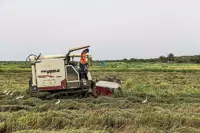
NIBONG TEBAL: The systematic profiling of the soil used for growing rice has almost doubled rice yield per hectare since it was launched in 2016.
Agriculture and Food Industries Minister Datuk Seri Dr Ronald Kiandee said the average yield from where soil profiling was implemented gave an output of 4.7 tonnes per ha, compared with 2.6 tonnes before that.
“Since 2016, soil profiling was implemented in 120,794ha of rice field (55% of the nation’s rice growing areas) at a cost of RM15.7mil. This is to be implemented in the entire country by 2022.
“It helps increase productivity and create better land management in line with guidelines set by Rice Check,” said Kiandee after launching the upgrading of irrigation systems and a book called Site-Specific Nutrition Management Technical at the irrigation scheme in Sungai Acheh here on Saturday.
Rice Check is a guideline launched by the government to manage rice fields to achieve targeted yields and output standards.
“Soil profiling was implemented in Penang, and the scheme in Sungai Acheh was the state’s pilot project. We will continue monitoring the soil based on fertility, with the objective of achieving targeted yields to benefit 5,312 rice farmers with an area of 12,105ha.
Kiandee added that analysis of nutrients in the soil had led to better nutrition for the crop.
“The management of nutrients contributes to 40% of the increase in rice yield, with the balance of 60% through field management, which involves factors such as water management, infrastructure and weather.
On the Site-Specific Nutrient Management Technical report, Kiandee said the publication enabled the senior management of the agriculture scheme to use it as a support system for the overall administration of rice cultivation in the country.
Agriculture and Food Industries Minister Datuk Seri Dr Ronald Kiandee said the average yield from where soil profiling was implemented gave an output of 4.7 tonnes per ha, compared with 2.6 tonnes before that.
“Since 2016, soil profiling was implemented in 120,794ha of rice field (55% of the nation’s rice growing areas) at a cost of RM15.7mil. This is to be implemented in the entire country by 2022.
“It helps increase productivity and create better land management in line with guidelines set by Rice Check,” said Kiandee after launching the upgrading of irrigation systems and a book called Site-Specific Nutrition Management Technical at the irrigation scheme in Sungai Acheh here on Saturday.
Rice Check is a guideline launched by the government to manage rice fields to achieve targeted yields and output standards.
“Soil profiling was implemented in Penang, and the scheme in Sungai Acheh was the state’s pilot project. We will continue monitoring the soil based on fertility, with the objective of achieving targeted yields to benefit 5,312 rice farmers with an area of 12,105ha.
Kiandee added that analysis of nutrients in the soil had led to better nutrition for the crop.
“The management of nutrients contributes to 40% of the increase in rice yield, with the balance of 60% through field management, which involves factors such as water management, infrastructure and weather.
On the Site-Specific Nutrient Management Technical report, Kiandee said the publication enabled the senior management of the agriculture scheme to use it as a support system for the overall administration of rice cultivation in the country.
Already a subscriber? Log in
Get 20% OFF The Star Digital Access
Cancel anytime. Ad-free. Unlimited access with perks.