KUCHING: In Long Lamam, a remote Penan village deep in Sarawak’s Baram district, the new permanent home for Tadika Pawah is nearing completion after construction work started in July.
It’s the result of a project by Sarawak-based volunteer organisation Barefoot Mercy, which is run by Persatuan Perkembangan Pendidikan Orang Pribumi.
“When I first learned of the uncertainty of the Penan preschoolers’ education in 2014, it triggered a call to action for me,” said Anna Wee, co-founder of Barefoot Mercy, and one of the of Star Golden Hearts Award’s 10 winners this year.
“We donated solar lanterns and worked in rural Sarawak, so we had an understanding of the uphill task faced by the educators.”
She decided to assist the kindergarten by running a child sponsorship campaign for the preschoolers and then launch the Kindy Project.
At RM2,400 per year for a child, the programme covers expenses for uniforms, books and school meals.
“I work predominantly at fund-raising, and also to source materials for the project.
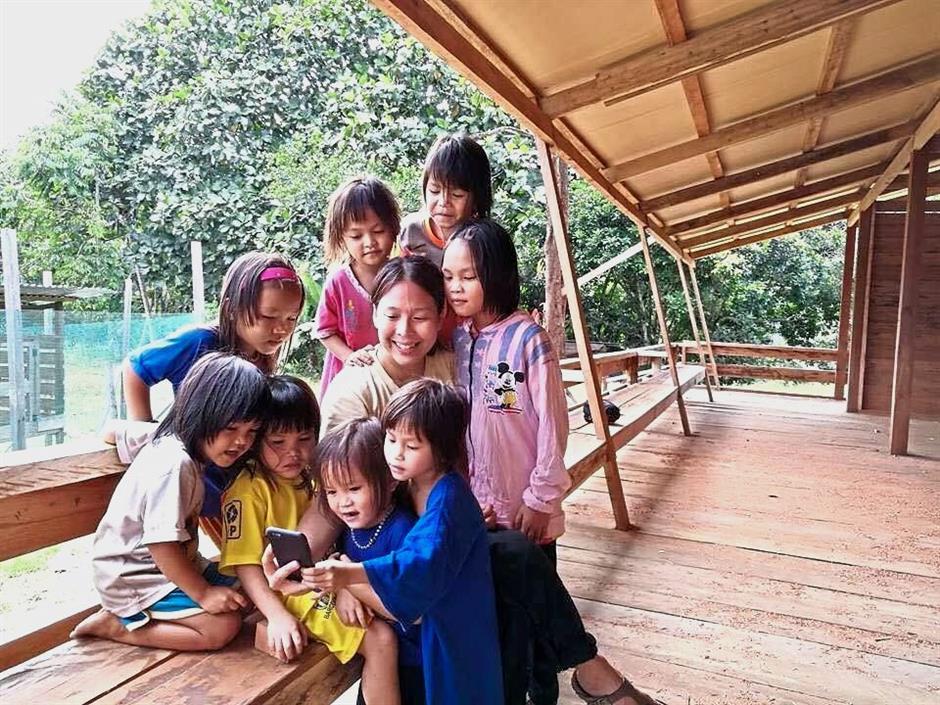
“Our team makes trips to oversee progress on site and ensure work gets done while the architect team makes adjustments to the drawings.
“We all feel strongly that every child has a right to an education, particularly true for underprivileged children,” Wee said.
So far, the main school structure is complete. This is the first phase of the project.
The next phase will be converting the current preschool building into a boarding house to enable the children to remain in school when their parents go foraging in the forest and to prepare them for boarding school away from the village when they enter Year One.
Barefoot Mercy’s co-founder Elaine Chan said the Kindy Project was the largest and longest project undertaken by the organisation.
“It took us a while to raise sufficient funds. There were a few hiccups during planning and once we hit the construction phase, we had to work out immensely challenging material transportation logistics.
“This required travel by logging road for at least five hours and then by longboats on a shallow river for 40 minutes. There is no telecommunication in the village, further impeding the process,” she said.
Chan said it was rewarding to see so many people come on board the project, from those outside Long Lamam who contributed time, energy and money, to the villagers who prepared wood for the building, transported materials and helped with construction.
It was exciting to see how the villagers used the space, she added.
“We wanted to build something different in the community, with open spaces for them to gather in, and we have seen them using it that way. The children treat the building like a giant climbing frame!”
For Wee, the kindergarten will hopefully be a model of learning to help the Penan parents understand the importance of education for their children.
“I feel a school the children, in whatever small measure, for the world they are about to experience.
“Perhaps even curate a syllabus which incorporates their cultural skills like weaving and knowing its value, or preserving their parents’ jungle survival skills which they can teach to urban folks.”
The Kindy Project is currently Barefoot Mercy’s top priority, but its off-grid electrification and social enterprise initiatives are on-going.
Since 2011, Barefoot Mercy has installed nine micro-hydro systems for villages in Lawas and Lubok Antu, and provided solar lanterns for communities without suitable water sources for micro-hydro.
It also works with rural communities to help improve their livelihoods through social enterprise initiatives such as harvesting mountain spring salt from the Lawas highlands and making dehydrated pineapple from Puneng Trusan village.
“We now source artisanal local produce direct from growers and makers from all over Sarawak. These include kelulut honey, coconut palm sugar and coconut oil,” Wee said.
Chan added that Barefoot Mercy’s progression from micro-hydro to social enterprise and education support was a “journey of discovery” with one step leading to another.
“Through micro-hydro we came into contact with rural communities. We were introduced to their products along with the struggles they faced getting to market. That led to our social enterprise initiatives.
“It was also through our off-grid electrification initiative that we came into contact with Long Lamam and that led to the Kindy Project and the student sponsorship scheme,” she said.
Already a subscriber? Log in
Get 20% OFF The Star Digital Access
Cancel anytime. Ad-free. Unlimited access with perks.