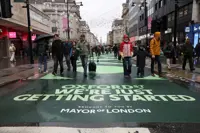
IN October, a nearly 1km section of London’s famous Oxford Street became pedestrian-only. Vehicles and bicycles are prohibited throughout most of the stretch, while delivery trucks are only allowed between midnight and 7am. Future plans include planting more trees, creating rest areas, and raising road surfaces to pavement level.
Oxford Street is among the latest global efforts to transform busy thoroughfares into more welcoming pedestrian spaces.
Pedestrianising major roads is not new. In 1962, Denmark’s heavily congested Stroget area in Copenhagen was converted into one of Europe’s longest pedestrian shopping boulevards. The 1.1km stretch was initially closed on a trial basis – in the face of opposition from business owners. However, the trial demonstrated that removing motor traffic could boost retail sales, encourage tourism, and bring more life to the streets. Stroget subsequently became permanently pedestrianised.
Similar initiatives have been introduced elsewhere in Europe, including Spain’s La Rambla in Barcelona, where traffic is restricted to narrow lanes alongside the wide walkway, France’s Rue Sainte-Catherine in Bor-deaux, and the Netherlands’ Kalverstraat in Amsterdam.
In China, Shanghai’s Nanjing East Road, Chengdu’s Chunxi Road, and Beijing’s Wangfujing Street have all been pedestrianised. Between 2003 and 2005, authorities in Seoul removed an elevated highway in the Cheongg-yecheon area and replaced it with a linear park and restored a stream. The project improved biodiversity, reduced heat and air pollution, and became a popular spot for residents and tourists.
Why go pro-pedestrian?
Despite the appeal, introducing permanent pedestrianised streets in South-East Asia comes with challenges.
Many cities remain heavily reliant on private vehicles, while last-mile public transport connections are often limited. Tropical heat and heavy monsoon rain can also make exposed pedestrian areas uncomfortable, particularly without adequate tree cover and shaded walkways.
Businesses may also resist, especially shopkeepers concerned about losing delivery access and customers who currently drive directly to their premises.
However, thoughtful planning and the right infrastructure can bring significant benefits.
Tree-lined walkways and shaded public spaces can reduce urban heat and improve air quality. While shopkeepers may initially worry about losing drive-by customers, increased foot traffic could encourage people to spend more time in the area, stopping for meals, browsing shops, and visiting cafes.
Malaysia already has examples of temporary road closures, including Kuala Lumpur’s Jalan Alor at night, Melaka’s Jonker Street on weekend evenings, and KL’s Sunday car-free 7km morning loop.
Could these initiatives eventually become a permanent part of our cities? Places such as the Unesco-listed George Town heritage area, Jonker Street, and KL’s Chinatown and Bukit Bintang areas could offer opportunities to rethink how we use our streets, giving people more space to slow down and enjoy the city.
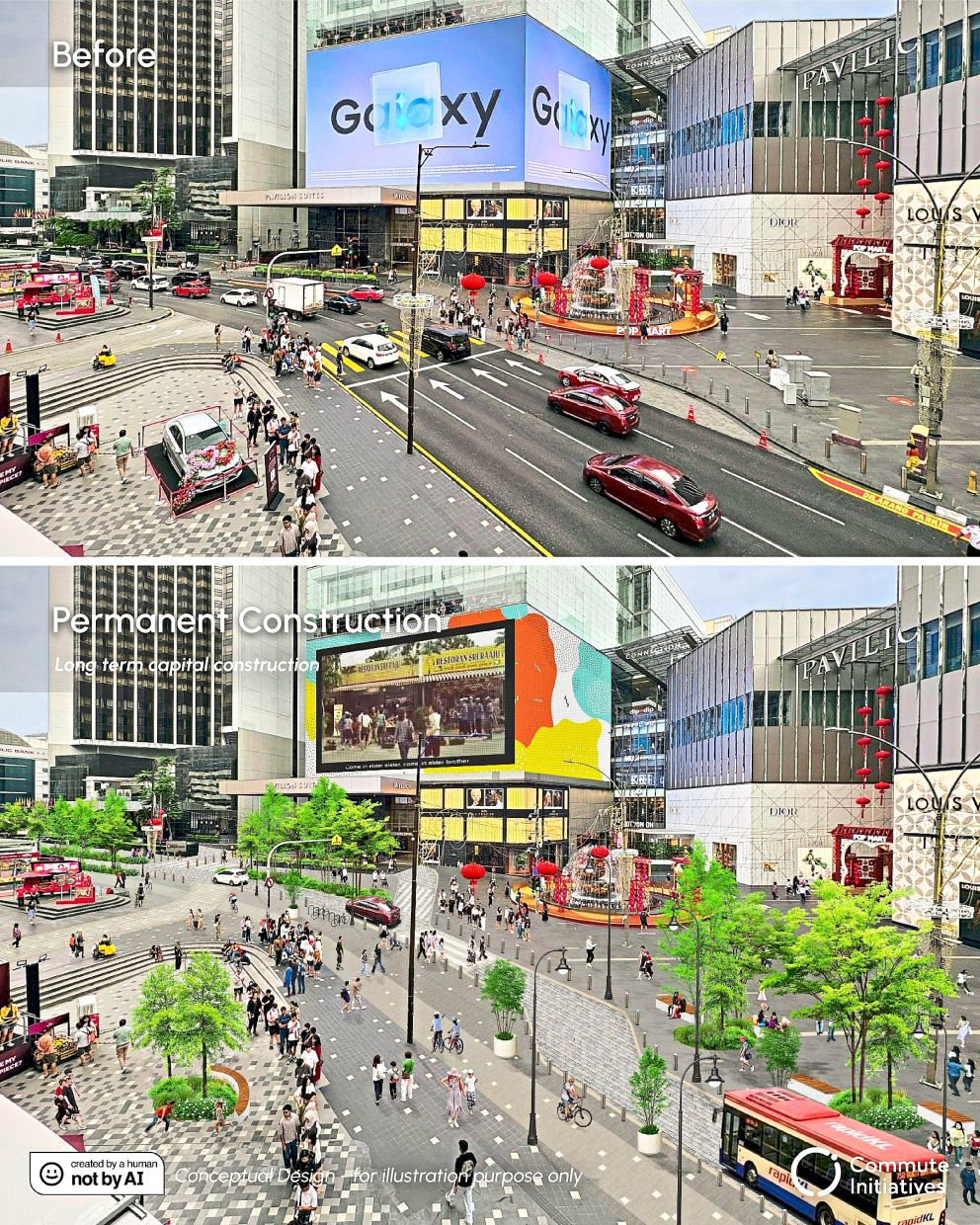
More than just closing roads
Town planner Mardiana Mohd Salleh believes pedestrianisation is feasible in Malaysian cities, but it requires more than just closing roads to vehicles. The goal is to rethink how we plan and design our cities so that people are given equal or even greater priority than vehicles.
Malaysia is not starting from zero, says Mardiana, who heads the Knowledge Platform and Advocacy at Urbanice Malaysia under the Housing and Local Government Ministry.
National policies, including the National Physical Plan, National Urbanisation Policy, and National Transport Policy already promote pedestrian accessibility, walkability, and sustainable urban mobility. However, implementation remains a sticking point.
“We need to look at why pedestrian infrastructure is still often given less priority when development takes place. In many cases, roads, traffic requirements, utilities, and other infrastructure take precedence, while pedestrian facilities are designed around what is left,” says Mardiana.
Areas with high pedestrian activity, commercial attractions, and good public transport connectivity have strong potential for pedestrianisation. Mardiana suggests starting with pilot projects, weekend closures, or selected operating hours, allowing authorities to assess the effects on traffic and businesses before expanding the schemes.
Managing implementation
Mardiana says pedestrianisation requires phased implementation, traffic studies, and collaboration among authorities, businesses, and the community.

Authorities must consider how road closures affect surrounding traffic and improve public transport connections, particularly for first- and last-mile journeys.
Businesses also need practical arrangements for deliveries and customer access, including designated loading zones, delivery time windows, and nearby parking facilities.
Given Malaysia’s climate, shaded walkways, trees, and resting areas are equally important. These spaces must also accommodate everyone, including older people, persons with disabilities, children, and parents with strollers.
Streets that we use, not just pass through
Mardiana believes pedestrian design needs greater attention from the earliest stages of planning. While many developments provide walkways to comply with planning guidelines, their quality, continuity, and usability are not always given due attention.
“A pedestrian walkway should not simply be a space for people to pass through. It should be designed as an essential part of the city’s infrastructure, just like roads,” she says.
This means creating connected routes with universal accessibility and climate-responsive features, alongside safe and attractive public spaces. Benches, pocket parks, playgrounds, landscaping, and public art can encourage people to spend more time outdoors and interact with their surroundings.
“Pedestrian pathways could incorporate heritage stories, local culture, interactive installations, or interesting urban design elements that make the walking experience more engaging,” she says, emphasising that the objective is to create streets that people want to use, not simply streets they have to pass through.
Achieving success
Successful pedestrianisation means people use the streets, feel safe, and enjoy better accessibility, while businesses benefit from an improved urban environment, says Mardiana.
Authorities must also ensure the changes do not create new problems for surrounding neighbourhoods, making traffic management, public transport connectivity, and community engagement essential.
“The objective is not to eliminate vehicles completely. It is to create a better balance between vehicles and people, and to ensure that our streets serve the needs of the entire community,” says Mardiana.
“We have successfully planned and built roads and highways to facilitate the movement of vehicles. Perhaps it is time we give the same level of attention to pedestrians. A city should not only be designed to move vehicles efficiently, but also to allow people to move safely, comfortably, and conveniently.”