
HALFWAY through the morning, I’m being tossed around like a popcorn kernel in the back of a troop carrier playing an eclectic medley of Backstreet Boys and Papua New Guinean jams.
We’re travelling along what feels more like a collection of loose rocks, arranged to be roughly vehicle width, than a road.
I’ve lost count of the river crossings, including one where the water lapped a few centimetres from the car’s windows.
And this is during a dry spell.
Our caravan is headed for an unlikely tourist destination deep in the jungle on Bougainville Island, an autonomous region of Papua New Guinea in the Solomon Sea.
The piecemeal remnants of a Mitsubishi G4M1 – Betty, as the planes were code-named by the Allies in World War II – have remained for some 80 years at the crash site of Japanese navy Admiral Isoroku Yamamoto.
This is the spot where Yamamoto, mastermind of the Pearl Harbour attack, archvillain to Americans in the war and a respected and memorialised figure to the Japanese, met his end in 1943.
In April that year, American P-38 Lightning fighters, tipped off by deciphered Japanese communications, shot down his plane over southern Bougainville, a feat dubbed Operation Vengeance.
Visiting the relic is not for one faint of heart, time or expense. And yet, war history buffs, Japanese pilgrims, a Chicago hot dog baron and lately, YouTubers, have made the journey, bringing a mix of curiosity, complicated feelings on war and, for many, the desire for bragging rights over going where few have gone.
My own journey involved flights to Port Moresby and Buka, a ferry, then eight hours on rough roads, up and over the fog-shrouded Crown Prince Range, to reach the start of the jungle trek.
I was in Bougainville with photographer Matt Abbott to report on the region’s quest for independence.
On our final day, we visited Yamamoto’s plane, and I was curious why people would go to such lengths to reach it.
I imagined I might meet Japanese visitors reflecting on their country’s wartime legacy.
As it happened, the group scheduled to make the trip that day with Zhon Bosco Miriona, who runs Bougainville Experience Tours, was made up of Chinese tourists.
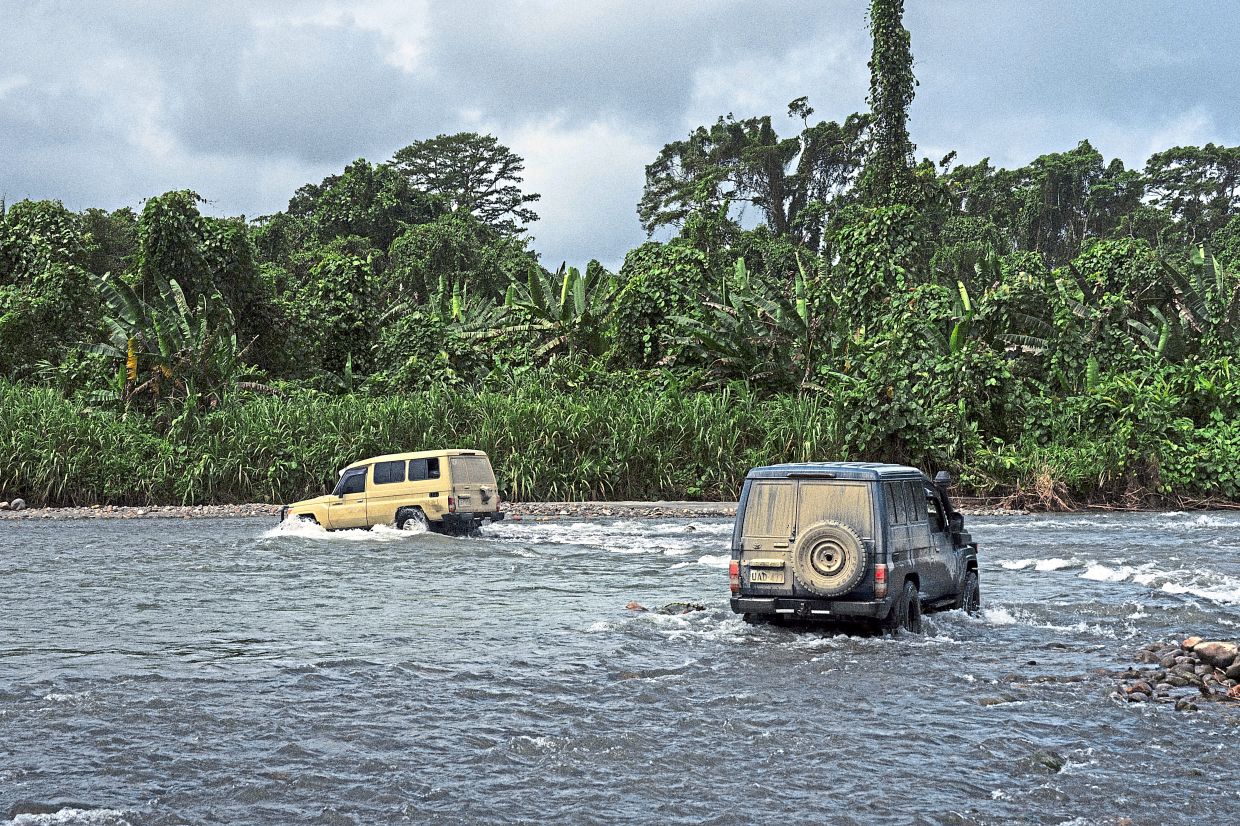
So there we were in three cars – seven Chinese visitors, two journalists, a handful of guides and drivers.
The group had found each other online, looking for others game to go off the beaten path.
Xiaoyu Xu, a chemical engineer, told me he had been to 110 countries and was making his way through a list of 330 destinations.
Around 2pm, we arrived at an idyllic village with thatched roofs, lovingly tended flowers and cocoa beans laid out to dry.
This was Kokopo, where the trek would begin.
Leading us was the village chief, Robert Nunu, whose father was among those who rushed to the crash site in 1943.
In Japan, the account told was that Yamamoto had perished as a dedicated soldier, found seated upright in the wreckage with a white-gloved hand on his sword.
Nunu said his father had told a different story: that villagers had extracted the admiral badly burned, but still alive. He died later that day, he added.
Nunu was shirtless, in teal-coloured galoshes with a machete as long as his arm. We would shortly come to see the wisdom of both.
Within 10 minutes, we came across a knee-deep stream.
I stripped off socks and boots, mosquitoes immediately flocking to my shins.
At the next crossing, I gave in and waded, muddy water squishing in my boots.
After an hour and a half slogging through the vegetation, we came upon a small, unimpressive pile of metal.
Don’t worry, this isn’t all of it, Luke Raupeto, our guide, said.
A minute later, we reached the main attraction: the crumbling fuselage, the broken engine and other fragments strewn through a jungle glade.
Since 1984, the centennial of Yamamoto’s birth, members of the Yamamoto Admiration Society have made pilgrimages to the wreck from his birthplace of Nagaoka, holding modest rites with sake and food.
Some villagers carried the Japanese visitors piggyback across the streams, recalled Mathias Pihei, a regional administrator at the time.
“As soon as we approached the crash site, they would shout, to greet the spirit,” said Pihei, 74.
If his spirit was there with us, it didn’t make itself known. The tourists busied themselves taking photos of the aircraft, climbing the fuselage to pose by the tail fin.
After about half an hour, we began the trek back, the skies darkening and fat droplets of rain starting to fall.
The villagers hacked off elephant ear fronds to use as umbrellas. It was nearly 6pm by the time we were back at the cars.
Pihei said he wished the plane were shielded from the elements so it could stand as a symbol.
The admiral may be associated with Japan’s wartime atrocities for many, but in Bougainville, still reeling from its own war, it could mean something different.
“When they see the plane, they see peace, because the person who died in the plane was a man of peace. He did not want war,” Pihei said.
“Bougainville, too, does not war anymore. That plane and Bougainville are one. That’s the way I see it.” — ©2026 The New York Times Company
This article originally appeared in The New York Times
Already a subscriber? Log in
Get 20% OFF The Star Digital Access
Cancel anytime. Ad-free. Unlimited access with perks.