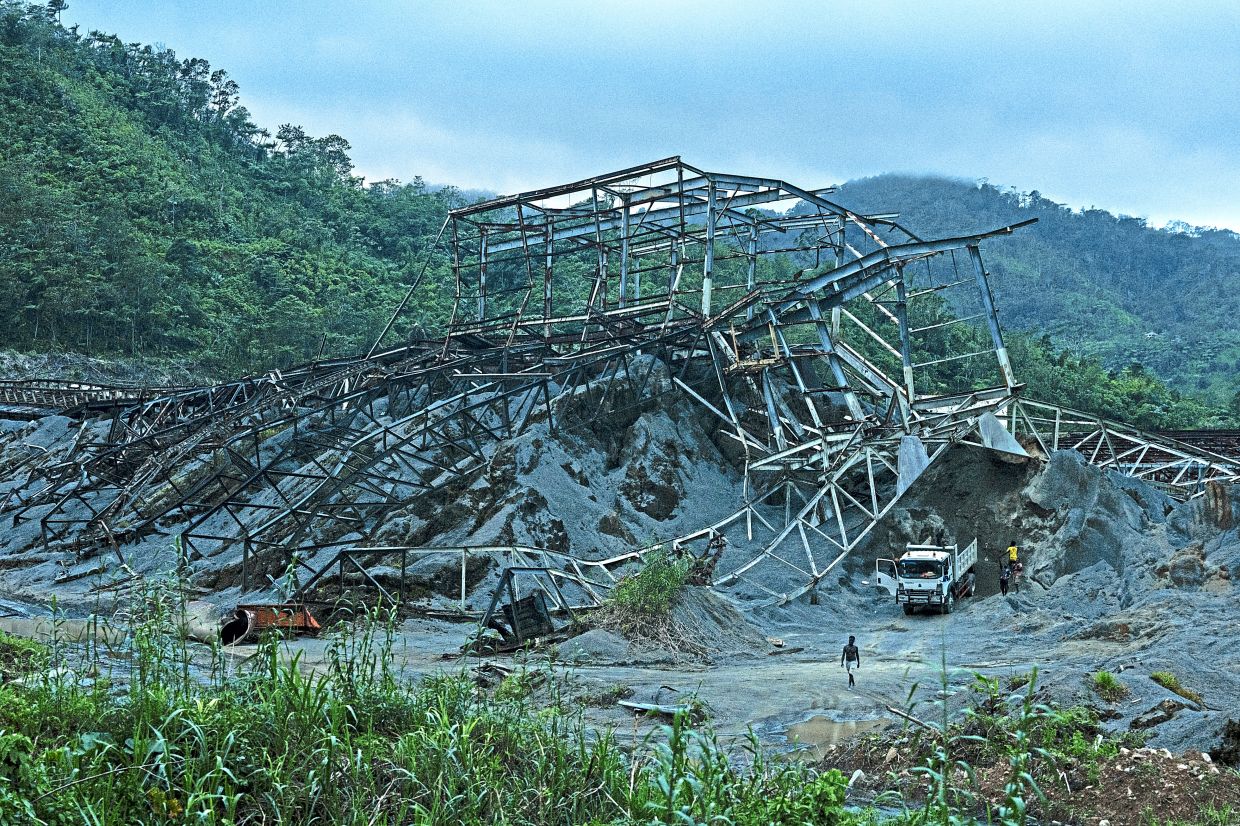
THE years had covered the skeletal structures of the abandoned mine with rust, filling its shafts with sludge and debris several stories deep.
Green leaves sprouted from crumbling industrial equipment. What was left of a water pump station was repurposed as a church, with steel beams for pews.
Four decades ago, the vast Panguna mine on Bougainville, an island on the eastern edge of Papua New Guinea, abruptly shut down.
It closed after sabotage by residents irate that less than 2% of the wealth generated by the Australian-run copper and gold mine went to the local community, even though it obliterated whole villages and buried swaths of land downstream in mine waste.
That anger spiralled into a decade-long civil war in the island’s jungles, as a ragtag separatist militia held Papua New Guinea’s military at bay.
“The Crisis”, as it is now known, left as many as 15,000 people dead and displaced a generation, while cementing Bougainville’s desires for independence.
Now, the dormant mine is whirring back to life, spurred by aspirations for the region to become the world’s newest country – and a growing appetite for copper.
The island’s leader, President Ishmael Toroama, a former rebel commander, has pledged Bougainville will be governing itself by next year, its future funded by the mine.
Global demand for the estimated 5.3 million tonnes of copper buried in its depths has surged. But the rush of interest raises the question: will its resources be extracted in a way that benefits the people of Bougainville, or will history repeat itself?
Late last year, the Autonomous Bougainville Government brought on a little-known Indian company, Lloyds Metals and Energy, as a partner in redeveloping the mine.
Since then, heavy machinery has been careening along unpaved roads leading to the pit, while mining engineers and technicians from India have filled lodges in the nearby town of Arawa.
Former combatants loyal to the president guard access to the mine, which Lloyds said in a statement should resume operations in early 2028.
The rapid progress has unnerved some landowners, observers and older Bougainvilleans who remember the descent into conflict and worry of renewed violence.
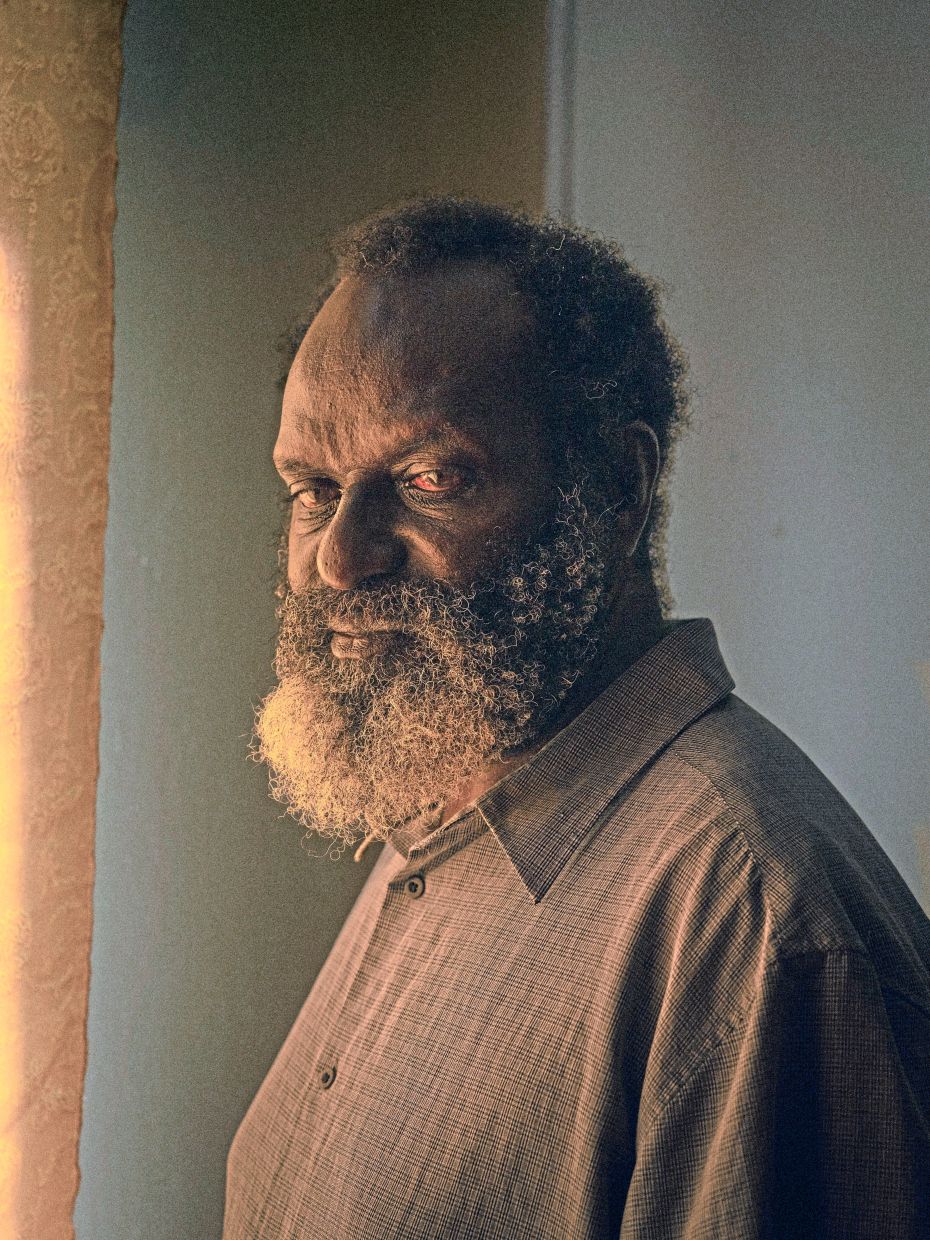
“If you’re walking fast, too fast, you have more chances of sliding over, and probably you can even break your head,” said Dennis Kuiai (pic), who fought alongside the president and is now a regional director in the Justice Department. “We should be taking time, making sure that we are doing things the right way.”
Lloyds said in the statement it is aware of the sensitivities.
“Panguna’s history makes careful consultation with landowners and communities essential,” the company said, adding that its aim is a project that “delivers lasting local benefits”.
Tensions briefly erupted recently, when 45 heavy vehicles bearing the Lloyds insignia were set on fire by saboteurs presumed to be local alluvial miners.
Toroama called it an “isolated act of violence by individuals” and said work would “continue without delay”.
The geography around Panguna is defined by vestiges of the mine. Instead of referring to villages by name, people will say they live by the drainage tunnel, the water pump station, in the pit or on the upper, middle or lower tailings – large areas covered in mine waste.
In August, New York Times journalists spent several days in Bougainville, travelling to the bottom of the mine pit and throughout the area, speaking to residents and workers.
In a sign of sensitivities, some workers accused journalists of spying for other would-be mine operators, and an agitated group of men who said they were former combatants briefly wrested away the photographer’s camera.
Philip Ken’s village, which was forced to relocate three times because of the mine, now sits by the pump station-turned-church. There, the psalm from Sunday’s service was scrawled on a chalkboard, and two statues of the Virgin Mary gazed out at the nave.
Born in 1970, two years before the mine opened, Ken knows only from stories what his home was like before – that wild pigs roamed, and the river teemed with fish.
“My family was living downstream. Now it’s a desert,” said Ken, 56.
He fought in the Bougainville Revolutionary Army in the conflict that lasted from 1988 to 1998.
“I fought for my land, having heard what the mining had done.”
In the years since the mine was halted, people in his village and others have relied on panning for gold in the runoff.
The tough but profitable work draws children as young as 10. Many use mercury because it binds to gold. The health effects are apparent in his community, where few live past 60, Ken said.
“You cannot see grey hairs in the tailings,” he said.
For the first time in decades, Lloyds is promising new jobs. Young women from Ken’s village are among 150 the company has started training to sew – but the wages pale in comparison with alluvial mining.
Whether Bougainville can be economically viable on its own has been a key question on its path to independence.
In a peace agreement signed in 2001, Papua New Guinea and Bougainville’s leaders agreed that the territory would be run autonomously and that a referendum would be held to determine its political future.
In 2019, that vote was finally held, and Bougainvilleans’ wishes were resounding: 98% wanted independence.
At the same time, lawmakers in Papua New Guinea have questioned whether Bougainville can sustain itself economically.
“The president thinks we get independence just by opening the mine,” said Michael Pariu, 77, chief of the Nasioi people, whose village is near the tunnel.
The rush to reopen seemed to take precedence over other basic preparations, like governance, social services and education, he said.
In November, Toroama surprised Bougainvilleans by signing a memorandum of understanding with Lloyds Metals, which operates iron ore mines in India but had no track record of developing or operating mines internationally.
Toroama rejected a proposal to partner with CMOC, a major Chinese miner and one of the world’s top copper producers.
“If Lloyds Metals and Energy Limited truly respects Bougainville’s past, then the first test will be transparency, accountability and a clear demonstration of how this partnership will uplift our people – not just extract our resources,” one resident, Walter Magut Buk, wrote in a Facebook comment on the day of the announcement.
By mid-August, signs of Lloyds’ intensifying of operations were apparent throughout the Panguna area and in Arawa.
Residents carried golf umbrellas bearing the Bougainville flag and the Lloyds logo, reinforcing the association between independence and the company.
Rows of new heavy machinery sat in the nearby Loloho Port. Construction was in full swing at the site of a 100-bed hospital Lloyds had promised to build.
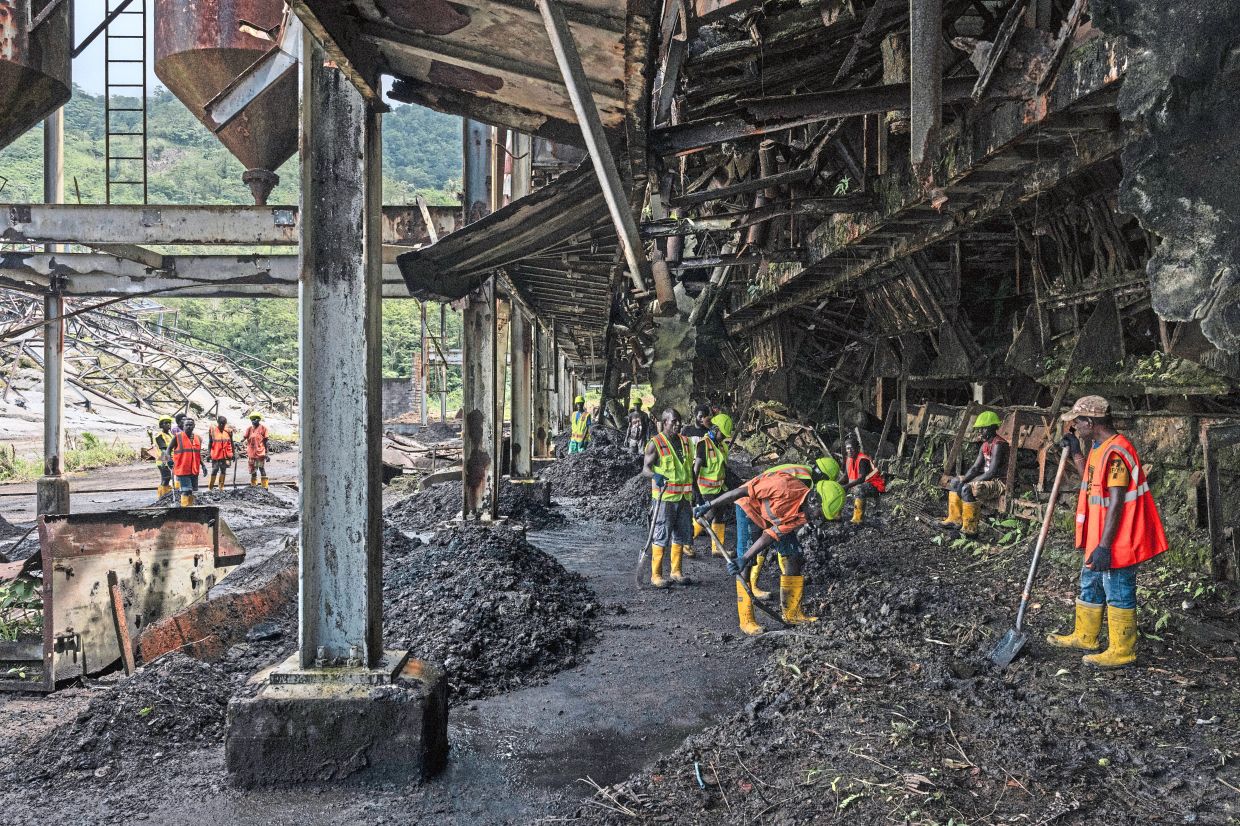
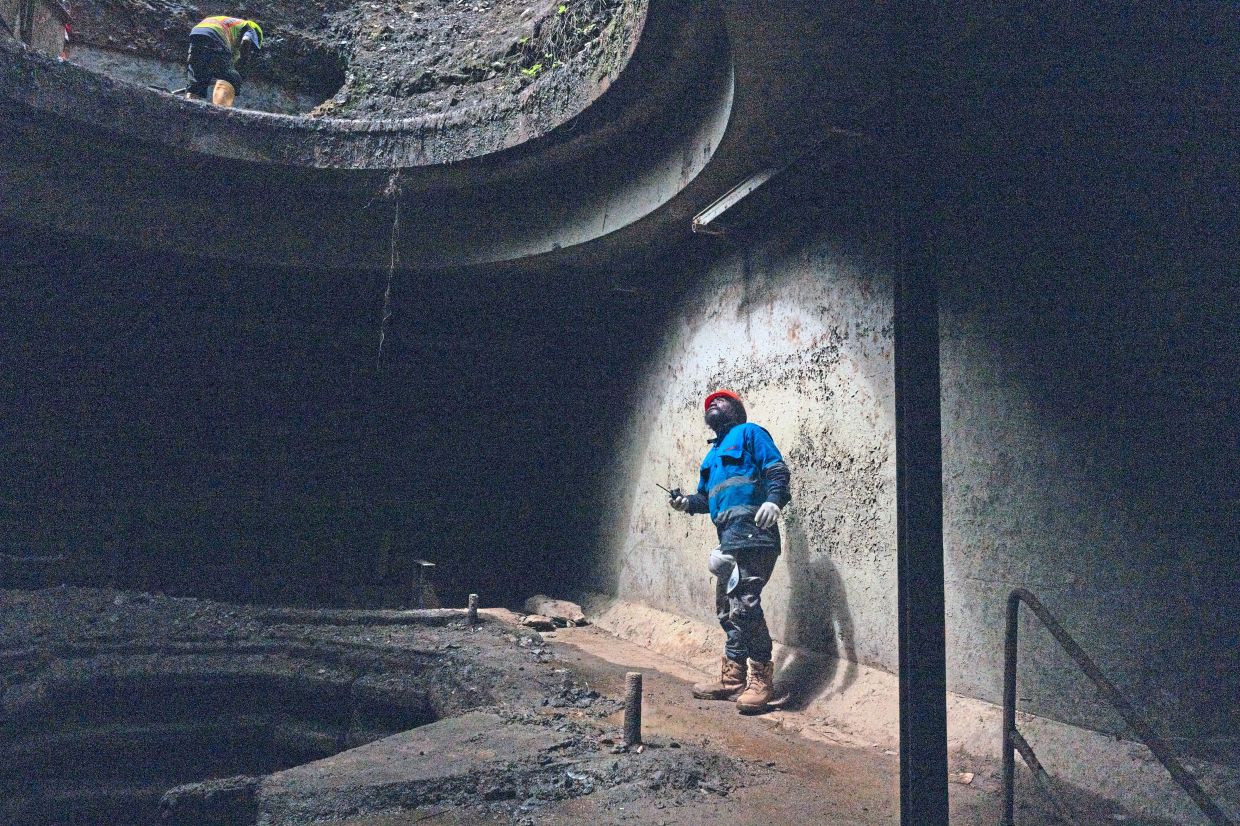
In a mine shaft inside the Panguna pit, workers said they had been shoveling away for a month at 40 years of accumulated sludge.
One man said he was being paid minimum wage of 5 kina an hour, about US$1.12, and had not been given gloves or masks. He glanced over his shoulder and stopped speaking when an Indian supervisor approached.
Lloyds promised that they can get the mine up and running faster than other companies, particularly Western ones, said Samson Kaissy, the chair of the landowners’ council.
“With Lloyds, they will never waste time. Once they talk, at the same time, they bring the funds,” he said.
The race to restart the mine complicates another hard-fought process: cleaning up the devastation left behind by the departure of Rio Tinto, which controlled the mine through a subsidiary.
Theonila Roka Matbob was among 156 Bougainvilleans who filed a complaint against the mining giant in 2020, seeking remediation for environmental and human rights harms.
Some of the most urgent work was getting under way just as Lloyds entered the picture, she said. Rio Tinto has said it is continuing to engage in efforts to address the mine’s impacts.
“We have a legacy to fix,” said Matbob, who filed the complaint with Australia’s Human Rights Law Centre.
She said she worries that the hurried reopening is “jumping on the wagon on the way to more destruction”.
Matbob, 35, whose father was killed during the crisis, said her village had been rebuilding the community and rehabilitating their land.
From 1972 to 1988, the mine was churning out 100,000 tonnes of waste rock daily, enough to fill a football field three stories high, deposited downstream.
On a rainy day in early August, in a bid to ease tensions, the government staged a “blood cleansing” ritual at the mine to release the land of its burdens.
It said in a statement it wanted to dispel notions that former combatants were taking over mine operations by force.
— ©2026 The New York Times Company
This article originally appeared in The New York Times
Already a subscriber? Log in
Get 20% OFF The Star Digital Access
Cancel anytime. Ad-free. Unlimited access with perks.
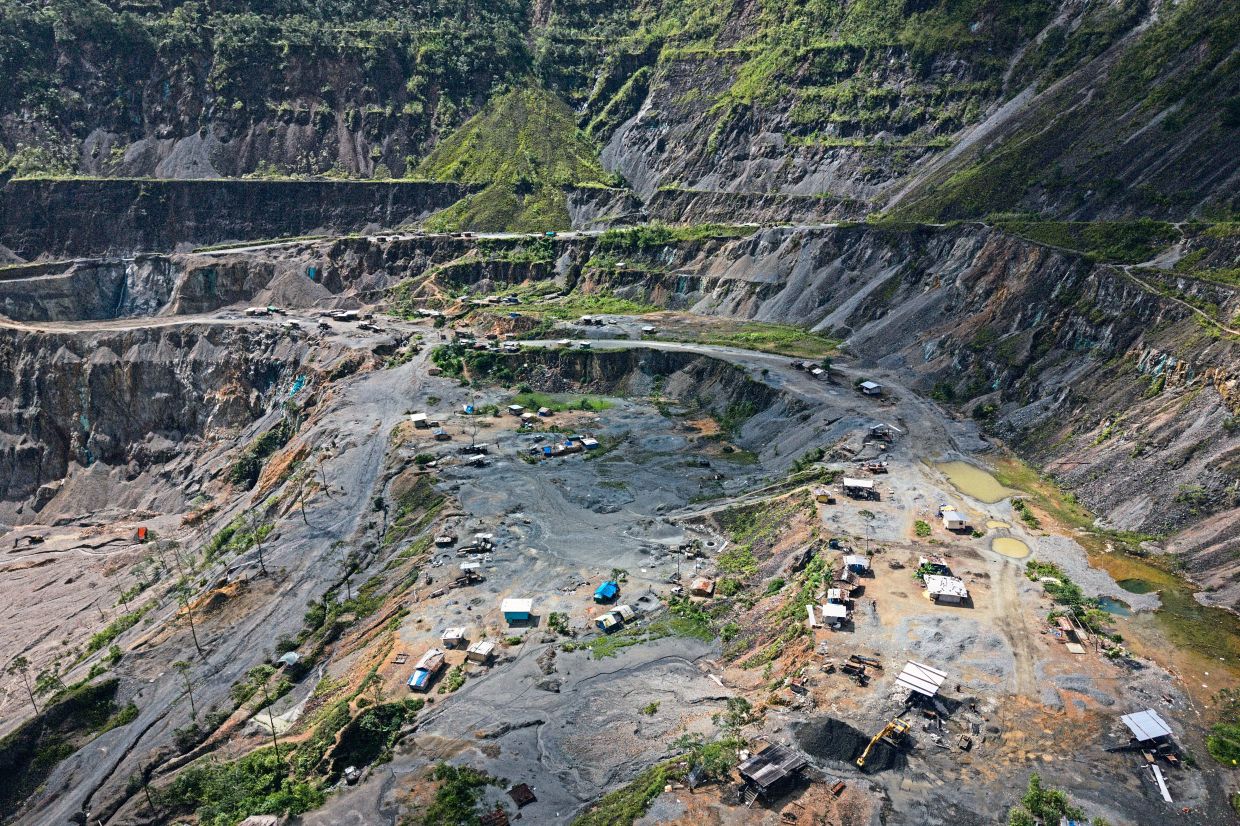
Small homes and settlements inside the pit of the Panguna copper and gold mine on Bougainville in Papua New Guinea. Communities of alluvial miners continue to live and work there despite efforts to move them out as redevelopment of the mine moves forward. — Matthew Abbott/The New York Times
A Lloyds Metals and Energy worker inside a facility where they are clearing decades of accumulated mud and debris. — Matthew Abbott/The New York Times
More workers clearing debris within a former processing plant as part of preparations to reopen the Panguna copper and gold mine on Bougainville. — Matthew Abbott/The New York Times
People scavenging amid the ruins of a mine processing plant destroyed during the Bougainville conflict at the Panguna copper and gold mine. — Matthew Abbott/The New York Times