



WHEN Datuk Shamir Aziz took the helm of the Human Resource Development Corporation (HRD Corp), he inherited an organisation grappling with questions over governance, financial management and accountability.
The 2024 Auditor-General’s report flagged 62 levy applications amounting to RM1.68mil that were approved after training had already taken place.
The report also highlighted questionable training applications involving repeated participant information and training facilities that did not correspond with approved specifications.
Tasked with restoring confidence in the agency, which manages training levies contributed by more than 109,000 employers for the benefit of some 5.4 million Malaysian workers, Shamir has spent the past nine months spearheading a series of reforms aimed at addressing longstanding issues and strengthening institutional oversight.
Among the changes introduced under his leadership are stricter grant approval procedures, enhanced verification of training programmes, an overhaul of procurement practices and measures to safeguard the organisation’s investments.
These efforts have also seen HRD Corp recover RM447.2mil in investments while significantly expanding its monitoring of training programmes.
With the organisation now looking beyond its legacy challenges towards strengthening Malaysia’s workforce development, Shamir speaks to Sunday Star about the decisions behind these reforms, the challenges of implementing change and his vision for HRD Corp’s future.
> What were the biggest challenges you faced when you took over as Chief Executive of HRD Corp?
The biggest challenge was having to rebuild trust while addressing years of legacy issues, from questionable investments and governance weaknesses to gaps in grant approvals, procurement and accountability.
Equally challenging was the task of shifting entrenched mindsets, restoring staff confidence and reassuring over 109,000 employers that their contributions were being managed responsibly.
Fixing systems takes time. Rebuilding trust takes longer.
> What have been the most significant governance reforms you have introduced since taking office?
The most significant governance reform is the way training grants were applied for, approved, and verified.
Let me say this clearly: retrospective training approvals are a thing of the past.
HRD Corp’s approvals will not come after trainings have taken place.
Under our new policy, every single training session must be submitted at least 14 days in advance. No exceptions.
This 14-day window gives our team the time to rigorously scrutinise paperwork, enforce compliance, and leave virtually zero room for manipulation.
> How have the changes to grant applications and training verification improved HRD Corp’s operations?
Since the 14-day advance application policy took effect in June, HRD Corp has received 137,460 applications under HRD Corp Claimable Courses for its in-house training and public programmes, an increase of nearly 12% over the same period last year. However, the approval rate declined to 78.8% in 2026, compared with 93.1% in 2025, reflecting more rigorous screening under the reformed process.
Most approvals came from the manufacturing sector (26%), followed by wholesale and retail (14%), professional and technical services (12%) and construction (8%). Nevertheless, approving a grant is only half the job.
In the past, the system barely checked whether these classes actually took place once the grant was approved.
We tore down the old framework and rebuilt it around active verification. The results speak for themselves.
In 2025, HRD Corp verified 6,231 training programmes. However, between June and September 2026 alone – after we stripped down the old framework and implemented the new reforms – we verified 19,322 sessions. That is roughly three times the previous year’s total, achieved in under four months.
Of course, we had staffing constraints. So, we modernised the verification process: over 15,000 trainings were verified digitally, while 3,500 underwent physical inspection.
HRD Corp is currently building a system to confirm attendance through MyDigital ID, QR codes, geotagging, and timestamps. The technology will be piloted in 2027 and operational by 2028. But we are not stopping there. Our target is 100% verification.
These tighter guardrails would not come at the expense of employers, and the data proves it. From January to October this year, HRD Corp had disbursed RM1.4bil across 335,877 approved claims.
This figure represents the 335,877 decisions by employers to invest in their people, and HRD Corp stood behind every one of them.
> What measures have you introduced to safeguard HRD Corp’s investments and prevent future financial irregularities?
We looked into four critical areas – the management of unutilised levies, the acquisition of Menara Ikhlas, investment management, and the overdue RM14mil procurement of the New Core System.
The six senior officers suspended earlier this year are no longer with the company. Three were subsequently officially dismissed.
On the investments, between 2020 and 2024, part of the organisation’s funds was placed in high-risk instruments without adequate guardrails.
We re-engineered our financial strategy and to date, we have recovered RM447.2mil.
The remaining exposure is down to RM396.3mil, or 8.6% of total investment funds, and legal action to recover the rest is ongoing.
Despite that, investments are legally permitted under the Human Resources Development Act 2001, and they are entirely necessary to sustain HRD Corp’s operations and pay staff salaries.
The four percent service fee, event revenue and other income streams are simply not sufficient to sustain HRD Corp’s vast operations, especially to support three million training opportunities in 2027.
This episode cannot repeat itself. Moving forward, all investments must be backed by collateral equivalent to at least 120% subject to the investment risk profile. Put simply, if an investment fails, we can claim assets worth more than we invested.
We believe accountability is where reform begins, not where it ends. I was brought in to clean up HRD Corp, and that is exactly what I intend to do. There will be no tolerance for failures of accountability.
Every ringgit entrusted to us belongs to Malaysian employers and workers, and we will ensure it is managed with the discipline and integrity they deserve.
These are the steps we are taking to resolve the 2024 Auditor-General’s report findings.
Of the 10 issues raised, four were closed in 2025; responses and supporting documents for another five were submitted to the Auditor-General’s dashboard, and the final issue is being addressed.
An essential part of the reforms includes the appointment of five new Board members in February whose expertise spans retail, Islamic finance, manufacturing, export markets, energy, and cooperatives.
This diverse leadership will strengthen checks and balances, safeguard public trust, and drive meaningful skill development for Malaysia’s workforce.
> How have the changes to procurement procedures strengthened transparency and accountability within HRD Corp?
After the RM14mil New Core System, a digital platform previously procured by HRD Corp, ran years behind schedule and failed user acceptance testing three times, we revamped the procurement process.
Now, every procurement goes to open tender, judged by three separate, cross-departmental committees.
For smaller purchases, the cheapest bid no longer wins by default; quality, delivery, and value are now paramount. Aligning with Ministry of Finance guidelines, tender periods have been extended from seven to 21 days. A fair process is not a favour we grant. It is an obligation we owe.
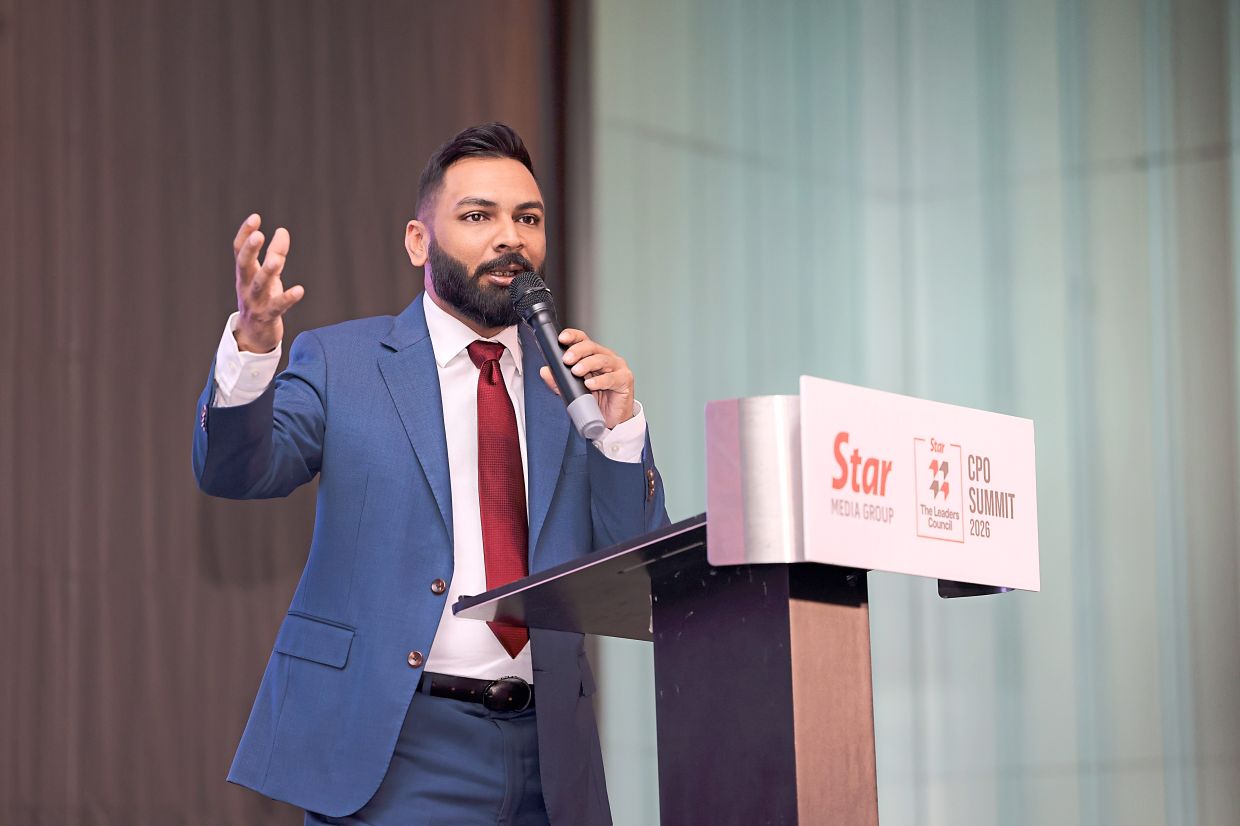
> What is your long-term vision for HRD Corp’s role in developing Malaysia’s human capital?
We are engaging with more than 500 employers, training providers, and industry associations, actively listening to what workforces truly need as we revise our Allowable Cost Matrix.
Training schemes are being regrouped around high-impact areas, heavily weighting on professional certifications to support Malaysia’s aspiration of achieving a 35% skilled workforce by 2030.
These conversations will continue until year-end, and we encourage feedback from all stakeholders to channel their input at corpcomms@hrdcorp.gov.my
We are also working to make Continuing Professional Development (CPD) points for professionals claimable under the revised framework.
By 2027, HRD Corp aims to make company-sponsored educational degrees claimable through HRD Corp.
To boost retention beyond just tax exemptions, employers will be able to use their levies as scholarships to upskill staff.
We foresee that as soon as next year, job advertisements will prominently feature scholarships.
Our long-term mandate is to anchor a sustainable ecosystem for lifelong learning in Malaysia. When Malaysians have future-proof skills, industry productivity will rise, wages will grow and the economy will thrive.
> Looking back at your tenure so far, what would you consider your most significant achievement?
I would say introducing the 14-day advance application policy and stricter training verification, both physically and online.
These changes challenged the way things had been done for years. Previously, training could take place before approval, with limited checks on whether it actually happened. We changed that. Verification now involves checking whether approved training sessions actually took place, including attendance, training venues and whether the programmes were conducted as approved.
The response has been mixed. Some welcomed the changes, while others found them difficult to adjust to. I understand that, but change is never easy.
In just four months, we verified over 19,000 training sessions, compared with just over 6,000 for the whole of 2025.
It is still a work in progress, but I believe we are moving in the right direction.
HRD Corp belongs to the employers and workers of Malaysia. We hold every ringgit in trust for them.
We have not finished keeping that promise, but we are keeping it, day by day, claim by claim, ringgit by ringgit. We will not stop here. The work will continue.
