WHEN Halima Mohammed was six, her parents dropped her off in the desert at Revolution School, where the children of Eritrean guerilla fighters were raised while their parents fought for independence.
Wounded fighters taught grammar when they weren’t carrying rifles. Mothers and fathers appeared only rarely before melting back into the mountains and deserts of a war that would rage for three decades before Eritrea seceded from Ethiopia in 1993.
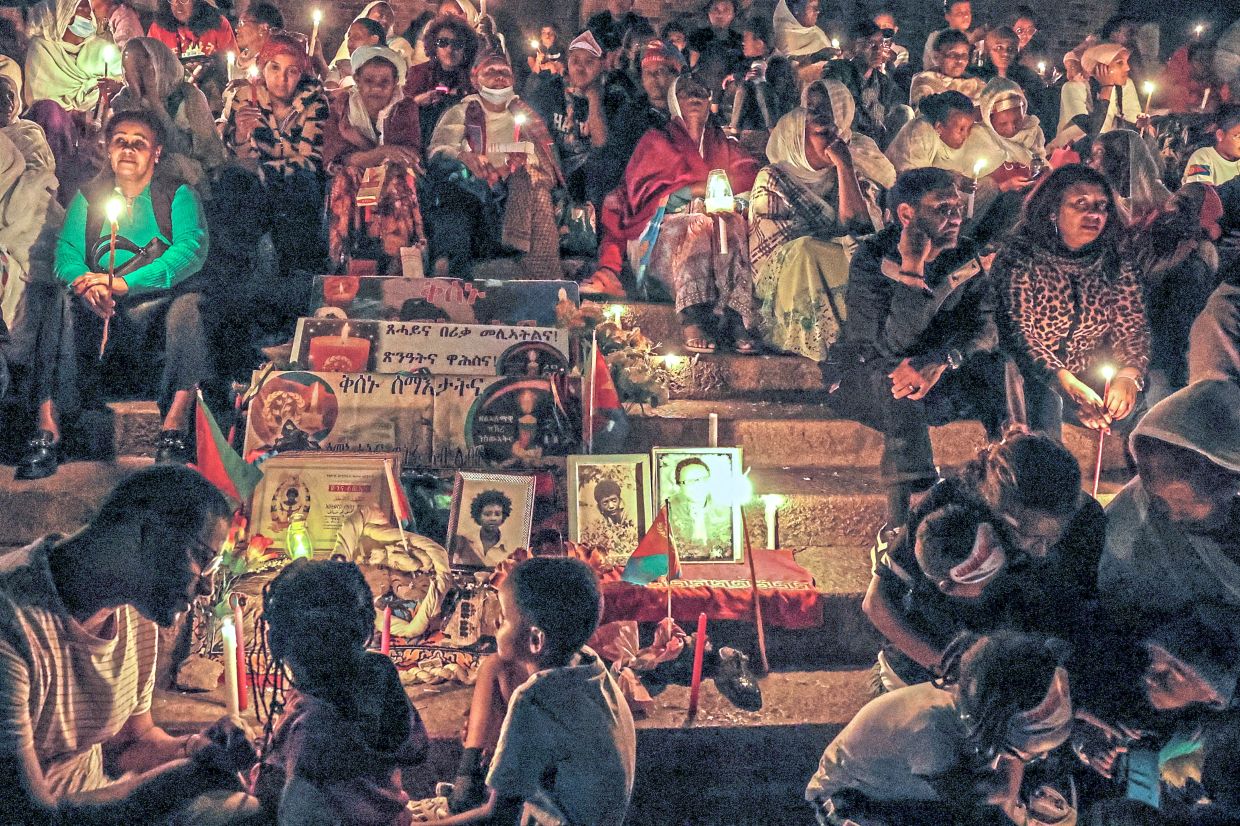
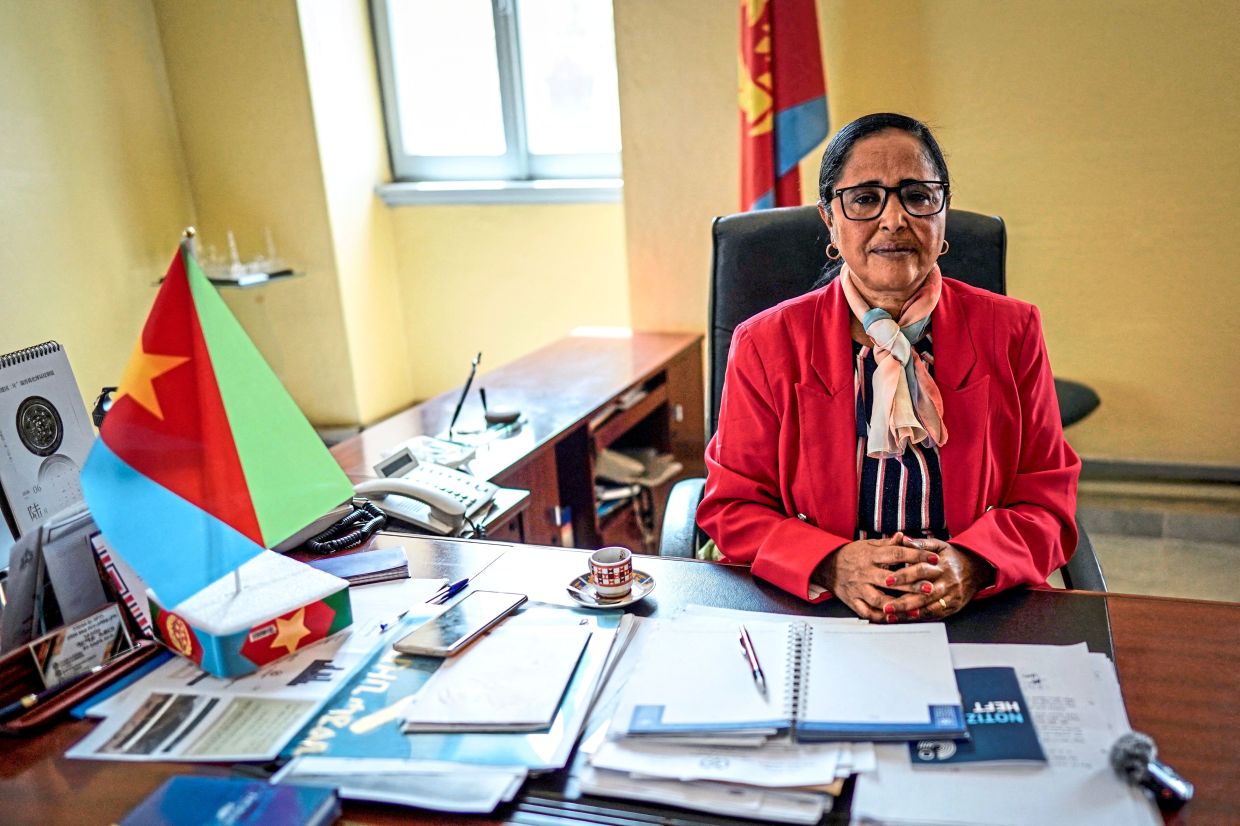
Halima, 56, is now the education minister of Eritrea, where that revolutionary struggle still hangs heavily over one of the most secluded and regimented societies on Earth.
She presides over a schooling system that binds the future of the country’s children to the service of the state.
All teenagers must undergo military training towards the end of high school before being assigned mandatory, often indefinitely long roles in the military or national service, mainly low-paid civilian jobs such as teaching and policing.
“All school graduates are getting at least a job to work, and they are getting their salary. And at the same time, they are serving the country,” Halima told Reuters, which was granted rare access to the nation.
“If you are going to have more freedom, first you have to have a country; you have to have national security, because we paid a lot for Eritrea.”
Strict internal security
Eritrea has long been isolated by the West, which views the East African country as among the world’s most repressive. Its government has pursued a policy of political and economic seclusion.
No elections have been held since independence in the 1990s. Independent media outlets were shut down in 2001, and hundreds of thousands of Eritreans have defied strict travel restrictions to flee overseas.
Yet the country of fewer than four million people has acquired new geopolitical significance during the Iran war, owing to its 1,000km coastline along the Red Sea shipping route between the Mediterranean and Asia.
With the Strait of Hormuz effectively closed by the conflict, the Red Sea has become a critical alternative route for Gulf energy shipments. Attacks on commercial vessels by Iran-backed Houthi fighters in Yemen, across the water from Eritrea near the route’s southern chokepoint, have further highlighted the importance of securing maritime traffic.
“Eritrea sits astride some of the world’s hottest geographical real estate,” said Murithi Mutiga, Africa programme director at the International Crisis Group, a Brussels-based think-tank. “The war in the Gulf has highlighted the importance of the Red Sea as an alternative outlet for that region. It’s no wonder outside powers are courting Asmara.”
There have been signs of warming ties. Last month, Washington removed sanctions imposed over the role of Eritrea’s military in the 2020-22 Tigray conflict in Ethiopia. The State Department said the Trump administration made the decision “to advance US regional interests”.
Eritrean officials say the country is ready to engage in trade and welcome investors keen to tap its gold, copper and potash deposits. The government is also looking at reforming its school system to give young people more say over their destiny.
But these aspirations sit uneasily alongside a state shaped by its leaders’ conviction that national survival depends on strict internal security and military vigilance against Ethiopia, its larger neighbour.
The countries have been at loggerheads over landlocked Ethiopia’s demands for commercial and naval access to the Red Sea, particularly the port of Assab near their border.
Ethiopia, which had access to the coastline for decades before Eritrea broke away, calls maritime access an urgent national security concern. Asmara fears Addis Ababa will try to seize Assab by force.
Getachew Reda, an adviser to Ethiopia’s prime minister on regional affairs, said Addis Ababa had never threatened force or Eritrea’s sovereignty. He accused Eritrea of funding insurgencies in Ethiopia, an allegation Asmara denies.
He said access to the Red Sea is an economic necessity for Ethiopia, a country of 130 million people, and that his government is open to a peaceful arrangement, such as a long-term lease on port use.
The countries severed diplomatic ties in September, with Ethiopia expelling Eritrean diplomats and Asmara retaliating.
Eritrea had enjoyed friendly relations with the US and several European countries after independence. Those ties collapsed in 2001 when the government cracked down on political opponents and journalists.
Capital above the clouds
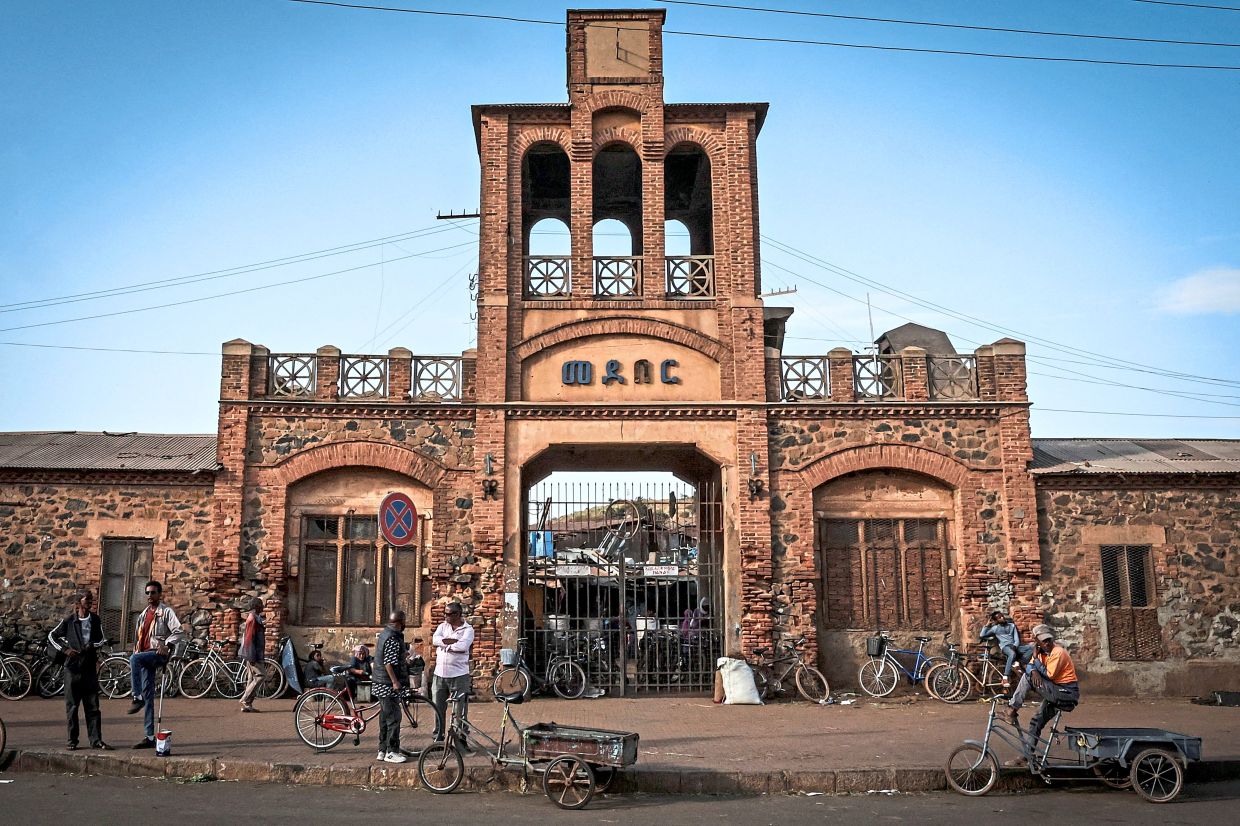
Asmara, Eritrea’s highland capital, seems suspended in time.
Elderly men, many veterans in wheelchairs or on crutches, linger over macchiatos at dusk beneath fading Italian signs at Bar Vittoria and Bar America, reminders of the colonial rule that preceded Ethiopian control.
Internet access is tightly controlled, sparse and slow. Few people stare at phones.
Young people drink beer from unlabelled bottles produced by the state-owned factory, while severe fuel rationing leaves the streets nearly empty of cars apart from a few battered taxis.
Even as ministers speak of reform and engagement, ordinary Eritreans are reluctant to discuss politics.
Conversations often end the same way: a glance over the shoulder, a lowered voice, a polite smile.
“It’s better not to,” several people said when questions turned to national service or political freedoms. Others agreed to speak only if they were not identified.
In a residential district, applause drifted out of an old cinema where an information session about Sawa was under way.
Few things better illustrate the tensions facing Eritrea than Sawa, a remote military camp in the desert near the Sudanese border. Teenagers must go there to complete their final year of secondary school and undergo military training.
Inside the cinema, teenagers preparing to leave home watched a young woman click through a presentation filled with photographs of students in camouflage uniforms, marching in formation and studying in classrooms.
The presenter, 24-year-old Luna Ermias, wore jeans, sunglasses pushed onto her head and braces that flashed when she smiled. She spoke passionately about her experience.
“I was there in 2019,” she said afterwards. “It teaches you to rely on yourself. You manage your money, your time. You meet people from every part of Eritrea.”
Fleeing across the desert
Many don’t share her enthusiasm.
Muse said he was 17 when he decided he would rather run than report to Sawa. He feared that if he stayed, his life would never be his own.
He slipped away from home under cover of darkness, hoping to cross into Ethiopia before the authorities caught him. He did not make it.
Muse said he spent six months in prison. When released, he was not sent home but deployed to the military in Assab, the Red Sea port.
He escaped again, this time successfully, crossing the blistering Danakil desert into Ethiopia before reaching another East African country. The journey cost thousands of dollars paid to smugglers and money borrowed from relatives already living abroad.
Muse’s story is far from unique. According to the United Nations, more than 679,000 Eritreans live as refugees or asylum seekers abroad, a significant share of the country’s small population.
Human Rights Watch and other rights groups say the prospect of prolonged compulsory service has driven generations of young people to flee, often risking perilous journeys across the Sahara and Mediterranean.
The Eritrean government did not comment on the details of Muse’s account, but said asylum seekers often fabricated claims to secure refugee status.
It disputed the UN figures, arguing that many people counted as Eritrean refugees were citizens of neighbouring countries posing as Eritreans to obtain faster asylum and social benefits. The government said young Eritreans were drawn abroad less by national service than by economic opportunities, family reunification and generous asylum policies in the West.
Germany, Switzerland, Sweden, Britain and the US are among the most popular destinations for Eritrean refugees and asylum seekers, according to the UN.
Dreams deferred
Not everyone who wants to leave manages to do so.
In Asmara, a mechanical engineer who achieved top grades at Sawa was allowed to attend university.
He spoke avidly about German engineering and dreamed of working for Mercedes-Benz. Instead, he was assigned a government job as an auto mechanic.
“You don’t study what you want,” he said. “Even if you finish university, you often don’t work in your field.”
He said his monthly salary of about 2,300 nakfa (US$153) barely covers basic necessities. Saving enough to pay smugglers or finance a life abroad seems impossible.
Eritrean officials maintain that Western governments and rights groups misrepresent national service by ignoring the security pressures the country faces from Ethiopia.
Eritrea emerged from a 30-year independence war that killed tens of thousands on both sides, only to fight another devastating border conflict with its neighbour seven years later. Persistent regional tensions have reinforced a sense of permanent mobilisation inside the young state.
Halima, the girl who left the desert a lifetime ago, now sits behind a polished wooden desk at the Ministry of Education in Asmara.
With four children of her own, she does not dismiss the frustrations of young Eritreans. Her ultimate goal, she says, is to replace compulsory national service with vocational colleges and technical schools.
But all plans remain subordinate to national security.
“First we have to think about Eritrea. We have to protect it,” she said. “As a mother, first I have to think about Eritrea.” — Reuters