



CHINA’S fast-growing low-altitude economy is beginning to create opportunities in South-East Asia, including Malaysia, but Malaysians should not expect flying taxis to appear over city skylines or resort islands anytime soon. Before that can happen, regulators and operators will need to address issues involving airspace, infrastructure, safety and public confidence.
Guangzhou-based EHang, a developer of pilotless electric vertical take-off and landing aircraft (eVTOLs), sees Malaysia as one of its potential markets as the company expands beyond China.
EHang vice-president He Tianxing said in an interview that a Malaysian private-sector customer had placed orders for the company’s passenger-carrying aircraft.
“The main applications in the first phase are cultural tourism, sightseeing, flight experiences, medium- and short-distance transport connections, and emergency rescue,” said He.
The aircraft is EHang’s EH216-S, a two-seat pilotless eVTOL that takes off and lands vertically. It resembles a large drone but is designed to carry passengers along pre-planned routes.
EHang has previously announced a partnership with a Malaysian aviation services company to develop urban air mobility services. In 2022, the Malaysian company placed a pre-order for EHang aircraft, including models from the EH216 series and the longer-range VT-30.
Its first uses could be more practical: controlled routes at tourist destinations, resort-to-island connections, cargo deliveries or emergency response services.
The low-altitude economy refers to commercial activity in airspace generally below 1,000m. It covers drones used for deliveries, agriculture, inspections and emergency work, as well as eVTOL aircraft for sightseeing, air shuttles and short-haul passenger travel.
China has made the sector a national priority. Local governments are opening designated airspace, building take-off and landing facilities, and supporting the development of aircraft, batteries, navigation systems and operating services.
Guangdong province, where EHang is based, aims to build a world-leading low-altitude economy hub by 2026. The province has set a target for the sector to exceed 300bil yuan (RM177bil), with Guangzhou, Shenzhen and Zhuhai at the centre of the plan.
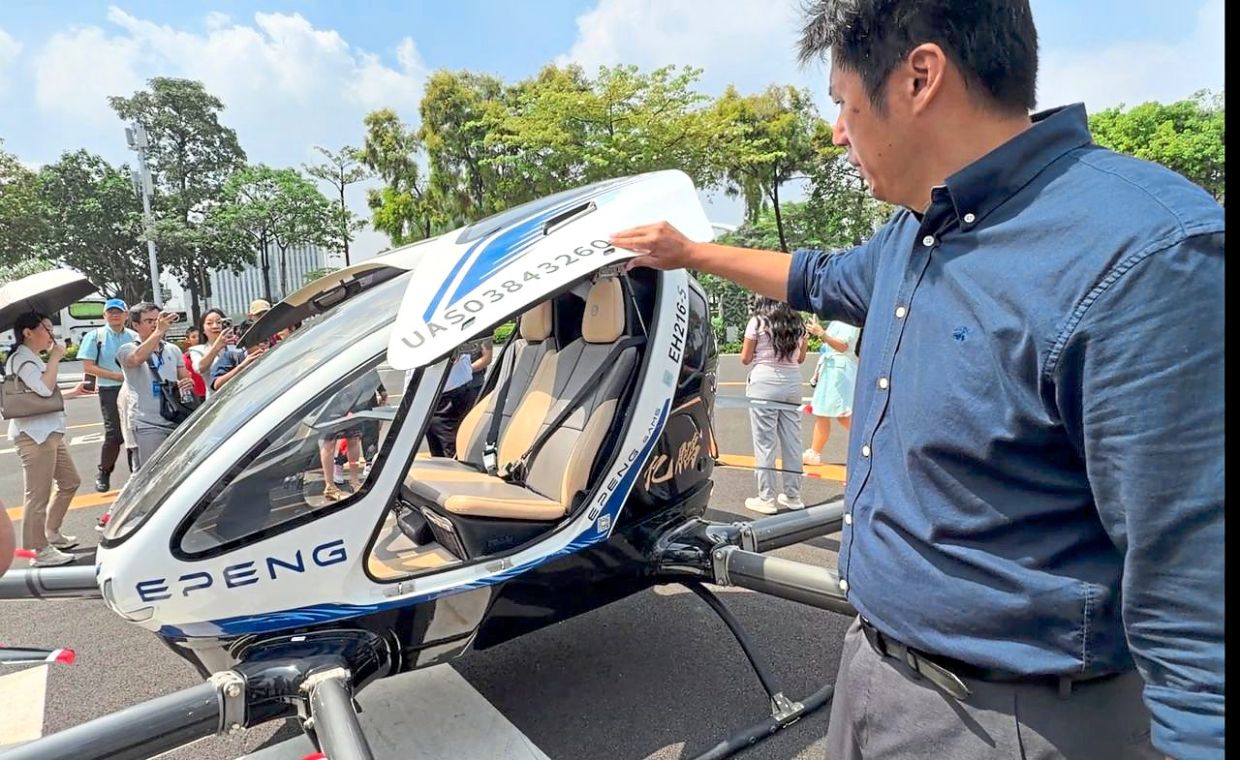
EHang said its EH216-S has received type, production and standard airworthiness certificates from the Civil Aviation Administration of China. In March last year, the company and an operating partner were granted approval to provide commercial passenger services in China.
It has since conducted commercial trial operations in Guangzhou and Hefei. Overseas, its attention is focused first on Thailand.
In October last year, EHang launched a regulatory sandbox programme in Bangkok with the Civil Aviation Authority of Thailand and local partners. The programme is intended to test the aircraft, operating procedures and safety framework before commercial operations can be expanded.
He said Thailand could be a springboard for EHang’s regional plans.
“Starting from Thailand, we hope to deploy our future commercial model and commercial flight scenarios across South-East Asia,” he said.
Thailand’s early applications are expected to focus on tourism, sightseeing and short-distance travel. The sandbox programme is planned to expand beyond Bangkok to destinations including Pattaya, Phuket and Koh Samui.
The Thai experience may be relevant to Malaysia, particularly in places where road or sea travel is slow and tourism operators are willing to pay for a premium transport option.
Island and coastal destinations, along with areas with limited road access, may offer more practical starting points than dense urban centres. Emergency services are another possible use, though they would require more stringent approvals and close integration with existing aviation operations.
Cost remains a major consideration. The EH216-S is priced at about 2.39 million yuan, or around US$330,000 (RM1.4 million), in China. That means early services are more likely to cater to tourists, corporate clients and specialised operators than ordinary commuters.
He said overseas delivery and deployment usually take between three and six months, depending on import requirements, local rules for unmanned aircraft and shipping arrangements. The aircraft are generally delivered as complete units rather than assembled in the destination country.
Still, bringing an aircraft into Malaysia would only be the first step.
The bigger questions are whether the country has rules for autonomous passenger flights, where the aircraft can take off and land, how they would share airspace with helicopters and conventional aircraft, and who would be responsible in the event of an incident.
Malaysia is working on a low-altitude economy blueprint that is expected to set out a framework for drone operations and other emerging aviation services. Its eventual direction will matter not only to eVTOL operators, but also to logistics companies, emergency services, tourism players and technology firms.
For now, flying taxis remain a niche proposition rather than a transport option for most Malaysians.
But China’s progress, together with Thailand’s regulatory sandbox, suggests that the sector is moving beyond concept videos and prototype displays. Malaysia’s first commercial opportunities may be small, but they could help determine where low-altitude aviation can deliver real value.
Ahead of the 33rd Apec Economic Leaders’ Meeting in Shenzhen in November, this writer joined 16 journalists from eight Apec member economies on a China Public Diplomacy Association programme that included a media workshop in Beijing and visits to Shenzhen, Zhuhai and Guangzhou, where the delegation was shown EHang’s EH216-S pilotless eVTOL aircraft at the Haixinsha OMNI-Space Intelligent Experience Centre.
Future opportunities
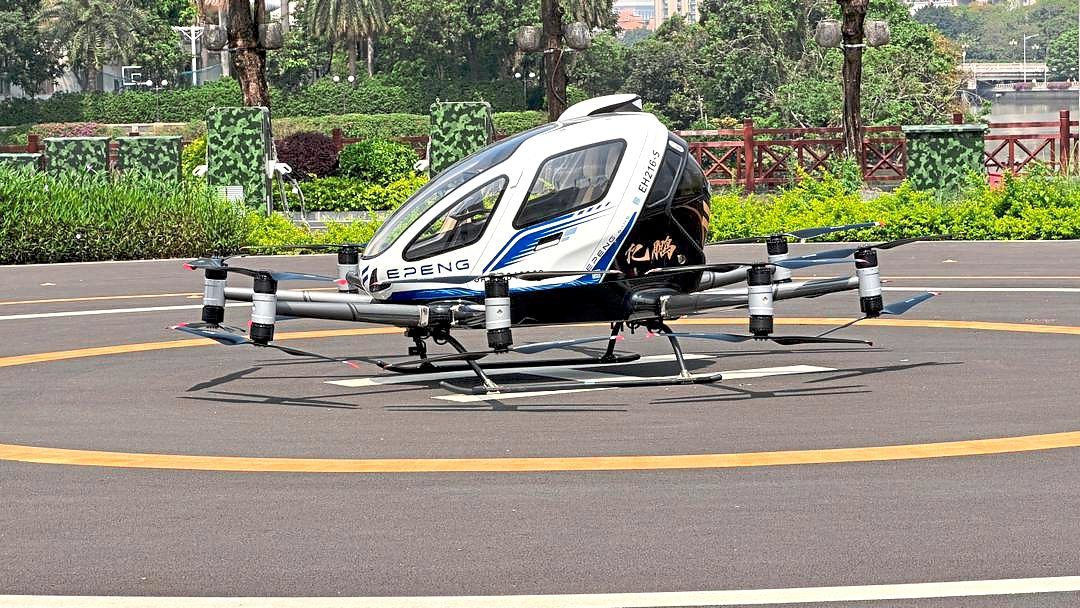
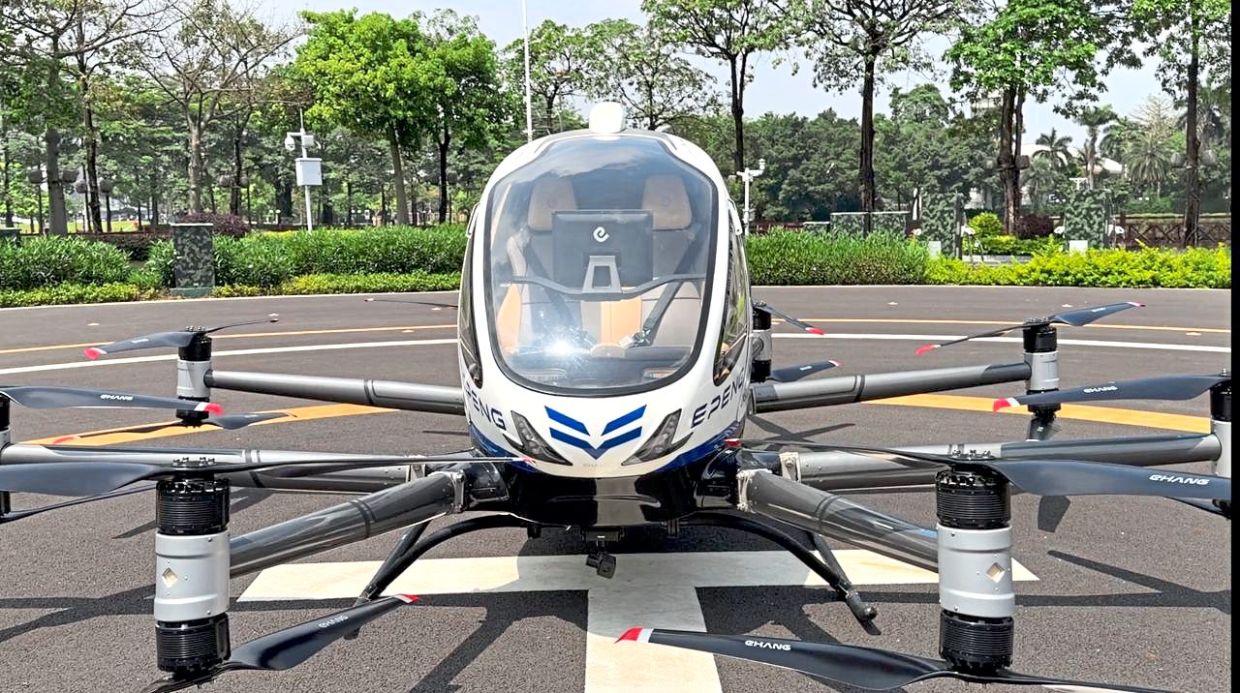
For now, flying taxis remain a niche proposition but not an impossible option for Malaysia.
