
THE black-and-green ink that runs down the side of Ahmad Rezki Fauzi’s face draws stares wherever he goes.
Thick and deliberate, it is impossible to ignore. The tattoo is not simply decoration. It is a shield. Beneath it lie the scars of an acid attack that nearly destroyed him. A decade ago, while he was asleep, someone poured corrosive liquid over his face.
“The burn felt like my skin was on fire. I did not get proper medical treatment. There was pus. The wounds eventually dried and healed,” he told The Straits Times.
For months, he wrestled with thoughts of revenge.
“At first, I kept thinking about who did it. It was definitely one of the lowest moments in my life. I did not trust anyone.”
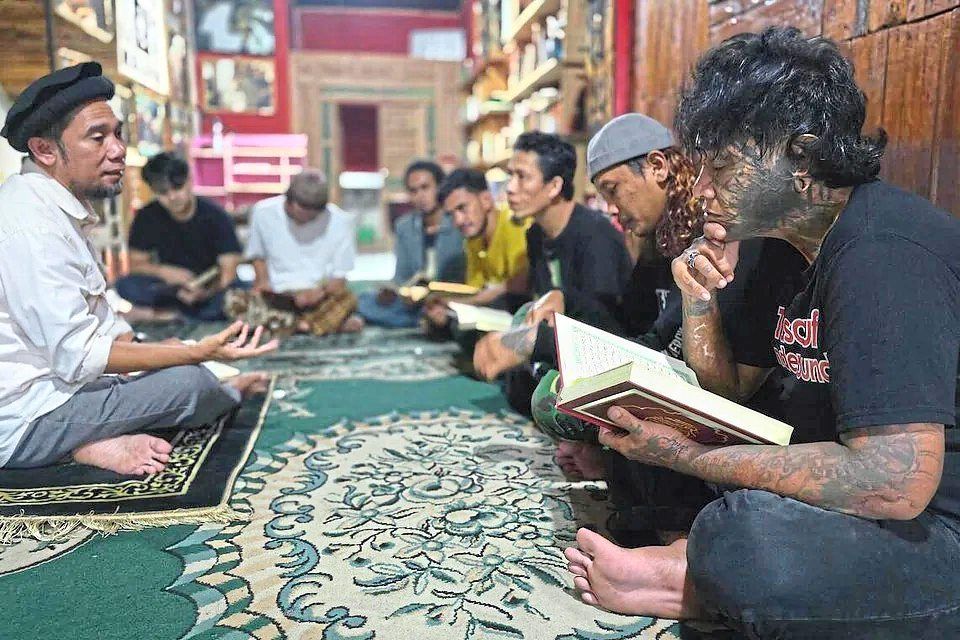
Now 30, he sits cross-legged on a carpeted floor, a Quran resting in his hands. Jembe drums lie nearby. Cigarette smoke drifts through the air. Shelves hold books on Islam, history and philosophy.
Portraits look down from above, including one of former Indonesian president Abdurrahman Wahid, a symbol of pluralism, and another of the late Pope Francis, who favoured simplicity and was widely recognised for promoting a more inclusive Catholic Church.
This unlikely sanctuary occupies a modest three-storey shophouse in South Tangerang, on Jakarta’s outskirts. It is called Tasawuf Underground.
Part boarding house, part spiritual centre, it serves those who have been pushed to the margins: street punks and young men from broken homes who live on the streets out of necessity, not choice.
Many struggle with substance abuse. During the Muslim fasting month of Ramadan, the rhythm shifts. The youths fast together and spend longer nights in prayer. For many, it is their first experience of observing the holy month with discipline.
Faith without condemnation
Tasawuf Underground was founded in 2012 by Ustad Halim Ambiya, a soft-spoken 51-year-old cleric. Rather than imposing strict rules or moral lectures, he draws on tasawuf, or Islamic mysticism – focusing on self-reflection and cultivating inner discipline without judgement.
“If we approach them only through syariah, the formal code of Islamic law, they may reject it because the law feels too harsh for them. It is more effective to approach them through tasawuf,” he said.
“I am first a friend, then a father figure, then a teacher.”
“I teach them how to cleanse the heart, how to feel, how to sense the presence of God,” the cleric told ST.

Since 2017, about 500 young people have passed through the programme. Some stay for months. Others drift in and out.
Alongside prayer and Quran studies, they are encouraged to learn trades such as car washing.
Halim’s approach was shaped by a moment of danger.
In 2003, while pursuing a master’s degree in Islamic civilisation in Malaysia, he travelled overland to Bangkok to take part in an academic discussion, passing through southern Thailand.
Mistaken for a rival, he was seized by rioters outside his hotel.He believes he might not have escaped unharmed had a local punk youth not intervened, hiding him in a safe spot until calm returned.
“I realised we cannot judge people by how they look,” he said.
The encounter changed him.He began engaging marginalised youths through conversation, not condemnation. Dressed in his signature Afghan-style wool beret and jeans, he attended punk concerts, listening more than preaching, and met youths living under bridges and in abandoned lots.
He focused on those aged above 20, many of whom were troubled and weary of street life. Among them was Ahmad, who used to swallow 20 to 30 Tramadol pills at a time, sometimes taking stronger opioids, washed down with alcohol. The drugs dulled his pain and boosted his confidence to perform music on the streets.
“When I take pills, I feel only temporary relief,” he said.
“But when I pray, especially with guidance from Ustad Halim, the peacefulness is deeper, more real. With prayer, I feel there is something greater than myself. I feel steady and focused.”
Rebellion and religion
To outsiders, punk and piety may seem incompatible. Born in the 1970s in the US and Britain, punk culture is defined by its anti-establishment stance, loud music and defiant fashion: mohawks, ripped clothes, leather jackets and heavy boots.
Indonesia’s punk movement emerged in the 1990s, during the final years of authoritarian rule under former president Suharto. Bands such as Marjinal railed against corruption and inequality, echoing global punk’s anger but rooted in local grievances: poverty, police abuse and political repression. Today, many street punks busk at traffic lights and outside markets, singing those same protest songs for small change.
Unlike their Western counterparts, most Indonesian punks formally identify with a religion, as required on national identity cards – though observance varies widely.
Herman Hendrik, a researcher at Indonesia’s National Research and Innovation Agency, told ST:
“Tasawuf Underground is completely different. It is not involved in political Islam. Members are everyday Muslims. They do not suddenly abandon music or drastically change their appearance.”
Breaking the cycle
Tasawuf Underground has transformed hundreds of lives, offering former addicts and those with violent pasts a path to education, employment and spiritual peace.
Trian Anugrah Permana’s life could easily have taken a darker turn. Now 38, he is in his final year of completing a law degree at Universitas Pamulang, a private university in South Tangerang. At 16, he ran away from home to escape constant fights between his parents.
One night, tensions between his friends and a gangster spiralled into a violent altercation. The fight left the man dead.
On the streets, violence rarely follows a neat legal script. There was no arrest, no court case. The episode faded into the blur of street life. But the memory still unsettles Trian.
“It made me promise myself never to let anger control me again,” he told ST.
Life on the streets demanded resourcefulness. He finished high school on his own, earning money by busking at traffic lights and taking odd jobs.
“I did anything halal, playing music, parking cars, whatever I could to survive,” said Trian.
When he first met Halim, he was sceptical – even challenging the cleric to visit his hangout under a bridge.
Halim kept returning. One day, Trian asked for a book on how to pray and visited the boarding house.
“That was when I saw it – a library, shelves full of books. I have always loved reading. It was like a vast ocean of learning. That was where my journey with him truly began,” he said.
The cleric saw potential in the young man, saying: “Alcohol and drugs had no place in his future. I saw potential in him to study law.”
He helped raise funds for Trian’s tuition and encouraged him to enrol in university.
Trian said: “When he said I should study law, I laughed at first. Even now, I still cannot quite believe it, that I could go to university, much less study law.”
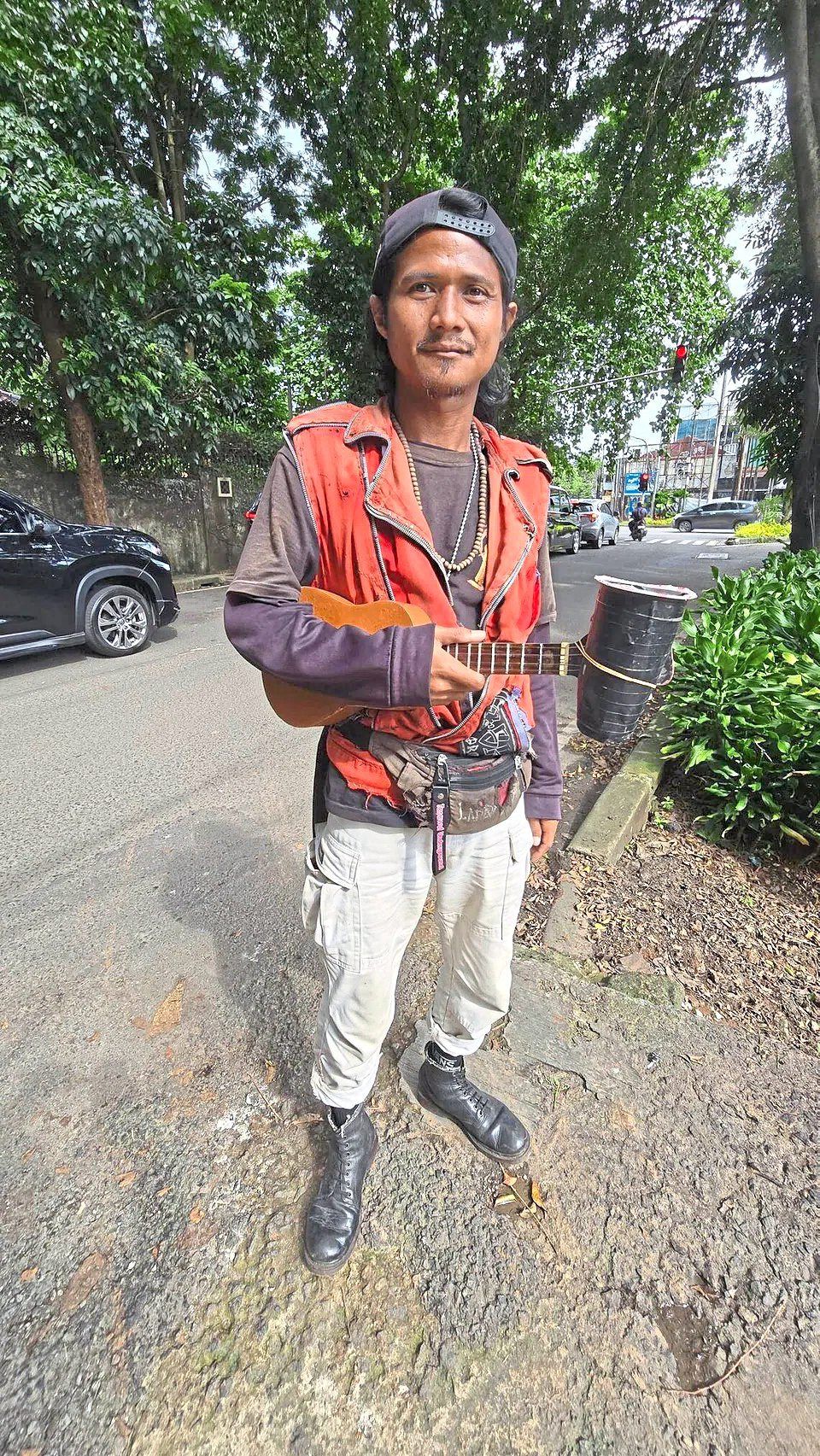
At university, some lecturers doubted him because of his tattoos. “I relied on knowledge, not anger,” he said. “I do not just read theories. I compare them with reality, what actually happens on the streets. My knowledge comes from what I have lived, not just from books.”
Trian has since accompanied friends to police stations to negotiate with officers. His ambition is to open a business employing former street youths, while continuing to busk.
“I am still part of them, and they are part of me. I want to help others, to give them the opportunities I was given.”
Second chances
Others tell similar stories. Ryan, 32, fled home after his parents divorced. “On the streets, I felt comfortable. There was a sense of being protected. There was solidarity,” he said.
But that sense of belonging came with violence and addiction.
“People would attack each other over small things. When you are drunk and angry, you can do reckless things,” he said.
During a period of wandering, he began to feel empty and fearful of death. Searching online, he found Tasawuf Underground.
Iwan Setiawan, 31, also embraced drugs and alcohol as part of his punk identity. “Being punk felt cool. It was about being myself,” he said.
Now, his outlook has shifted.
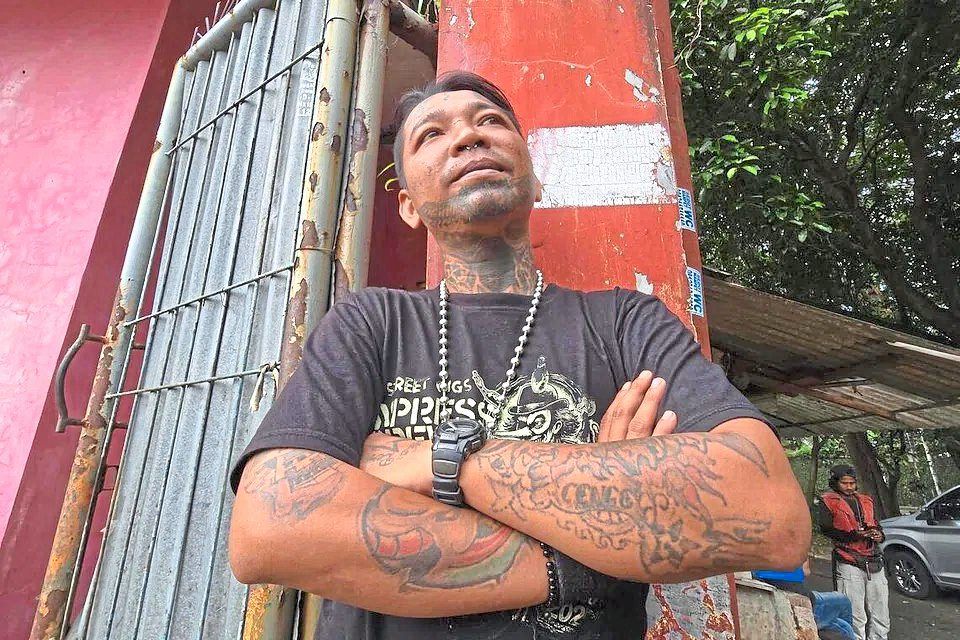
“In the past, people saw us as criminals. But now, I am not afraid. As long as my attitude is good, people respond well.”
For Ryan, faith replaced fury. “When there is a problem, I turn to God – not to the streets.” — The Straits Times/ANN
Arlina Arshad is ‘The Straits Times’ Indonesia bureau chief. She is a Singaporean who has lived and worked in Indonesia for over 15 years.